You've bought a vitamin C serum, applied it, and now you're staring at the mirror wondering: do I wash this off after 20 minutes, or leave it on? Getting this wrong can either waste a good product or irritate your skin. This guide answers exactly how long to leave vitamin C serum on your face, whether you rinse it off, what to do before and after, and how to get the most from it without damaging your skin barrier.
How Long Should You Leave Vitamin C Serum on Your Face?
Vitamin C serum is a leave-on product. You apply it to clean skin and leave it on all day or all night without rinsing, unless the product's instructions say otherwise. There's no set number of minutes to leave it before washing; simply let it settle into your skin, then follow with moisturizer and, in the morning, a broad-spectrum sunscreen.
Quick Facts About Vitamin C Serum
|
Question |
Short Answer |
|
How long to leave it on? |
Normally left on without rinsing, unless the label says otherwise |
|
Best time to use it |
Morning is popular; evening works too, following your product's directions |
|
Basic order |
Cleanse, then serum, then moisturizer, then sunscreen (morning) |
|
Main benefits |
Antioxidant support, brighter-looking skin, a more even-looking tone |
|
When do results show? |
Often weeks to months of consistent use |
|
Right for everyone? |
No. Some formulas, especially high-strength ascorbic acid or low-pH products, can irritate sensitive skin |
Do You Wash Off Vitamin C Serum?
In normal use, no. Vitamin C serum is formulated to stay on the skin, unlike a cleanser or rinse-off mask. Washing it off after a few minutes is unnecessary and removes the product before it can do its job.
There are exceptions. If a product is designed for short-contact use, or is part of a special treatment protocol, follow the written instructions. And if you feel severe burning, swelling, or see an obvious rash, stop using it and gently rinse your skin.
How Long Should You Wait Before Moisturizer or Sunscreen?
There's no single waiting time in minutes that fits every product. Wait until the serum has settled and your skin no longer feels wet or tacky, then apply moisturizer or sunscreen without the products balling up. The right pause depends on the formula and its texture.
Does the Type of Vitamin C Change Things?
Yes, how you use it can vary by form. Pure ascorbic acid behaves differently from derivatives like ascorbyl glucoside or sodium ascorbyl phosphate in stability and acidity. Packaging, pH, and supporting ingredients also change how a formula feels and how well your skin tolerates it.
Remember: how long the serum stays on your face isn't the same as how long it takes to see results. The first is about how you apply it; the second depends on consistency, the formula, and the skin concern you're treating.
What Are the Benefits of Vitamin C Serum for Your Skin?

Vitamin C serum supports your skin's antioxidant defenses and may improve the look of dark spots, texture, and fine lines when a suitable formula is used consistently. Results vary, and it isn't a guaranteed fix for every skin concern.
The main potential benefits:
-
Brightness: May improve the look of dull skin and uneven tone, especially alongside hydration and sun protection.
-
Dark spots: Influences melanin production (the pigment behind skin color), which may help soften the look of some dark marks gradually.
-
Antioxidant protection: Helps limit the effect of free radicals from environmental stressors like UV exposure.
-
Collagen support: Vitamin C is involved in the processes your skin uses to build collagen, a protein important for firmness.
-
Fine lines: Active formulas, used consistently with sunscreen, may help improve the appearance of some signs of aging.
-
Even tone: May help with superficial pigmentation and post-inflammatory marks, depending on cause and depth.
-
Preventive routine: Works well in a morning routine with sunscreen, but never replaces it.
A 2023 systematic review found encouraging results for topical vitamin C on pigmentation and photoaging, while also noting that studies are limited and more research is needed to define the best formulas and concentrations.
Good to know: Lightening the look of dark spots doesn't mean the serum will change your natural skin color, and brighter skin doesn't mean it fixes every cause of darkening, dryness, or under-eye circles.
Who Should Use Vitamin C Serum, and Who Should Be Careful?
Vitamin C serum may suit people who want brighter-looking skin or softer dark marks, as long as the formula matches their skin type and they aren't sensitive to its ingredients.
It may be worth considering if you have:
-
Dull skin: You want an antioxidant step that improves overall radiance.
-
Post-acne marks and superficial pigmentation: It may help soften some dark marks, though the cause of the inflammation still needs managing.
-
Frequent sun exposure: It can be part of a protective routine, as long as sunscreen is also used.
-
Fine lines: It may help support collagen and improve how some signs of aging look.
-
Uneven tone: It may gradually improve color irregularities depending on formula and cause.
-
Normal or combination skin: A well-matched formula can be tested over the first few weeks.
Who Needs Extra Care?
-
Sensitive skin, eczema, or active rosacea may react to some formulas.
-
Damaged or irritated skin should have its barrier restored before new actives are added.
-
People using several topical treatments should check compatibility, especially if they already cause dryness or peeling.
-
Persistent melasma or worsening pigmentation is better evaluated by a dermatologist than treated with a serum alone.
You don't need oily or dry skin specifically to benefit from vitamin C. The formula, your tolerance, and the nature of your concern matter more than skin-type labels.
How to Choose a Vitamin C Serum: Type, Strength, and Stability
Choose based on the form of vitamin C, the formula's stability, and your skin's tolerance, not just the percentage on the bottle. A higher concentration doesn't automatically mean better results, and it can raise the risk of irritation.
1. Type of Vitamin C
-
L-ascorbic acid: The most studied form for topical use, but sensitive to oxidation and can irritate in some formulas.
-
Ascorbyl glucoside: A derivative used in products aimed at radiance and uneven tone.
-
Sodium ascorbyl phosphate: Another derivative found in skincare formulas.
-
Magnesium ascorbyl phosphate: A derivative whose properties vary with how the product is made.
These forms aren't identical in stability, penetration, or clinical evidence, so look at the entire product rather than the ingredient name alone.
2. Concentration
Some formulas contain lower amounts, while others reach 10-20% ascorbic acid. That range is common, but there's no single ideal percentage for every skin type, and stronger formulas can irritate sensitive skin. If you're new to vitamin C, don't start high just because you assume it works faster.
3. Stability and Packaging
Vitamin C is sensitive to air, light, and heat in many formulas. Opaque or airtight packaging, stored as the maker directs, helps limit degradation.
4. Supporting Ingredients
Some formulas include vitamin E or ferulic acid, which have been studied alongside vitamin C in antioxidant formulas. Their presence doesn't guarantee a product works, since results depend on the overall balance and stability.
5. Directions and Warnings
Read the ingredient list, directions, expiry date, and warnings. Avoid any product containing an ingredient you know you're allergic to.
6. Product Information and Regulation
When buying skincare, check the product details, the company responsible, and any local registration or listing requirements. "Dermatologically tested" doesn't automatically mean a product suits every skin type, and marketing claims shouldn't be read as proof of treating a skin disease. The U.S. FDA notes that cosmetics generally don't require pre-market approval, and that claims must not be misleading.
How to Use Vitamin C Serum Step by Step

The correct method is to cleanse and gently dry your face, apply a small amount of serum as directed, follow with moisturizer, and use sunscreen in the morning. You normally don't rinse the serum off after a few minutes.
-
Cleanse: Use a gentle cleanser to remove dirt and leftover products.
-
Dry gently: Pat, don't rub, especially if your skin is sensitive.
-
Patch-test if needed: Try the serum on a small area and watch for irritation before adding it to your routine.
-
Apply the serum: Use the amount on the label and spread it gently, avoiding eyes and lips.
-
Let it settle: There's no fixed wait; give it a moment until your skin is ready for the next step without pilling.
-
Moisturize: This helps limit water loss and supports your skin barrier.
-
Apply sunscreen in the morning: Choose a broad-spectrum SPF 30 or higher, reapplying as directed.
-
Watch your skin: If irritation persists, stop and seek professional advice if needed.
Tip: Don't use more serum, or use it more often, to speed up results. Consistency and tolerance matter more than overdoing it.
Warning: Don't apply it to cracked or badly irritated skin, and keep it out of your eyes. If the packaging gives different directions, follow those.
Can You Use Vitamin C Serum with Other Products?
You can combine vitamin C serum with moisturizer and sunscreen in a daily routine. Combining it with other actives depends on your skin type, product strengths, and tolerance.
|
Ingredient |
Compatibility |
How to Use |
|
Hyaluronic acid |
Generally suitable for hydration |
Follow product textures and directions |
|
Ceramide moisturizers |
Help support the skin barrier |
Usually applied after the serum |
|
Vitamin E |
Used with vitamin C in some antioxidant formulas |
Choose a formula that combines them |
|
Sunscreen |
Essential in the morning routine |
Applied after skincare products |
|
Niacinamide |
Many people use them together |
Monitor tolerance, especially with several products |
Vitamin C and vitamin E have been studied together in antioxidant formulas, but that doesn't mean any two products containing them will deliver the same results.
Ingredients to Handle with Care
-
Retinoids: May increase dryness and irritation when stacked with other actives, so they can be spread across different times of day if directions allow.
-
Exfoliating acids (glycolic, salicylic): Overusing them alongside a potentially irritating serum can add redness and peeling.
-
Benzoyl peroxide: May affect the stability of some forms of vitamin C, so check the formula's directions or ask a pharmacist how to separate them.
There's no blanket rule forbidding all these ingredients in one routine. The principle is to avoid irritation, introduce new products gradually, and follow your doctor's directions if you use a prescribed treatment.
When Will You See Results from Vitamin C Serum?
Radiance may improve gradually over a few weeks of regular use, while dark spots and signs of aging usually need longer, sometimes several months. There's no guaranteed timeline, since response depends on the formula and the cause of the concern.
|
Timeframe |
What You Might Notice |
|
First few days |
Skin may feel smoother thanks to other ingredients, but dark spots won't vanish in days |
|
Weeks 2 to 4 |
Some people notice a gradual improvement in radiance, though a clear change isn't guaranteed |
|
Weeks 4 to 8 |
Uneven tone may begin to improve for some users, depending on the product, consistency, and sun protection |
|
Weeks 8 to 12 and beyond |
A more realistic point to assess changes in some pigmentation, texture, and fine lines |
These timeframes are estimates, not guaranteed clinical outcomes for every product. Systematic reviews of topical vitamin C suggest improvements in pigmentation and photoaging may need long-term use, and larger studies are still needed to identify the best regimen.
How to judge your results: Compare photos in similar lighting at spaced-out intervals, and don't rely on differences caused by lighting or camera settings. If dark spots persist or worsen despite proper care, a dermatologist can help identify the cause and the right treatment.
Common Mistakes When Using Vitamin C Serum

The most common mistakes are washing the serum off after a few minutes, using an unsuitable concentration, skipping sunscreen, and layering too many active ingredients at once.
|
Mistake |
What to Do Instead |
|
Rinsing the serum off after minutes |
Leave it on unless the instructions say otherwise |
|
Using too much |
Follow the label amount; more product doesn't mean more effect |
|
Always picking the highest strength |
Choose the balance of effectiveness and tolerance that suits you |
|
Skipping sunscreen |
Use broad-spectrum sunscreen daily; vitamin C doesn't replace it |
|
Ignoring color or smell changes |
Check the expiry date and storage; stop using it if it changes noticeably and unusually |
|
Mixing several strong actives at once |
Introduce new products gradually so you can spot the cause of any irritation |
|
Expecting it to erase dark circles and wrinkles |
It may help with some pigmentation and fine lines, but it can't fix every cause |
Which Altesse Soin Product Fits This Routine?

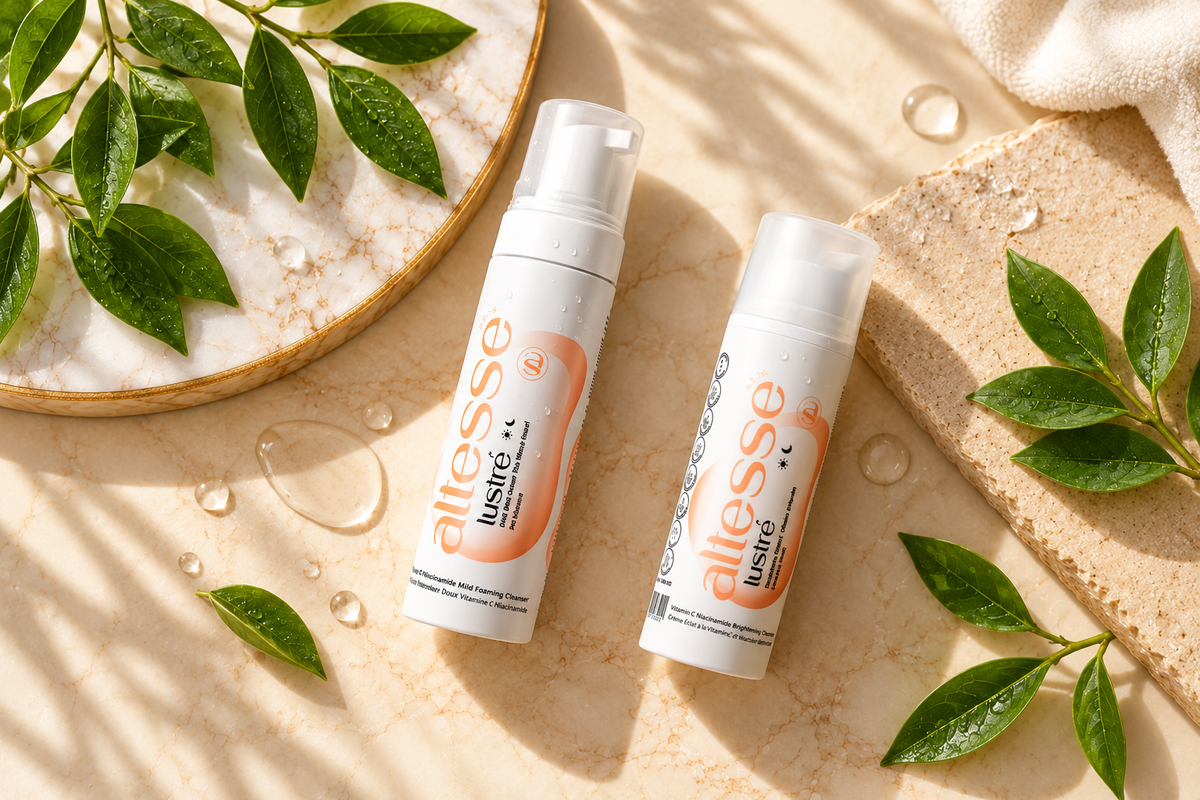
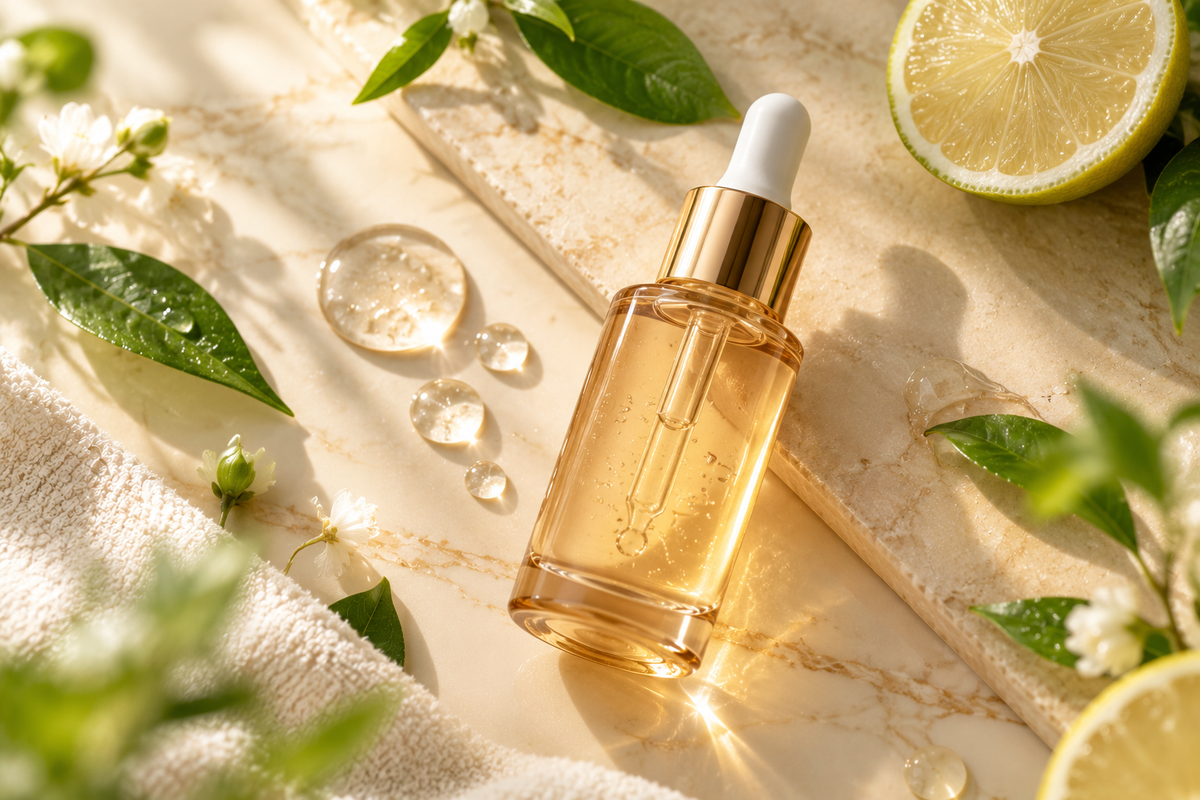
If you're looking for a vitamin C step, the Altesse Lustré Vitamin C & Niacinamide Brightening Serum combines vitamin C with niacinamide in one formula, aimed at brightening and the look of uneven tone. Use it as directed on the product page, and start gradually if your skin is sensitive.
To round out the routine:
-
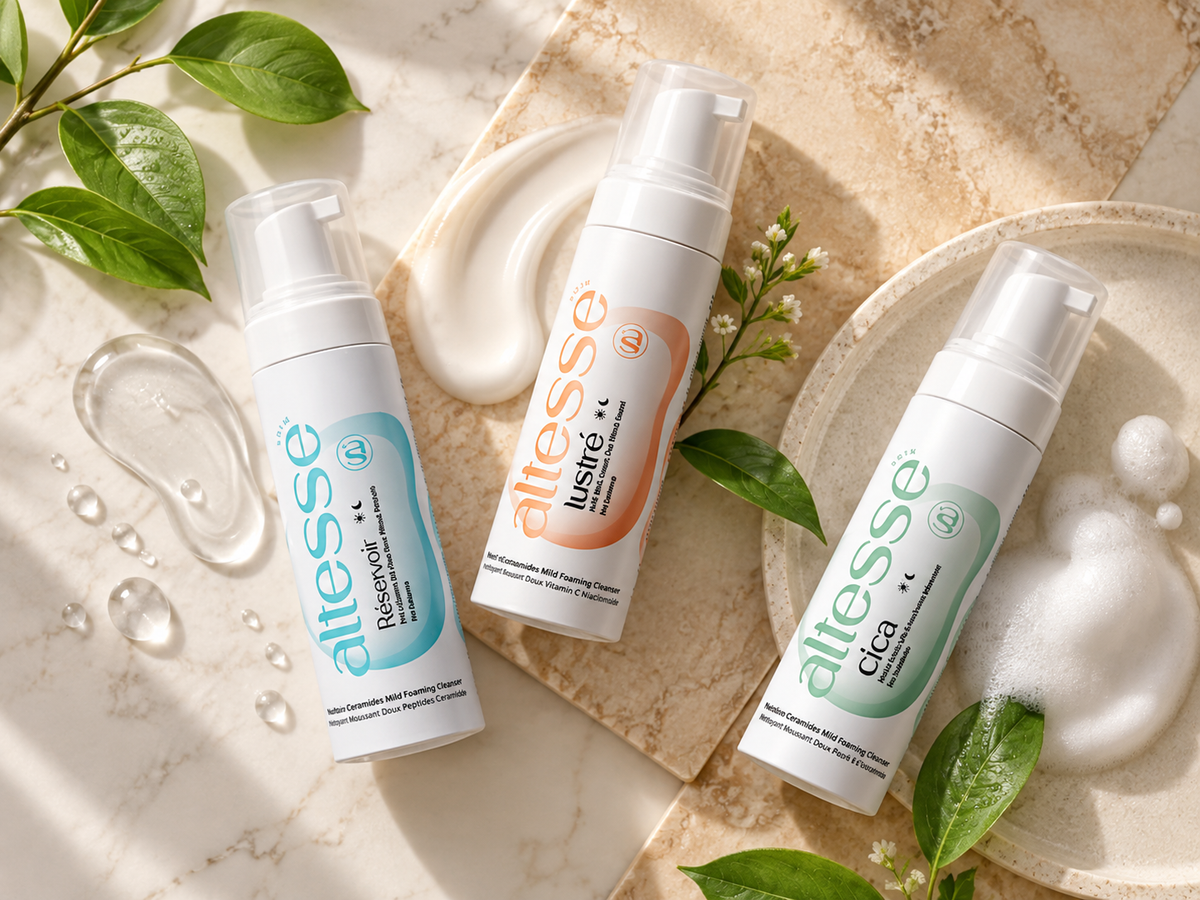
Cleanse with the Altesse Cica Mild Foaming Cleanser or the Altesse Lustré Vitamin C & Niacinamide Foaming Cleanser.
-
Moisturize with the Altesse Lustré Vitamin C & Niacinamide Brightening Gel Cream or the Altesse Cica Repairing Gel Cream for skin that needs extra barrier support.
-
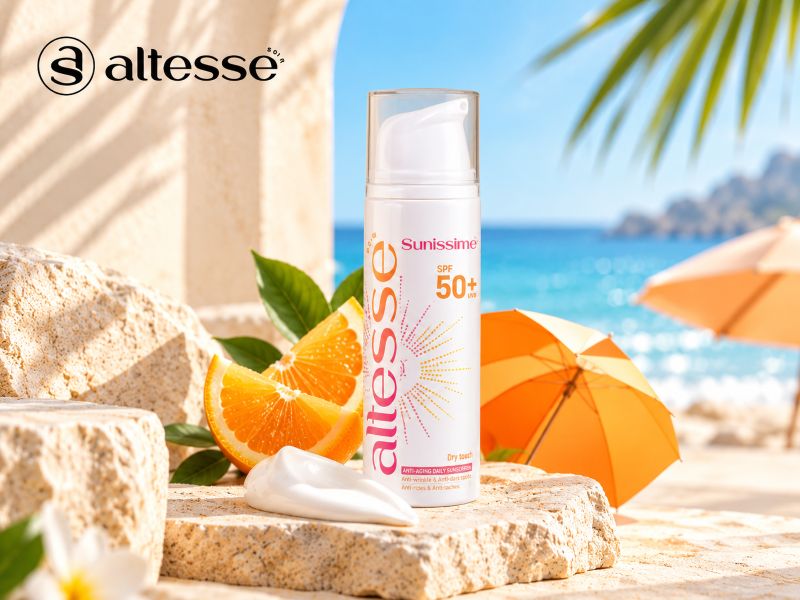
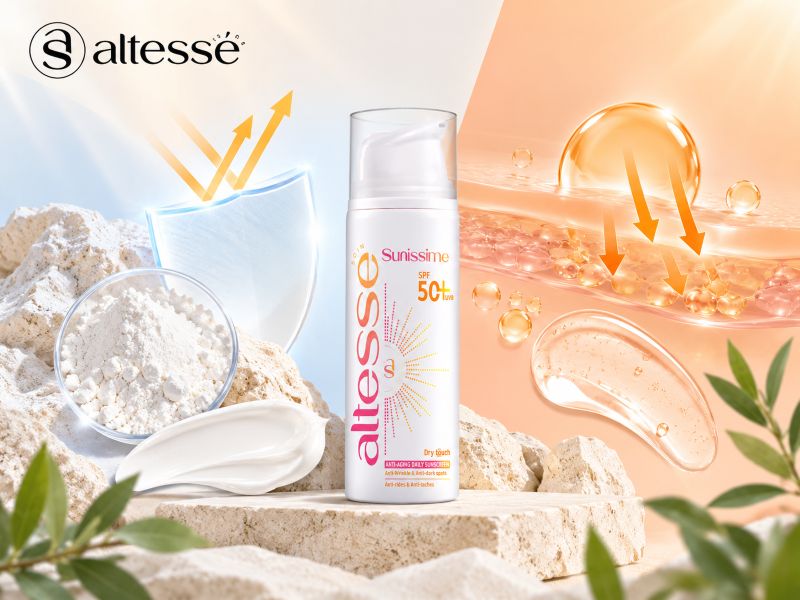
Protect with Altesse Soin Sunissime Sunscreen SPF50+ every morning.
As with any new product, introduce one thing at a time and watch how your skin responds.
Morning and Evening Routine with Vitamin C Serum
A simple routine built around vitamin C pairs antioxidant care with hydration and UV protection, without needing lots of products.
Morning
-
Cleanse with a gentle cleanser suited to your skin.
-
Vitamin C serum: Apply as directed and leave it on your skin.
-
Moisturize with a suitable moisturizer to support your skin barrier.
-
Protect with broad-spectrum SPF 30 or higher, reapplying as directed.
Combining antioxidants with sunscreen builds a more complete preventive routine, but the serum can't protect you from UV rays on its own.
Evening
-
Remove makeup and sunscreen with a suitable cleanser.
-
Cleanse gently and dry your skin.
-
Use vitamin C serum if it suits your routine and the product instructions.
-
Apply moisturizer.
You don't need to use the serum both morning and night to benefit. Once a day may be enough, depending on the product and your skin's tolerance. If you use a prescribed topical treatment, follow your doctor's plan rather than changing your routine on your own.
Common Myths About Vitamin C Serum
-
Myth: You must wash it off after 15 or 20 minutes. Reality: Most serums are made to stay on the skin unless the packaging says otherwise.
-
Myth: It has to tingle to work. Reality: Tingling isn't proof of effectiveness and may signal irritation.
-
Myth: Vitamin C prevents sunburn by itself. Reality: It can't replace sunscreen, protective clothing, or avoiding excess sun.
-
Myth: All vitamin C forms are the same. Reality: Derivatives differ in stability, formulation, and supporting evidence.
-
Myth: It removes all types of dark circles. Reality: Dark circles have many causes, including pigmentation, genetics, and shadowing around the eye area.
-
Myth: Results should show within days. Reality: Improvement in dark spots and fine lines can take weeks or months and may not be noticeable for everyone.
-
Myth: "Natural" means it can't cause allergies. Reality: Natural and synthetic ingredients can both cause irritation or allergy in some people.
When to See a Doctor
Stop using the serum and seek medical advice if you develop signs of allergy or marked irritation. Swelling of the tongue or throat, or difficulty breathing, is a medical emergency, so call emergency services immediately.
Watch for:
-
Severe or persistent burning: may signal irritation, so don't keep using it.
-
Worsening redness, rash, or clear itching: may indicate a skin reaction to the product or an ingredient.
-
Swelling of the face or eyelids: needs urgent evaluation, especially if it gets worse quickly.
-
Unusual blisters or sores: stop the product and have the cause assessed.
-
Darker marks after irritation: inflammation can worsen post-inflammatory pigmentation, so don't treat it with more active products.
-
Trouble breathing or swelling of the tongue or throat: an emergency; call emergency services immediately.
For persistent melasma, stubborn pigmentation, or severe dark circles, a dermatologist can identify the cause and recommend the right treatment. Don't rely on a vitamin C serum alone when a skin concern needs diagnosis.
Summary
The direct answer to how long to leave vitamin C serum on your face: you normally leave it on without washing it off, all day or all night, unless the product instructions say otherwise. There's no required number of minutes, so let it settle and carry on with your routine.
For the best results, choose a formula that suits your skin, follow with moisturizer and sunscreen, and avoid piling on too many active ingredients. Persistent pigmentation or repeated irritation deserves a medical evaluation rather than random product swapping.
Frequently Asked Questions
1. Can you leave vitamin C serum on your face all day?
Yes, normally. It's made to stay on the skin if the product is designed for continuous use. Follow with moisturizer and sunscreen as directed.
2. How many minutes should you wait after applying vitamin C serum?
There's no mandatory universal time. Wait until the serum has settled on your skin before applying moisturizer or sunscreen, following the manufacturer's directions.
3. Do you wash off vitamin C serum before bed?
A typical serum doesn't need to be washed off before bed. If you use it at night, leave it on and apply moisturizer afterward, unless instructions say otherwise.
4. Is it better to use vitamin C serum in the morning or at night?
Either works. Many people prefer the morning for its antioxidant role alongside sunscreen, but evening use is fine if the formula allows it.
5. Can you use vitamin C serum every day?
Yes, many formulas can be used daily according to the product directions and your skin's tolerance. If you're new to it or have sensitive skin, start gradually and stop if clear irritation appears.
6. Does vitamin C serum remove dark spots?
It may soften the look of some dark spots and improve uneven tone, but results depend on the cause, depth, and formula. Conditions like melasma may need a plan from a dermatologist.
7. Can you use vitamin C serum around the eyes?
Don't apply it near the eyes unless the formula is designed for that area and the directions say so. Dark circles may not improve if they're caused by genetics or anatomical shadowing rather than pigment.
8. Can vitamin C serum make skin dry?
Some formulas can cause dryness, redness, or stinging, especially high-strength or unsuitable products. A suitable formula and moisturizer help reduce the risk.
9. Can you use vitamin C and niacinamide together?
Yes, in many routines and there's no general need to separate them. If you use several products or have sensitive skin, introduce them gradually and watch your skin's response.
10. Can you use vitamin C with retinol?
They can be combined in some routines, but doing so may increase irritation for some people. You can use them at different times if the product directions and your routine allow.
11. When do you see results from vitamin C serum on pigmentation?
Pigmentation can take several weeks or months to improve visibly. No timeline is guaranteed, and daily sun protection is essential to prevent it from worsening.
12. How do you know if vitamin C serum has oxidized?
A clear, unusual change in color, smell, or texture can signal degradation. Check the manufacturer's directions and expiry date, and stop using the serum if you doubt its safety.
13. Does leaving vitamin C serum on longer make it work better?
Not necessarily. Leaving it on as directed is standard use, but longer doesn't equal stronger results. Outcomes depend on the formula, consistency, and tolerance.
14. Is vitamin C serum good for oily skin?
It can be, if the formula suits oily skin. A lightweight texture that doesn't clog pores is helpful, but check the full ingredients and your skin's tolerance instead of relying on texture alone.
15. Can you use vitamin C serum on dry skin?
Yes, but choose a well-tolerated formula and follow with a suitable moisturizer. If your skin is cracked or irritated, repair the barrier first before adding new actives.