Do you buy a sunscreen only to find it leaves a white cast, feels greasy, or leaves you unsure whether its protection is actually enough? The answer lies in understanding sunblock vs sunscreen, because the name alone doesn't tell you much — it's the formula, the SPF, and how you use it that actually protect your skin from harmful sun rays.
There's no fixed or official medical distinction today that makes sunblock better than sunscreen just because of the name. Both terms may be used to describe sun protection products, while the real difference lies in the type of filter: a physical or mineral sunscreen, usually containing zinc oxide and titanium dioxide, or a chemical sunscreen, which uses organic filters that absorb UV rays. Choose a product with broad-spectrum protection, an SPF of 30 or higher, that you can apply in a sufficient amount and reapply regularly.
Sunblock vs Sunscreen: Are They Two Different Types?
Sunblock and sunscreen are two common names for sun protection products, but neither name alone determines the type of filter or how effective it actually is.
The term "sunblock" has historically been associated with physical or mineral sunscreens, because they sit on the skin's surface and help scatter part of the sun's rays, while also absorbing a portion of them. Some people describe this type as acting like a shield on the skin, especially when it contains zinc oxide or titanium dioxide. Interestingly, the U.S. FDA moved away from allowing the word "sunblock" on packaging, since no product actually "blocks" the sun completely — every sunscreen reduces exposure rather than eliminating it entirely.
"Sunscreen," on the other hand, is a broader term referring to any product that filters or reduces the amount of UV rays reaching the skin. It could be physical, chemical, or a hybrid combining different filters. So you can't assume every sunscreen is chemical, or that every sunblock is physical, just based on the name written on the package.
When shopping, don't stop at the word "sun," "block," or "screen." Look for three essential elements:
- Broad-spectrum protection from UVA and UVB rays
- An SPF of 30 or higher
- A comfortable formula suited to your skin that helps you actually stick with using it
Real protection depends on the right product and how you apply it, not the marketing label alone.

Is Sunblock Always a Physical Sunscreen?
The name "sunblock" is often used to refer to physical sunscreen, but the most accurate way to know is by reading the active ingredients on the package.
If the formula contains Zinc Oxide, Titanium Dioxide, or both as active ingredients, it's a physical or mineral sunscreen. These filters work above your skin's surface, absorbing UV rays and scattering part of them — so it's scientifically inaccurate to say they only reflect rays. These formulas may suit sensitive skin, or anyone who prefers a limited, clear set of active ingredients. That said, skin response varies from person to person; some mineral sunscreens come in a dense cream that leaves a white cast, while others offer lighter or tinted formulas suited to different skin tones.
Key advantages of physical sunscreen
- Contains well-known mineral filters like zinc oxide and titanium dioxide
- Can be a comfortable option for sensitive skin when choosing a fragrance-free, low-irritant formula
- Suits anyone who prefers a more coverage-heavy cream or a tinted formula
- Available in versions made specifically for children or very sensitive skin
- Can offer a more stable feel for some skin types when the right texture is chosen
- Water-resistant formulas exist for outdoor activity
But the white cast or difficulty spreading it evenly can lead to applying less than needed, and in that case, no matter how good the product is, it won't deliver the protection level printed on the label.
Does Sunscreen Always Mean a Chemical Sunscreen?
Sunscreen doesn't necessarily mean a chemical product — it's a general description for any product that reduces skin's exposure to UV rays.
Chemical sunscreen uses organic filters that absorb UV rays and convert the energy differently before it affects the skin. Filters you might find on the label include avobenzone, octocrylene, octinoxate, octisalate, and homosalate, depending on the formula and local regulations.
These formulas tend to have a lighter texture and leave less of a white cast, which is why many people prefer them, especially those with oily or combination skin or anyone who wears makeup daily. But some people may notice stinging, especially around the eyes or after using strong exfoliants or treatments, and in that case, trying a simpler formula or a physical sunscreen can help.
It's important to know that the phrase "chemical sunscreen" doesn't automatically mean the product is harmful or unsafe. The name refers to the type of filters, not a judgment on the product's quality. Both chemical and physical sunscreens can protect your skin effectively when they're labeled broad-spectrum, carry a suitable SPF, and are used correctly.
How Do Sunblock and Sunscreen Work Differently?
Physical sunblock and chemical sunscreen work in partly different ways, but the goal is the same: reducing the amount of harmful rays that reach your skin.
Physical, or mineral, sunscreen acts as a protective layer on the skin's surface that contains inorganic filters. These filters absorb part of the UVA and UVB rays, and scatter or reflect another part, depending on particle properties and the product's formula.
Chemical sunscreen, meanwhile, works more like a sponge; its organic filters absorb UV rays and deal with their energy before it can directly damage the skin. This comparison is useful for understanding the concept, but it doesn't mean either type forms a complete barrier or blocks 100% of the sun.
| Comparison | Sunblock / Physical Sunscreen | Sunscreen / Chemical Sunscreen |
|---|---|---|
| Most common name | Sunblock, mineral sunscreen, physical sunscreen | Sunscreen, chemical sunscreen |
| Typical active ingredients | Zinc oxide, titanium dioxide | Organic filters like avobenzone and octocrylene |
| Protection method | Absorbs and scatters, may reflect part of UV rays | Absorbs UV rays and dissipates their energy |
| Product texture | Can be creamy or denser | Usually lighter and easier to spread |
| White cast | May be noticeable depending on the formula and skin tone | Usually less visible or absent |
| Sensitive skin | Can be a suitable option for many people | May also suit it if the formula is gentle |
| Makeup and oily skin | Needs a lightweight or tinted formula | Lightweight gel and fluid options are often available |
Don't assume the two types are always competitors. Hybrid formulas exist that combine mineral and chemical filters, and they may suit anyone who wants a balance between protection, texture, and transparency. If you'd like a deeper breakdown of exactly how each mechanism works, our full guide to physical vs chemical sunscreen covers this comparison in detail.
Why Do You Need Sunscreen Every Day?
Sunscreen matters because repeated UV exposure can cause cumulative damage, even if no obvious burn shows up after every outing.
UV rays are broadly split into UVA and UVB. UVB is more linked to sunburn, while UVA can reach deeper skin layers and contribute to changes linked to photoaging, like loss of elasticity, wrinkles, and pigmentation. That's why the phrase "broad spectrum" matters — it means protection from both types.
Key reasons to use sunscreen regularly
- Reducing sunburn: SPF reflects the level of protection from burn-related rays, especially UVB
- Supporting pigmentation prevention: sun exposure can worsen dark spots, melasma, and acne marks
- Helping protect skin from photoaging: repeated UV exposure is linked to wrinkles and spots
- Supporting your skincare routine: exfoliants, retinoids, and some pigmentation treatments make sticking with protection even more important
- Protection during driving and daily activities: exposure isn't limited to the beach — it can happen while walking, driving, or sitting near windows
- Reducing damage from cumulative exposure: the sun's effect builds up over time, so regular use is more helpful than seasonal use alone
- Complementing other protective measures: sunscreen doesn't replace shade, a hat, sunglasses, or protective clothing
The American Academy of Dermatology recommends using a broad-spectrum, water-resistant sunscreen with an SPF of 30 or higher, reapplied every two hours while outdoors or after swimming or sweating. For a deeper look at exactly how consistent, daily protection pays off over time, see our full guide on the best daily sunscreen — and if you're still weighing whether this step is really worth the hassle, our article on the benefits of sunscreen for skin breaks down exactly what's at stake.
How Do You Choose the Right Product for Your Skin?
Choose your sunscreen based on broad-spectrum protection and how well the texture suits your skin, not just whether it's labeled "sunblock" or "sunscreen."
1. Check for "broad spectrum"
Look for the phrase "Broad Spectrum." This means the product protects against both UVA and UVB rays, not just the ones linked to burning.
2. Choose SPF 30 or higher
Dermatology bodies recommend SPF 30 or higher. According to the American Academy of Dermatology, SPF 30 filters around 97% of UVB rays when applied correctly and in sufficient amounts under test conditions — but it doesn't provide complete coverage, so you still need to reapply it.
3. Identify your skin type
- Oily skin: choose a gel, fluid, or lightweight non-oily formula to reduce shine
- Dry skin: a cream with hydrating ingredients may suit you better, while avoiding formulas that cause tightness or flaking
- Sensitive skin: choose a fragrance-free formula with fewer ingredients, and you may prefer physical sunscreen if chemical filters cause stinging
- Acne-prone skin: look for a lightweight texture that doesn't leave a heavy layer, and monitor your skin's response instead of relying on a single label claim
Knowing your skin type with more precision first makes every one of these choices a lot easier.
4. Choose water resistance when needed
If you sweat, swim, or do outdoor activities, choose a water-resistant sunscreen. Remember that water resistance doesn't mean protection lasts all day — you need to reapply after water, sweating, and towel-drying.
5. Test the texture before committing
If a cream clumps, stings your eyes, or leaves a bothersome white cast, you may end up applying less of it or avoiding it altogether. That's why the best sunscreen is the one that suits you and that you can use every day in a sufficient amount.
How Do You Use Sunscreen Correctly?
Using sunscreen in a sufficient amount and reapplying it are what actually deliver the protection printed on the package, whether it's labeled sunblock or sunscreen.
- Start with clean skin: apply your usual morning routine, like serum and moisturizer if needed, then make sunscreen the last skincare step before makeup
- Spread a sufficient amount: cover your face, neck, ears, and upper chest if exposed. Applying too little reduces the actual level of protection
- Don't neglect sensitive areas: apply the product gently around your hairline, the sides of your nose, and behind your ears, avoiding your eyes
- Apply it before sun exposure: follow the product's instructions, and apply it a suitable amount of time before heading out or doing an outdoor activity
- Reapply every two hours: while staying outdoors, and after swimming, sweating, or towel-drying
- Use additional protection methods: seek shade when possible, and wear a wide-brimmed hat, sunglasses, and clothing that covers exposed areas
- Check the expiration date: don't use an expired product, or one whose smell, texture, or color has noticeably changed
Expert tip: if your sunscreen leaves a white cast or clumps, apply it in two thin, even layers instead of one thick layer — this helps with better distribution without reducing the amount of protection.
Warning: don't apply sunscreen over severely inflamed, cracked skin, or a painful sunburn without consulting a specialist, and stop any product that causes swelling, a rash, or strong burning.
What Products Can Be Combined with Sunscreen?
Sunscreen can be used with most skincare products, as long as it's the last step in your routine and isn't mixed with another product in your hand.
Safe and effective with
- Hyaluronic acid: applied before your moisturizer and sunscreen to help with hydration without canceling out the protection
- Niacinamide: can be used before sunscreen within a routine for oily, combination, or acne-prone skin
- Vitamin C: may be used in the morning before sunscreen as part of an antioxidant routine, as long as your skin tolerates the formula
- A light moisturizer: helpful for dry or irritated skin, left to absorb before applying sunscreen
- Foundation and makeup: applied over sunscreen once it's settled, but they don't replace reapplication
If you're deciding between niacinamide and hyaluronic acid for your morning routine before sunscreen, our comparison of niacinamide vs hyaluronic acid can help you choose the right one for your goal.
Use with caution
- Retinoids: best used in the evening, and may increase skin's sun sensitivity, so don't compromise on daytime protection
- Exfoliating acids like AHA and BHA: especially with sensitive skin — start gradually and don't over-exfoliate
- Benzoyl peroxide: may cause dryness or irritation, so use a gentle moisturizer and sunscreen
Avoid
- Mixing sunscreen with moisturizer or foundation: mixing can reduce the evenness of the protective layer and make the amount applied insufficient
- Fragrances and essential oils right before sun exposure: may irritate sensitive skin for some people
- Exfoliating irritated skin: pause strong products if noticeable redness or flaking appears, and see a dermatologist if symptoms continue
What Results Can You Expect from Sticking with Protection?
The main result of sunblock or sunscreen is reducing new damage, so its benefit shows up more clearly with consistency than as an instant change.
Week 1
- Lower likelihood of burning and redness linked to direct exposure when you use enough product
- You learn how the product suits your skin: texture, shine, white cast, and comfort around your eyes
Two weeks to a month
- You may notice existing spots aren't worsening as easily with daily exposure, especially when avoiding intense sun
- Skin becomes more stable if you're using treatments for pigmentation or acne and sticking with reapplication
One to three months
- The cumulative effect of repeated UV exposure decreases
- You support the gradual results of your skincare routine, like improved tone evenness when paired with a suitable care plan — including a brightening cleanser for hyperpigmentation if uneven tone is one of your goals
Important: sunscreen alone doesn't erase deep pigmentation, wrinkles, or scars. Its role is protecting against additional damage, and persistent skin conditions may need a treatment plan set by a dermatologist.

Common Mistakes When Using Sunblock and Sunscreen
The most common mistake is assuming that buying the "best" cream is enough on its own, while protection also depends on how you apply it and reapply it.
Mistake 1: only applying sunscreen once in the morning Fix: reapply every two hours while outdoors, and after swimming, sweating, or towel-drying.
Mistake 2: applying less than needed Fix: spread an amount that evenly covers all exposed skin, since too little won't deliver the SPF printed on the label.
Mistake 3: buying based on the word "sunblock" or "sunscreen" alone Fix: check the active filters, the "broad spectrum" phrase, the SPF, and how well the formula suits your skin.
Mistake 4: believing SPF 50 means you can stay in the sun all day Fix: SPF doesn't mean a fixed number of protection hours — you still need to reapply and use additional protective measures.
Mistake 5: forgetting your neck, ears, and hairline Fix: extend application to all exposed areas, not just your face.
Mistake 6: relying on makeup with SPF alone Fix: apply a standalone sunscreen first; the usual amount of makeup typically isn't enough to deliver the protection listed.
Mistake 7: skipping sunscreen on cloudy days Fix: UV rays aren't limited to strong sunny days — make protecting your skin a habit based on your daily exposure level.
Quick Facts About Sunblock and Sunscreen
- Sunblock and sunscreen aren't always two separate medical categories; the commercial name alone doesn't determine the filter type or level of protection
- If a product contains zinc oxide or titanium dioxide, it's a physical or mineral sunscreen
- Chemical sunscreen uses filters that absorb UV rays, while mineral filters absorb, scatter, and may reflect part of the rays
- "Broad spectrum" means protection from both UVA and UVB rays
- SPF 30 filters around 97% of UVB rays under test conditions with sufficient application, but it doesn't provide complete coverage
- Reapplying sunscreen every two hours outdoors, or after swimming or sweating, is recommended
- Water-resistant sunscreens aren't water-resistant all day, and need reapplying
- The best sunscreen is the one that suits your skin type and that you use consistently, not necessarily the thickest, most expensive, or most popular one
What Are the Common Misconceptions?
Misconception: sunblock completely blocks the sun Truth: no sunscreen blocks 100% of sun rays. Whatever the SPF, you need a sufficient amount, reapplication, and extra protection from shade and clothing.
Misconception: sunscreen always means a chemical product Truth: "Sunscreen" is a general term covering physical, chemical, and hybrid sunscreens. Check the active ingredients instead of relying on the name.
Misconception: physical sunscreen only reflects rays Truth: mineral filters don't just reflect rays — they also absorb a significant portion of them, along with scattering or reflecting another part.
Misconception: every sunscreen labeled SPF 50 offers the same protection Truth:** actual performance depends on whether the product is broad-spectrum, the amount applied, water resistance, and reapplication — not the number alone.
Misconception: people with oily skin don't need a sunscreen cream Truth:** oily skin needs protection just like any other skin type, but you can choose a lightweight gel or fluid to avoid shine and bothersome pore-clogging.
Misconception: sunscreen is only needed on vacation or at the beach Truth:** protection isn't limited to vacations. Daily exposure while commuting, driving, and walking has a cumulative effect, which is why regular use matters.
Which Types of Sunscreen Suit Each Skin Type?
There's no single ideal type for everyone; choosing the right one depends on your skin's sensitivity, texture preference, daily activity, and how consistently you can reapply it.
| Your Skin Type or Need | Sunscreen Type to Start With | What to Look For |
|---|---|---|
| Sensitive skin | Physical sunscreen or a simple formula | Fragrance-free, broad-spectrum, non-irritating |
| Oily skin | Gel or lightweight fluid sunscreen | Non-oily texture, no bothersome shine |
| Dry skin | Hydrating sunscreen cream | Hydrating ingredients, no tightness |
| Combination skin | Lightweight fluid or lotion | A balance between hydration and easy absorption |
| Acne-prone skin | Lightweight gel or cream | A comfortable formula that doesn't increase clogging |
| Skin with pigmentation | Broad-spectrum sunscreen, possibly tinted | SPF 30 or higher, consistent use and reapplication |
| Sports or swimming | Water-resistant sunscreen | Water resistance and clear reapplication instructions |
If your skin leans combination, our full guide on the best routine for combination skin can help you build the rest of your routine around your sunscreen choice.
If you're torn between physical and chemical sunscreen, start with a gentle, broad-spectrum formula. Test the product for several days in your actual conditions: under makeup, at work, in the heat, and after moving around. This practical test is the best way to know if the product suits you.
Daily Skin Protection Routine
A protection routine doesn't need dozens of products — what matters is that it's simple, comfortable, and something you can actually stick with.
Morning routine
- Gentle cleanser: use a suitable cleanser without over-scrubbing, especially if your skin is sensitive or oily
- Optional serum: you can add vitamin C, niacinamide, or hyaluronic acid depending on your needs and skin tolerance
- Moisturizer: use a light cream or hydrating gel if your skin needs extra hydration
- Sunscreen: choose a broad-spectrum sunblock or sunscreen with SPF 30 or higher, and apply it as the last step before makeup
- Reapplication: keep the product in your bag if you'll be out, and reapply after sweating, swimming, or two hours outdoors
Evening routine
- Remove sunscreen residue: gently cleanse your skin, especially if you wore makeup or a water-resistant sunscreen
- A suitable cleanser: use one that doesn't cause dryness or tightness
- Targeted treatment when needed: use a pigmentation or acne treatment, or a retinoid, only in the evening based on your skin's tolerance or medical guidance
- A supportive moisturizer: apply a moisturizer that helps support the skin barrier overnight
If you're prepping your skin for a big event, our full guide on the best skincare routine before a wedding walks through how to build daily sun protection into a longer-term plan.
Best Sunblock and Sunscreen
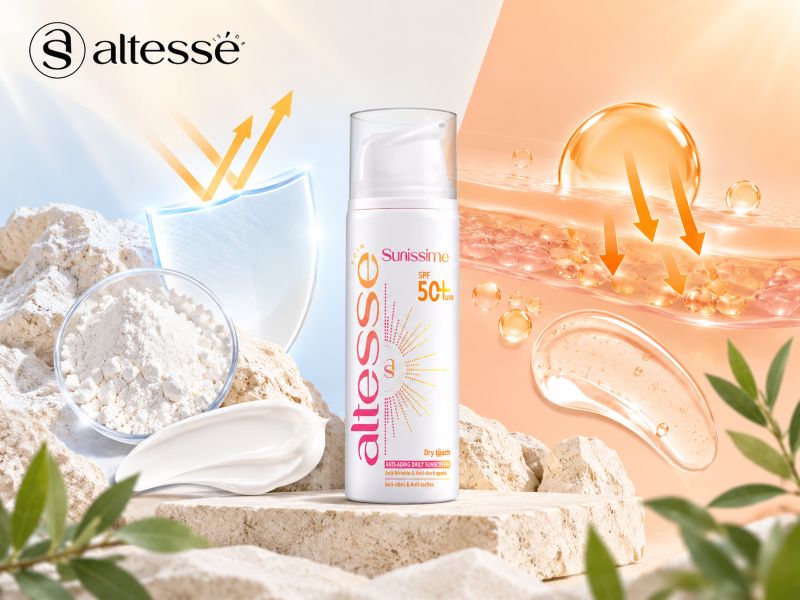
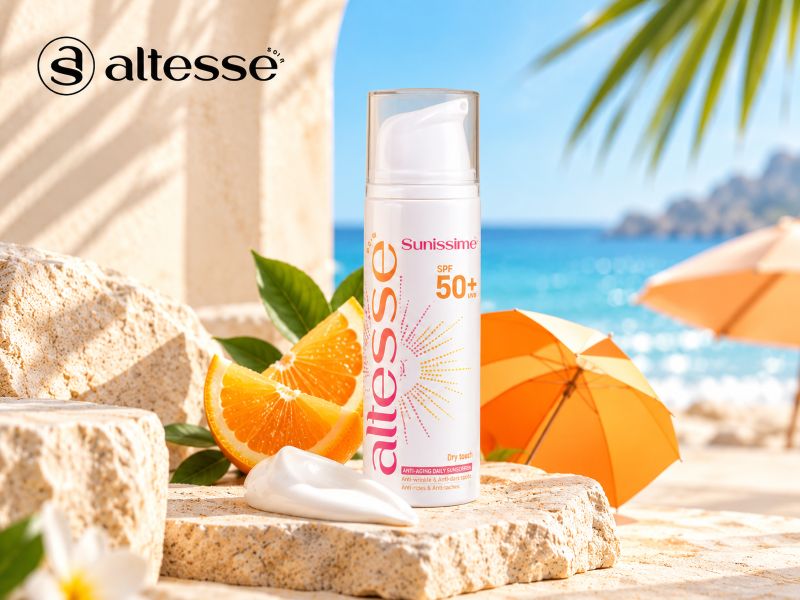
Sunissime Hydrating Daily Sunscreen SPF50+ 50ml
Beyond the technical debate between the two terms, what actually matters is real, broad-spectrum protection you can rely on daily — and that's exactly what this product delivers with confidence.
Key Ingredients & Benefits
- Protection against up to 98% of UVB rays plus broad-spectrum UVA coverage
- Hydrating formula that prevents the dryness common with traditional sun protection
- No white cast and no greasy shine, suitable under makeup
When Will You See Results?
Immediate protection from the first application, with reapplication needed every 2 to 3 hours during direct exposure.
How to Use
- Apply as the last step each morning, even on cloudy days
Comprehensive protection in one simple concept: real effectiveness without complicated terminology.
Get complete, reliable protection with Sunissime Hydrating Daily Sunscreen SPF50+ 50ml.
Sunissime Anti-Aging Daily Sunscreen SPF50+ 50ml
A second option for anyone who wants comprehensive UVA/UVB protection combined with anti-aging care in one product that's easy to use every day.
Key Ingredients & Benefits
- Broad-spectrum protection from both UVA and UVB
- Nourishing ingredients that support skin elasticity and reduce cumulative damage
- Lightweight texture fully compatible with makeup
When Will You See Results?
Effective protection from the first application, with reapplication needed every 2 to 3 hours.
How to Use
- Apply a generous amount each morning as the last step before makeup
A simple daily investment in protecting your skin from every type of sun damage.
Invest in your skin's long-term protection with Sunissime Anti-Aging Daily Sunscreen SPF50+ 50ml.
When Should You See a Doctor Immediately?
Seek urgent medical care if sudden swelling appears in your face, lips, or around your eyes, difficulty breathing, or severe dizziness after using sunscreen — these may be signs of a severe allergic reaction.
See a dermatologist soon if any of the following appear:
- A painful rash, severe itching, or blisters after using the product
- Extensive sunburn with severe pain, fever, nausea, dizziness, chills, or signs of dehydration
- Persistent redness and peeling despite stopping the product
- A clear worsening of eczema, rosacea, or dermatitis after applying sunscreen
- Pigmentation increasing despite sticking with protection, or new, unusual skin spots appearing
- A change in a mole's shape, color, size, or bleeding from it
- Severe skin pain or a possible infection after a sunburn or skin reaction
Keep the packaging or a photo of the ingredients list when seeing a doctor, since it can help them identify the potential irritant or choose a more suitable alternative. And if underarm sensitivity is part of your broader skincare picture, our guide to an alcohol-free deodorant for sensitive skin applies the same gentle-formula thinking to that area too.
FAQ: Sunblock vs Sunscreen
What's the real difference between sunblock and sunscreen? There's no fixed difference based on the name alone. "Sunblock" is often linked to physical or mineral sunscreen, while "sunscreen" is a general term that may include physical, chemical, or hybrid products. Check the active ingredients, the "broad spectrum" phrase, and the SPF.
Is sunblock better than sunscreen? Not necessarily. The best option is the one that provides broad-spectrum protection with SPF 30 or higher, suits your skin, and that you can apply in the right amount and reapply consistently.
Is physical sunscreen suitable for sensitive skin? It can suit many people with sensitive skin, especially fragrance-free formulas. But sensitivity can come from other ingredients in the product, so it's best to test it gradually and see a doctor if a rash or persistent itching occurs.
Does chemical sunscreen cause pigmentation? No. Pigmentation is usually linked to sun exposure and insufficient protection or infrequent reapplication. If a chemical sunscreen is broad-spectrum, suits your skin, and is used correctly, it can offer effective protection.
How do I know a product is a physical sunscreen? Check the active ingredients. The presence of zinc oxide or titanium dioxide, or both, points to a physical sunscreen.
Is SPF 50 better than SPF 30? SPF 50 filters a slightly higher level of UVB rays under test conditions, but it doesn't offer 100% protection and doesn't replace reapplication. What matters most is consistent, correct use of broad-spectrum protection.
Do I need sunscreen indoors? If you're near windows, driving, or heading out during the day, using sunscreen can be beneficial as part of your daily routine. Your actual need depends on your level of sun exposure and your skincare plan.
Can sunblock be applied under makeup? Yes. Apply it as the last step in your morning routine before makeup, and wait a bit for it to settle. If the texture is heavy or leaves a white cast, choose a lighter formula or a tinted sunscreen that suits your skin tone.
Do I need to reapply sunscreen even if it's water-resistant? Yes. Water-resistant sunscreen needs reapplying every two hours while outdoors, and after swimming, sweating, or towel-drying.
Is spray sunscreen a good option? Sunscreen spray can be a practical option for the body, but you need to spray enough and spread it well to ensure full skin coverage. Don't spray it near your face or inhale it — spray it into your hand first, then apply it to your face carefully.
Can sunscreen be mixed with a cream or vitamin C? Use vitamin C or your moisturizer first, then apply sunscreen as a separate layer. Don't mix products with sunscreen in your hand, since that can change how the protective layer is distributed.
Is chemical sunscreen suitable for oily skin? Yes, and there are lightweight gel and fluid options suited to oily skin. Look for a comfortable, non-oily, broad-spectrum formula, since choosing the right texture helps you stick with it daily.
To ask about choosing the right product or get help building a skincare routine, you can reach out via WhatsApp, email at info@altessesoin.com, or call +2 010 0114 3374.