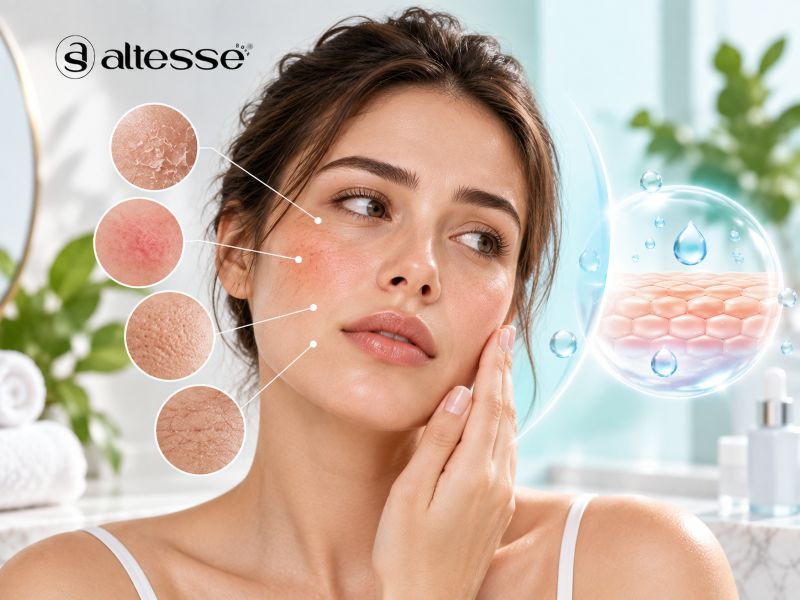
Bought a hyaluronic acid serum expecting plump, dewy skin, only to end up feeling just as tight and dry as before? The product probably isn't the problem — How to Use Hyaluronic Acid Serum؟ how you're applying it is. Hyaluronic acid only delivers on its promise when it's used correctly, and the gap between how most people apply it and how it actually needs to be applied is wider than you'd think.
Hyaluronic acid serum is a concentrated formula built to hydrate skin and improve the look of lines linked to dryness. But because it's a humectant — an ingredient that draws water in rather than supplying it directly — the technique behind applying it matters just as much as the product itself. Get it wrong, and hyaluronic acid can actually leave skin feeling more dehydrated than before you started.

What Does Hyaluronic Acid Serum Actually Do?
Hyaluronic acid serum is a concentrated liquid that works by drawing water into the skin and holding onto it, giving skin a plumper, more hydrated look with consistent use.
Hyaluronic acid is a substance your skin already produces naturally, and its defining trait is its ability to bind an enormous amount of water — reportedly up to a thousand times its own weight. Think of it as a sponge: without water, it's brittle and stiff, but once hydrated, it becomes soft and plump. That's exactly the mechanism behind why hyaluronic acid serum works so well for tight, dehydrated, or dull-looking skin.
If you want a deeper breakdown of exactly what this ingredient does for your face beyond application technique, our full guide on what hyaluronic acid does for your face covers the science in more detail.
Why Does the Application Method Matter So Much?
The biggest mistake with hyaluronic acid serum isn't the product — it's applying it to skin that's too dry, which can cause the exact opposite of what you're trying to achieve.
Because hyaluronic acid draws moisture toward itself, it needs a water source to pull from. If your skin is completely dry when you apply it, and the surrounding air is also dry, the ingredient can end up pulling moisture from deeper layers of your own skin instead of the environment — leaving you more dehydrated, not less. This is exactly why the technique matters as much as the ingredient itself.
How to Apply Hyaluronic Acid Serum, Step by Step
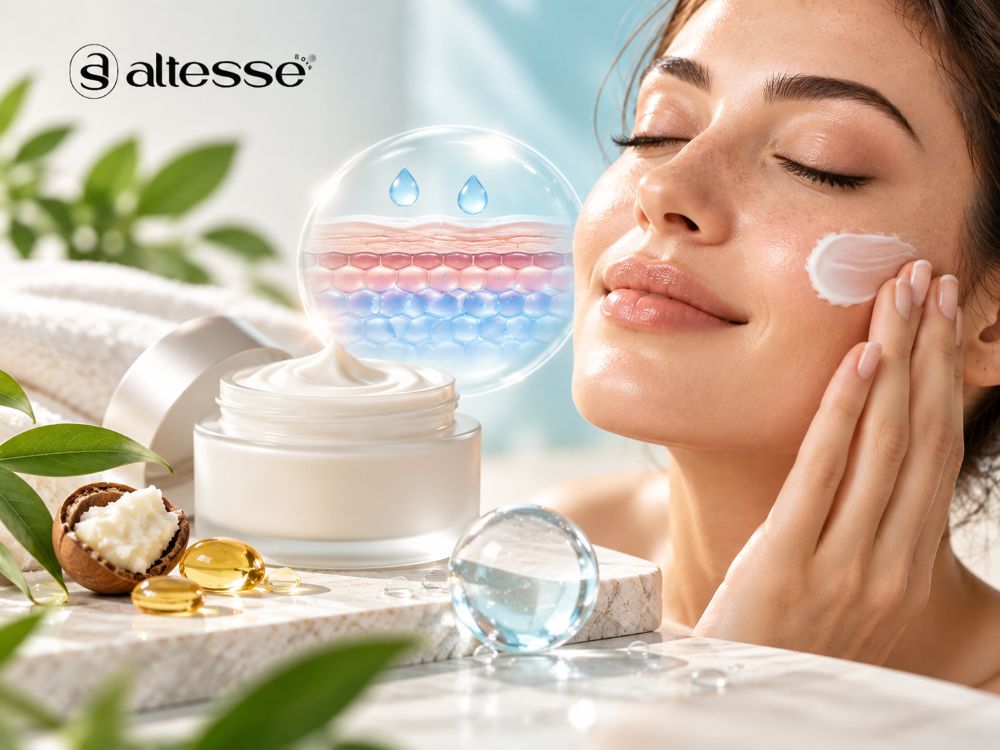
Apply your hyaluronic acid serum to slightly damp skin, never completely dry skin, and always follow it with a moisturizer to lock the hydration in.
- Cleanse your skin: use a gentle cleanser to remove dirt, oil, and any makeup
- Pat your face, don't dry it fully: leave your skin slightly damp — this gives the hyaluronic acid water to draw from right on the surface
- Apply 2 to 3 drops: that's usually enough to cover your entire face and neck
- Pat, don't rub: gently press the serum into your skin with your fingertips, working outward and upward, avoiding the eye area
- Wait for it to absorb: give it around 30 to 60 seconds before your next step
- Seal it in with a moisturizer: apply your cream immediately after, while the serum is still slightly damp on your skin — this is the step most people skip, and skipping it is what lets the moisture evaporate instead of staying locked in
- Apply sunscreen in the morning: an essential step to protect your results throughout the day
Expert tip: if your skin is very dry, applying the serum right after a shower, while your bathroom is still steamy, gives hyaluronic acid even more moisture in the air to draw from.
Warning: never apply hyaluronic acid to completely dry skin and skip the moisturizer step afterward — in a dry environment, this can actually reduce hydration instead of adding it.
Should You Use Hyaluronic Acid Serum Morning or Evening?
Hyaluronic acid serum can be used both morning and evening, and many people benefit from applying it twice daily as part of a consistent hydration routine.
In the morning, it works well as a base layer that helps skin look plumper and more prepped for makeup, followed by a moisturizer and sunscreen. In the evening, it can help support skin's overnight recovery when paired with a suitable night cream. There's no strict rule that says it has to be one or the other — consistency matters more than timing.
Does the Molecular Weight of Hyaluronic Acid Matter?
Yes. Look for a serum that combines multiple molecular weights of hyaluronic acid, since research suggests this combination delivers better results than a single molecular weight alone.
Smaller molecules can penetrate more deeply into the skin, while larger molecules sit on the surface and hydrate the outer layers. A formula that combines both is generally considered more effective at improving dryness, roughness, and the look of fine lines within just one to two weeks of consistent use, compared to a single-weight formula working on just one layer of skin.
How to Layer Hyaluronic Acid with the Rest of Your Routine
Hyaluronic acid serum fits into your routine right after cleansing and before your moisturizer — it's rarely the last step, since its job is to draw water in, not seal it.
Safe and effective with
- Niacinamide: calms skin and supports the barrier without interfering with hyaluronic acid's hydrating effect — if you're trying to decide which one your skin needs more, our comparison of niacinamide vs hyaluronic acid breaks down exactly how each one works
- Vitamin C: can be layered underneath hyaluronic acid in the morning as part of an antioxidant-focused routine
- Ceramides: help lock hyaluronic acid's hydration into the skin barrier rather than letting it evaporate
Use with caution
- Retinol: can be used in the same routine, but is best introduced gradually if your skin is sensitive, since retinol alone can be drying
- Exfoliating acids: apply hyaluronic acid afterward to help replenish hydration that exfoliation can temporarily strip away
Avoid
- Skipping the moisturizer step entirely: hyaluronic acid without a sealing layer is one of the most common reasons people don't see results
- Layering too many active ingredients at once: introduce new products one at a time, especially if your skin reacts easily
If you're not sure exactly where hyaluronic acid, niacinamide, or a treatment serum like vitamin C should sit relative to each other, our full guide on the correct face cream order walks through the entire sequence step by step.
Is Hyaluronic Acid Serum Suitable for Every Skin Type?
Hyaluronic acid suits nearly every skin type, but how you apply it and what you pair it with can shift slightly depending on your skin's needs.
- Oily and acne-prone skin: boosts hydration without a greasy residue and can actually improve the skin barrier's cohesion, which helps reduce excess oil production over time
- Dry skin: benefits most from a multi-molecular-weight formula combined with a richer moisturizer to seal everything in
- Combination skin: a lightweight formula helps relieve dry patches without adding extra oil to naturally oilier areas
- Sensitive or irritated skin: hyaluronic acid is generally gentle, but if your skin is reactive in general, our guide on the best serum for irritated skin covers ingredients that calm skin alongside hydrating it
Common Mistakes When Using Hyaluronic Acid Serum
- Applying it to completely dry skin: this is the single biggest mistake, and it can actively work against you in a dry climate or air-conditioned room
- Skipping moisturizer afterward: without a sealing layer, the hydration hyaluronic acid draws in can evaporate within hours
- Using too much product: a few drops is enough — more doesn't mean deeper hydration
- Rubbing instead of patting: vigorous rubbing can cause irritation and doesn't improve absorption
- Expecting it to replace your moisturizer: hyaluronic acid draws water in, but it doesn't create a barrier to keep that water from evaporating — that's your moisturizer's job
When Do Results Show Up?
Instant plumpness and hydration are usually visible from the very first application when the serum is used correctly. Improvements in roughness, dryness, and the look of fine lines can appear within one to two weeks with a multi-molecular-weight formula, while continued, consistent use over several weeks supports longer-term improvements in skin texture and elasticity.

Best Hyaluronic Acid Serum
Rèservoir Peptides Ceramides Hydrating Serum 30ml
The essential first step in learning how to properly use a hyaluronic acid serum, and in getting the full benefit of its remarkable ability to draw water in and hold onto it within your skin.
Key Ingredients & Benefits
- A high concentration of sodium hyaluronate with fine, fast-absorbing molecules
- Ceramides and peptides that prevent the moisture drawn in by the serum from evaporating
- Softens fine lines caused by dryness
When Will You See Results?
Instant hydration and plumpness from the first use. Improved elasticity takes 3 to 4 weeks of consistent use.
How to Use
- Apply to slightly damp skin, not completely dry skin — this is its real secret to effectiveness
- Follow immediately with a moisturizer to lock in hydration, morning and evening
Correct application on damp skin is the difference between a real result and a limited one.
Learn the correct technique with Rèservoir Peptides Ceramides Hydrating Serum 30ml.
Rèservoir Peptides Ceramides Hydrating Gel Cream 50ml
The essential follow-up step after your hyaluronic acid serum — without it, your skin can lose the moisture the serum drew in within just a few hours.
Key Ingredients & Benefits
- Locks the moisture drawn in by the serum into the skin's layers
- Triple ceramide that prevents water loss throughout the day
- Lightweight texture that absorbs quickly with no greasy residue
When Will You See Results?
Instant comfort from the first use. Within two weeks, skin looks noticeably plumper and softer.
How to Use
- Apply immediately after your serum, without waiting for it to fully dry
The step that guarantees hyaluronic acid keeps working all day, not just for a few minutes.
Don't skip the sealing step with Rèservoir Peptides Ceramides Hydrating Gel Cream 50ml.
If dryness and fine lines are showing up together, our full guide to a serum for dry skin and fine facial lines goes deeper into building a complete routine around both concerns at once.
FAQ: How to Use Hyaluronic Acid Serum
Can I use hyaluronic acid serum every day? Yes, it's gentle enough for daily use and can be part of both your morning and evening routine.
Is it safe to leave hyaluronic acid on overnight? Yes, hyaluronic acid is safe to leave on your face overnight, especially when followed by a moisturizer.
Should I apply hyaluronic acid before or after moisturizer? Before. Apply it to damp skin first, then follow immediately with your moisturizer to lock the hydration in.
Can hyaluronic acid serum make my skin drier? It can, but only if applied to completely dry skin in a dry environment with no moisturizer afterward. Used correctly — on damp skin, sealed with a cream — it does the opposite.
Does hyaluronic acid help with fine lines? Yes, by improving hydration and plumpness, it can make fine lines linked to dryness less visible, especially with a multi-molecular-weight formula.
Talk to Our Skincare Experts
If you're looking for the right hyaluronic acid serum for your skin, the Altesse Soin team is here to help you choose the products that fit your daily routine.
WhatsApp: https://wa.me/201001143374
Email: info@altessesoin.com
Phone: +2 010 0114 3374