Does every breakout leave behind a dark mark that lingers long after the pimple itself is gone? The problem usually isn't the blemish — it's what it leaves behind. The right serum for acne scars and pigmentation, combined with daily sunscreen and a consistent routine, can gradually fade those marks and improve overall skin texture.
The best serum for acne scars and pigmentation is one suited to your skin type that contains a targeted active ingredient — such as azelaic acid, niacinamide, vitamin C, or a suitable retinoid — for post-inflammatory marks. A serum alone isn't enough; daily broad-spectrum sunscreen is an essential part of treating and preventing dark spots from becoming more noticeable.
Medical note: This article is for educational purposes and doesn't replace an evaluation by a dermatologist, especially in cases of painful acne, deep scarring, or severe irritation.
What Is a Serum for Acne Scars and Pigmentation?
A serum for acne scars and pigmentation is a lightweight, concentrated formula applied after cleansing to help even out skin tone and reduce the look of dark marks left behind by inflammation.
Once a breakout calms down, you may notice a brown, gray, or reddish mark where the pimple used to be. Brown marks are usually known as post-inflammatory hyperpigmentation — they aren't necessarily a true scar, but rather the skin's response to inflammation, where melanin production temporarily increases. This tends to be more common and more visible on medium and deeper skin tones.
Think of skin like a page that's been hit with a drop of ink: the pimple is the initial event, and the pigmentation is the mark left behind. A serum won't erase it overnight, but it can support skin renewal or limit further pigment formation, depending on its ingredients.
It's important to tell the difference between:
-
Flat discoloration: Brown or dark marks that usually respond to topical care and sun protection.
-
Acne scarring: Pits, indentations, or raised marks in the skin, which typically need professional evaluation and different treatment options.
-
Active breakouts: Need to be treated in parallel, or new marks will keep appearing.
Why You Need a Serum for Post-Acne Marks

The right serum can gradually reduce the look of dark marks, but it works best as part of a balanced routine that treats active acne while preventing new pigmentation.
Key expected benefits:
-
Fading dark marks: Ingredients like azelaic acid, niacinamide, vitamin C, and kojic acid are commonly used topically to help improve post-inflammatory hyperpigmentation.
-
More even skin tone: Consistency can reduce the contrast between old acne sites and the rest of the face.
-
Improved texture: Some ingredients, such as topical retinoids, may support cell renewal and long-term texture improvement.
-
Fewer new marks: When active breakouts are properly treated, the chance of additional pigmentation drops.
-
Lightweight layering: A serum's texture is usually light enough to layer daily without feeling heavy.
-
Sensitive-skin friendly options: Gentle, fragrance-free formulas can be a better starting point than aggressive exfoliation.
-
Easier consistency: One clear-purpose product makes a routine simpler to stick to.
But keep in mind: no serum guarantees instantly flawless skin. Real progress depends on consistency, not picking at breakouts, and protecting skin from the sun.
Who Is This Type of Serum For?
This category of serum suits many situations, but choosing the right ingredient, concentration, and application method matters more than chasing a single trending product.
-
Brown marks after acne: May benefit from pigmentation-targeted ingredients like azelaic acid or niacinamide.
-
Oily skin: A lightweight, non-comedogenic serum paired with appropriate acne treatment works best.
-
Combination skin: Can be applied to the whole face or just pigmented areas, depending on tolerance.
-
Sensitive skin: Start gradually with a simple formula and patch-test before regular use.
-
Both active acne and marks: Azelaic acid is often discussed with a specialist because of its anti-inflammatory and antimicrobial properties, and it's used in both acne and pigmentation treatment.
-
Daily sunscreen users: This group tends to see fairer, more reliable improvement, since sun exposure can darken pigmentation further.
-
Deep scarring: A serum may offer limited improvement in color and texture, but it isn't a substitute for specialized treatment.
How to Choose the Best Serum for Acne Scars and Pigmentation
The best choice isn't the strongest or most popular product — it's the one that targets your specific goal without triggering new inflammation that leads to more pigmentation.
1. Identify the main issue
Ask yourself: is the problem active acne, post-acne dark marks, or deep scarring? Treating marks alone while breakouts continue means new pigmentation can keep appearing.
2. Read the active ingredient
-
Azelaic acid: A common choice for both acne and pigmentation, and often a good alternative when other topical treatments cause irritation.
-
Niacinamide: Frequently included among topical ingredients used for post-inflammatory hyperpigmentation.
-
Vitamin C: Supports a brightening routine and radiance, but needs a stable formula and good tolerance.
-
Retinoids: Useful for regulating cell turnover, but can cause dryness or irritation if introduced too quickly or used too often.
3. Choose the right formula
For sensitive skin, pick a simple formula that's as free as possible from fragrance, harsh alcohol, and multiple exfoliants in one product.
4. Don't skip sunscreen
A broad-spectrum SPF 50+ sunscreen is recommended daily on exposed areas when dealing with pigmentation, to help reduce UV-triggered darkening.
5. Start with one active product
Having many options available doesn't mean combining them all. Introducing one ingredient and monitoring your skin for two to four weeks is safer and gives clearer results.
Comparing Active Ingredients for Acne Scars and Pigmentation

The right ingredient depends on your main goal and your skin's tolerance — there's no single formula that works best for everyone.
|
Ingredient |
Best For |
Usually Suits |
Important Notes |
|
Azelaic acid |
Acne and its marks, plus pigmentation |
Oily, combination, and sensitive skin (with caution) |
May cause mild tingling at first; used in acne and pigmentation treatment |
|
Niacinamide |
Uneven tone and barrier support |
Most skin types |
A good fit for a simple, gradual routine |
|
Vitamin C |
Dullness and surface dark spots |
Skin that tolerates actives well |
Needs morning sunscreen |
|
Retinoid |
Acne, texture, and gradual discoloration |
Tolerant skin, with proper guidance |
Introduce gradually; avoid during pregnancy unless medically directed |
|
Exfoliating acids |
Clogged pores and uneven texture |
Non-sensitive skin |
Overuse can irritate skin and worsen pigmentation |
How to Use the Serum Correctly
Using it the right way lowers the risk of irritation and gives your skin a real chance to benefit from consistent use.
-
Cleanse gently. Use a suitable cleanser without harsh scrubbing or rough exfoliants.
-
Pat skin dry. Leave it slightly damp or fully dry depending on the product's instructions.
-
Patch-test first. Apply a small amount to a limited area for a few days, especially with sensitive skin.
-
Use a small amount. A few drops are enough for the face; more product doesn't mean faster results.
-
Apply gently. Smooth over pigmented areas or the whole face as directed on the packaging.
-
Follow with a moisturizer. This supports the skin barrier and reduces dryness from active ingredients.
-
Apply sunscreen every morning. Reapply as needed, especially with direct sun exposure.
💡 Expert tip: Start using the serum two to three days a week if it contains an active ingredient, then gradually increase frequency once you've confirmed your skin tolerates it.
⚠️ Caution: Avoid layering more than one strong exfoliant, retinoid, or acne treatment in the same routine without knowing how they interact — repeated irritation can make pigmentation worse.
Can This Serum Be Combined With Other Products?
Yes, it can be combined with supportive products, but the goal of your routine should be protecting skin, not overloading it with too many actives at once.
Safe and effective with:
-
A barrier-supporting moisturizer — eases dryness and helps skin tolerate treatment
-
Broad-spectrum sunscreen — essential for reducing UV-triggered darkening of pigmentation
-
A gentle cleanser — lowers the risk of disrupting the skin barrier
-
Niacinamide — can be a gentle addition for most skin types
Use with caution:
-
Retinoids — introduce gradually, ideally in the evening
-
AHA/BHA acids — don't combine several strong exfoliants on the same night, especially early on
-
Benzoyl peroxide — can help treat acne, but dryness and irritation need monitoring
Best avoided:
-
Harsh scrubbing or gritty exfoliants, which don't treat marks and can increase inflammation
-
Unverified brightening recipes or unregulated steroid-based mixes, which can damage skin
-
Combining every active ingredient at once — more steps isn't proof of better results
When to Expect Results
Results appear gradually, and improvement usually takes weeks to months depending on how deep the pigmentation is, whether breakouts continue, and how consistent you are with sunscreen.
|
Timeframe |
What You Might Notice |
|
Week 1 |
Better hydration or a smoother feel; possible mild dryness when starting an active ingredient |
|
2–4 weeks |
More routine stability and a limited early reduction in surface marks |
|
4–8 weeks |
Some pigmentation may start looking less intense, especially with daily sun protection |
|
2–3 months |
Clearer improvement in tone and texture with consistent use |
|
3+ months |
A good point to reassess your routine with a dermatologist if there's no improvement or marks are deep |
Clinical guidance notes that acne itself often takes several months to improve, while azelaic acid may need around a month before breakouts visibly improve. Some pigmentation also takes longer to fade than the original inflammation did.
⚠️ Important: Don't judge results by checking the mirror daily. Take a monthly photo in the same lighting — it will help you evaluate progress more realistically.
Common Mistakes That Delay Results
Wanting to fix skin imperfections and even out tone quickly often leads to habits that irritate skin and worsen pigmentation, which disrupts natural healing and delays the improvement you're after.
Mistake 1: Using too much serum Why it hurts: More active product doesn't mean faster results — skin can only absorb so much. Overloading it with concentrated ingredients stresses the barrier and can trigger new inflammation. Do this instead: Stick to the recommended amount (usually three to four drops), spread as a thin, even layer for optimal absorption without triggering sensitivity.
Mistake 2: Skipping sunscreen Why it hurts: UV rays are the main trigger for melanin production. Skipping sun protection cancels out the effect of exfoliants and brightening ingredients, and can darken and set dark spots further. Do this instead: Apply a broad-spectrum sunscreen with a suitable SPF daily, and reapply with continued sun exposure.
Mistake 3: Picking at or touching breakouts Why it hurts: Mechanical pressure on a pimple pushes inflammation and bacteria deeper into the skin, turning a temporary surface issue into extended pigmentation or permanent scarring. Do this instead: Avoid picking at breakouts entirely, and use dedicated spot patches to protect them and speed up healing without damaging surrounding tissue.
Mistake 4: Starting too many exfoliants at once Why it hurts: Combining multiple acids (chemical exfoliants and retinoids) at the same time can erode the skin's protective barrier and strip its natural oils. Do this instead: Introduce one exfoliating product gradually (once or twice a week) to monitor your skin's response before adding another treatment.
Mistake 5: Ignoring dryness and redness Why it hurts: Continuing to use strong treatments despite signs of irritation and dryness damages the skin barrier, making skin more prone to rebound pigmentation. Do this instead: Reduce frequency immediately and focus on barrier-repairing moisturizers, consulting a dermatologist if irritation persists.
Mistake 6: Treating every mark as a scar Why it hurts: Confusing surface pigmentation from excess melanin with deep scarring from collagen loss leads to choosing the wrong treatment that won't deliver real results. Do this instead: Distinguish between surface marks that respond to topical products and deep scars that need clinical procedures like laser or microneedling.
Mistake 7: Stopping after just a few days Why it hurts: The skin's natural renewal cycle takes about 28 to 40 days, and stopping too early prevents products from completing their biological process. Do this instead: Give your routine at least 8 to 12 weeks of consistent use before evaluating effectiveness or switching products.
Best Serum Types by Skin Need
Azelaic acid serum for acne and pigmentation Suits anyone dealing with both active breakouts and their marks. Azelaic acid is associated with properties that help manage acne and is listed among topical treatments available for post-inflammatory pigmentation.
Niacinamide serum for uneven tone and barrier support A good option for anyone who wants a relatively gentle routine that helps improve the look of uneven tone, especially alongside a moisturizer and sunscreen.
Vitamin C serum for radiance and surface dark spots Useful in a morning brightening routine when followed consistently by sunscreen; vitamin C is listed among topical options for pigmentation.
Retinol or retinoid serum for evening use May suit tolerant skin looking for gradual improvement in texture and marks, but should be introduced slowly and under guidance when there's inflamed acne or sensitivity.
💡 Tip: Use it alongside a gentle cleanser, moisturizer, and sunscreen — these supporting products aren't secondary extras, they're the foundation for better results.
Daily Routine for Reducing Acne Marks
A successful routine doesn't need ten layers — it needs the right ingredients, correct timing, and consistency that respects your skin's needs.
Morning:
-
Gentle cleanser to remove overnight buildup without stripping skin
-
Niacinamide or vitamin C serum, if your skin tolerates it
-
Moisturizer suited to your skin type
-
Broad-spectrum SPF 50+ sunscreen — a central step when treating pigmentation
Evening:
-
Gentle cleanser
-
Serum for acne scars and pigmentation, per your plan: azelaic acid or a gradual retinoid
-
Barrier-supporting moisturizer
-
Targeted spot treatment for active breakouts when needed, under guidance
Don't apply every active ingredient in one night. For example, you might dedicate certain nights to azelaic acid and others to a retinoid if your skin tolerates it, while keeping hydration a priority throughout.
Quick Facts About Acne Marks
-
Post-inflammatory hyperpigmentation is a change in skin color after a pimple heals — not necessarily a permanent scar.
-
Sun exposure can make marks darker, which is why daily broad-spectrum SPF 50+ is recommended.
-
Azelaic acid is used as an acne treatment option and may suit people who can't tolerate benzoyl peroxide or topical retinoids.
-
Improvement in acne and its marks takes time; many acne treatment plans need several months for a fair evaluation.
-
Ongoing irritation can increase pigmentation, especially in skin prone to post-inflammatory discoloration.
-
Deep scarring usually needs different medical options beyond an at-home serum.
Common Myths
"Every mark left after a pimple is a permanent scar." Not true. A mark can be surface-level pigmentation that improves with sun protection and a suitable routine, while a true scar involves a structural change in the skin.
"Stronger exfoliation means faster results." Not accurate. Over-exfoliating can weaken the skin barrier and cause inflammation that increases dark marks.
"A serum alone treats everything." Not quite. Treating active acne, maintaining hydration, and using sunscreen are essential, complementary factors.
"I don't need sunscreen indoors." Daily use matters, especially near windows or with regular exposure to outdoor light, and broad-spectrum SPF helps reduce the darkening of pigmentation.
"Results should appear within a week." Unrealistic. Skin needs time to renew cells and calm inflammation, and real results can take months.
When to See a Doctor Immediately
See a dermatologist promptly if you notice any of the following:
-
Painful, deep breakouts or inflamed cysts
-
Deep scarring that's increasing or affecting your confidence
-
Severe swelling, intense itching, persistent burning, or a rash after using any product
-
Rapidly spreading marks or unusual skin changes
-
No improvement in acne despite following a suitable routine for several months
-
Suspected skin infection, such as widespread pus discharge or painful crusting
-
Pregnancy or planning pregnancy while wanting to use retinoids or medicated pigmentation treatments
-
Using unverified brightening creams or ones containing prescription-strength ingredients without a prescription
A doctor may recommend a stronger topical treatment, adjustments to your acne treatment plan, or medical procedures suited to scarring when needed. Guidance also points to the importance of specialist referral when scarring persists or progresses despite acne being under control.
The Right Serum From Altesse Soin for Acne Marks and Pigmentation
If you're building a routine around a serum for acne scars and pigmentation, look for a formula that pairs brightening actives with barrier-supporting, calming ingredients — so it targets dark marks without adding irritation.
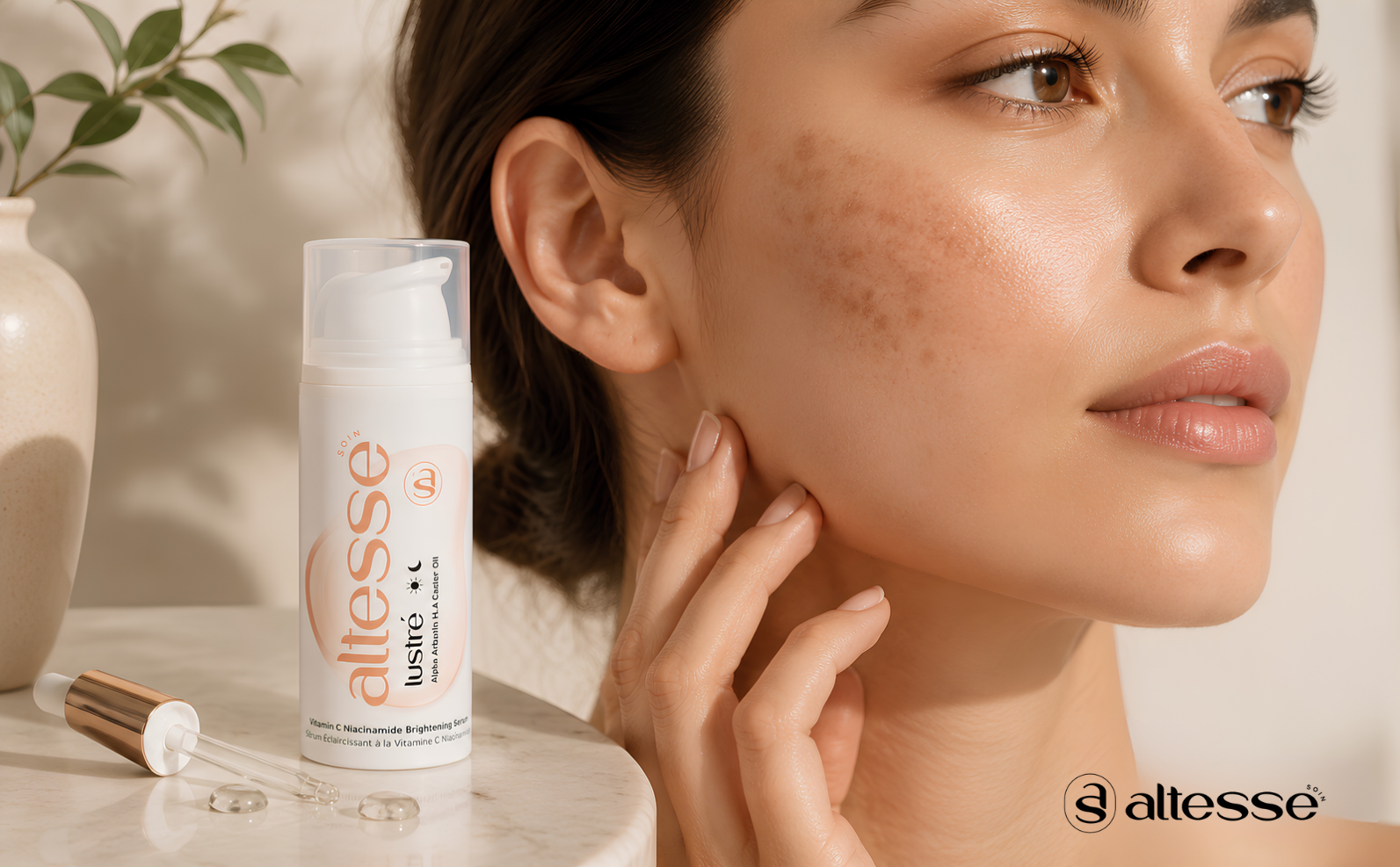
Lustré Vitamin C & Niacinamide Brightening Serum – 30ml

This serum is a strong fit for skin dealing with uneven tone or dark spots left behind by breakouts, combining several active ingredients that work together to improve skin's appearance and give it a clearer, more even finish.
It contains vitamin C to help brighten skin and support collagen production, niacinamide to even out tone and minimize the look of pores, and alpha arbutin to gradually target pigmentation. The formula also includes hyaluronic acid and sodium hyaluronate for deep hydration that keeps skin soft and comfortable while active ingredients do their work.
It's rounded out with licorice root extract and chamomile extract to calm skin and reduce redness, along with pomegranate extract and vitamin E to help skin resist external stressors, plus castor oil for a nourishing, softer feel — making it a well-balanced option for anyone treating post-acne marks without overloading sensitive skin.
🛒 Shop the Lustré Vitamin C & Niacinamide Brightening Serum here
FAQ: Serum for Acne Scars and Pigmentation
Does a serum for acne marks remove deep scars? No, a serum usually won't fully remove deep scarring, but it may help improve surface pigmentation and skin texture to a limited degree. Structural scars need medical evaluation.
What's the best ingredient for treating dark spots after acne? It depends on your skin, but azelaic acid, niacinamide, vitamin C, and retinoids are among the ingredients used for post-inflammatory pigmentation.
Is azelaic acid good for acne and pigmentation? It can be a good fit — it's used in acne treatment and is listed among topical ingredients helpful for pigmentation. It's best to start gradually if you have sensitive skin.
When do results from the serum appear? You may notice early changes within 4 to 8 weeks, but clearer results usually take two to three months of consistent use alongside sunscreen.
Should I use the serum in the morning or evening? It depends on the active ingredient. Some serums work well in the morning, while retinoids are usually better suited for evening use. Follow the product's instructions and prioritize sunscreen during the day.
Can vitamin C be used with niacinamide? Yes, they can usually be combined in a suitable routine if your skin tolerates both, but introduce them gradually and stop if persistent irritation appears.
Do I need sunscreen while using a pigmentation serum? Yes. Broad-spectrum sunscreen is an essential step to help prevent marks from darkening and to protect the results of your routine.
Can sensitive skin use a serum for pigmentation? Yes, but it's best to choose a simple formula, patch-test it on a small area, and start with fewer applications per week before gradually increasing based on tolerance.
Does picking at pimples cause pigmentation? Picking at breakouts can increase inflammation and skin injury, raising the likelihood of leaving marks or scars behind.
Can pregnant women use a serum for acne marks? It depends on the ingredient. Retinoids should be avoided during pregnancy unless a doctor advises otherwise, so check with a dermatologist or OB-GYN before starting any active treatment.
Does a serum replace acne treatment? No. If active breakouts are present, the underlying cause needs to be treated in parallel, since ongoing acne can lead to new marks.
Can pigmentation come back after it improves? Yes, it can become more visible again with unprotected sun exposure, skin irritation, or the return of breakouts — which is why staying consistent with sunscreen and a gentle routine matters.
Choosing the right serum for acne scars and pigmentation is a meaningful step toward clearer, more even-toned skin — but it works best as part of a complete routine, not as a stand-alone fix. Treat active breakouts, stay consistent with a gentle cleanser and moisturizer, apply sunscreen every morning without exception, and give your skin the time it needs.
Talk to Our Skincare Experts
For questions about the right routine for your skin type, or personalized advice on choosing the right products, the Altesse Soin team is happy to help.
-
WhatsApp: https://wa.me/201001143374
-
Email: info@altessesoin.com
-
Phone: +2 010 0114 3374
Medical references consulted for accuracy: NHS guidance on acne treatment and topical options including azelaic acid; DermNet NZ on post-inflammatory hyperpigmentation and sun protection; Primary Care Dermatology Society guidance on acne vulgaris, irritation, and referral for persistent scarring.