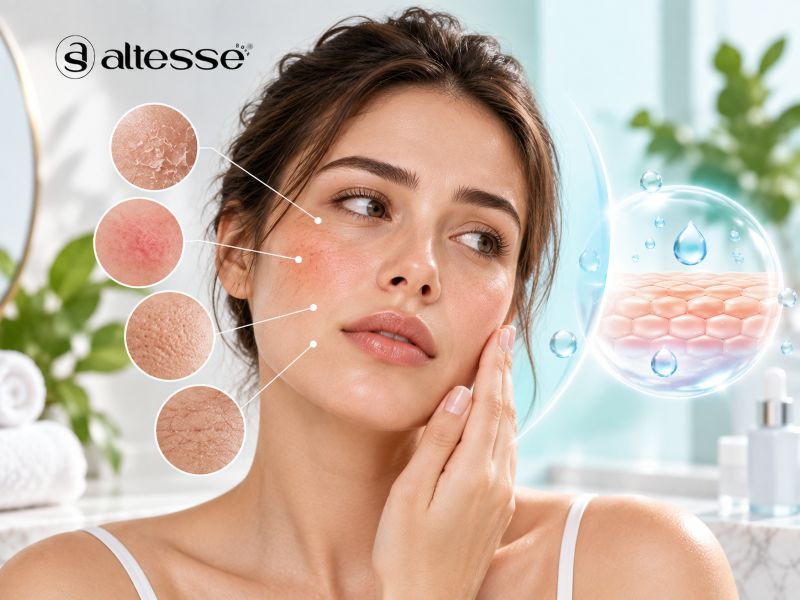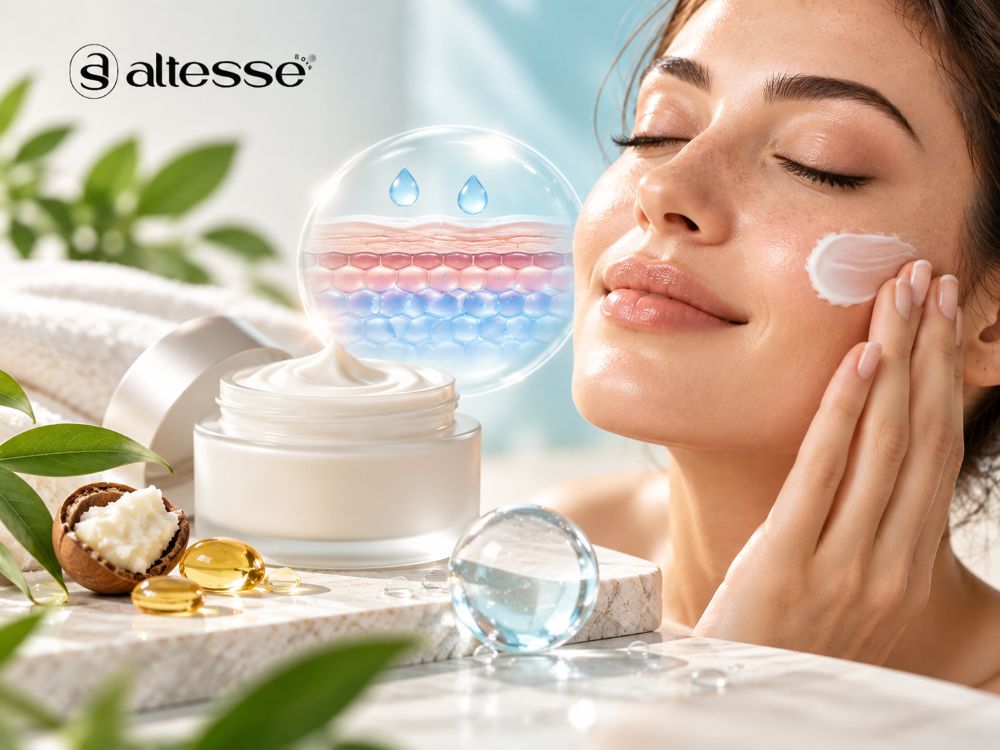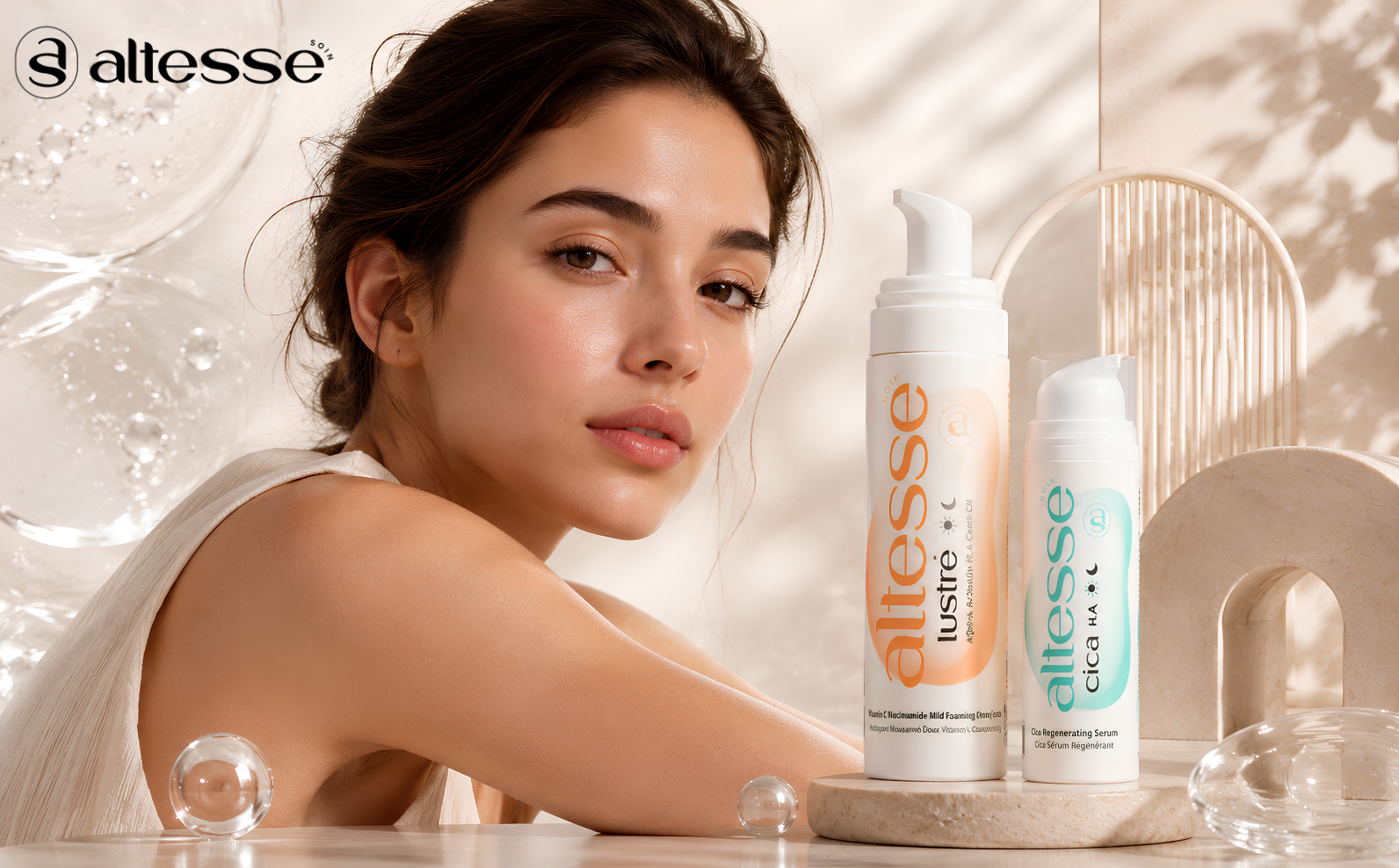
Standing in front of the skincare aisle feeling confused, especially when your skin feels dry in some spots and oily in others? What's the actual difference between niacinamide and hyaluronic acid? In simple terms: hyaluronic acid supports hydration, while niacinamide helps balance oil, calm the skin, and improve the look of pores. Choosing the wrong ingredient, or using it the wrong way, can delay the results you're hoping for.
Quick answer: The main difference between niacinamide and hyaluronic acid is that niacinamide is a form of vitamin B3 that supports the skin barrier, eases the look of pigmentation and redness, and helps regulate oil — while hyaluronic acid is a water-binding molecule that gives skin temporary hydration and plumpness. You usually don't have to choose between them, since both can be used in the same routine for better balance and moisture. Research reviews suggest niacinamide may support the skin barrier and reduce water loss, while topical hyaluronic acid is used to improve how well skin retains water and looks plump.
What's the Difference Between Niacinamide and Hyaluronic Acid?

Niacinamide addresses several skin concerns at once, while hyaluronic acid mainly focuses on drawing in water and supporting hydration.
Niacinamide, also called nicotinamide, is a water-soluble form of vitamin B3. It's included in skincare products because it helps support the skin's natural protective layer, and it's often used for visible pores, shine and excess oil, or uneven skin tone. Evidence also points to its role in supporting ceramide production and reducing water loss through the skin.
Hyaluronic acid, on the other hand, is a molecule that occurs naturally in the body and skin, and its main job is binding to water. When it's added to a serum or cream, it acts like a tiny sponge that draws moisture toward the surface of the skin, giving it a smoother, plumper feel and temporarily softening the look of dryness-related lines.
Think of your skin like a house: hyaluronic acid fills up the water tank, while niacinamide helps repair the walls so moisture doesn't leak out as quickly. That's why combining them often makes sense when your skin needs both hydration and better balance at the same time.
What Are the Benefits of Niacinamide and Hyaluronic Acid for Skin?
Niacinamide helps support the skin barrier and overall balance, while hyaluronic acid meets skin's immediate need for hydration.
Benefits of niacinamide
-
Supports the skin barrier: Niacinamide helps reduce water loss from the skin, making it more resistant to dryness and irritants.
-
Helps control oil: Can benefit oily or combination skin by helping regulate the look of oiliness and shine.
-
Improves the look of pores: Doesn't actually shrink pore size, but may make them appear less noticeable as oil balance and texture improve.
-
Addresses pigmentation: Supports a more even-looking tone and helps reduce the visibility of dark marks from acne or sun exposure.
-
Calms redness: Has properties that support skin comfort, which is why it may suit skin that gets irritated easily.
-
Supports acne-prone skin: Can be a gentle addition to a routine, but isn't a substitute for medical treatment when acne is moderate or severe.
-
Improves skin texture: May make the skin's surface feel smoother with regular use.
Benefits of hyaluronic acid
-
Gives skin quick hydration without a heavy, greasy feel
-
Supports a plumper, more radiant look
-
Temporarily softens the appearance of dryness-related fine lines
-
Suits most skin types, including sensitive skin
-
Helps make skin feel more comfortable before applying makeup
-
Supports the skin barrier when used within a suitable moisturizing formula
Who Should Choose Niacinamide vs Hyaluronic Acid?

Niacinamide suits concerns like oiliness, dullness, pores, and pigmentation, while hyaluronic acid suits any skin dealing with a lack of hydration or tightness.
-
Oily skin: Niacinamide is a practical choice for reducing the look of shine, oil, and improving the appearance of pores.
-
Dry skin: Hyaluronic acid adds hydration, but you need a moisturizer on top of it to lock the water in.
-
Combination skin: Both can be used, since different areas of the face need balance rather than drying out.
-
Acne-prone skin: Niacinamide may help calm the look of inflammation and support oil balance, especially with a lightweight, non-comedogenic formula.
-
Dull or uneven skin: Niacinamide vs hyaluronic acid? Start with niacinamide if the main concern is uneven tone or lingering marks, then add hyaluronic acid for hydration.
-
Sensitive skin: Choose simple formulas and start slowly, since even gentle ingredients can bother compromised skin if you layer on too many products.
-
Mature skin: Both are useful — hyaluronic acid for the look of dryness and surface lines, and niacinamide for barrier support and evening out tone.
How to Choose Between Niacinamide and Hyaluronic Acid
Choose the ingredient based on your skin's primary concern, not because a product is trending or has a high active ingredient percentage.
-
Identify your main goal first. If tightness, flaking, or dryness is the complaint, start with hyaluronic acid. If the concern is the look of pores, oiliness, or dark spots, niacinamide may be the better fit.
-
Check the niacinamide concentration. A concentration between roughly 2% and 5% is usually a reasonable starting point for most people, while higher concentrations aren't necessarily better and may raise the chance of irritation for some users.
-
Look at the formula type. A water-based serum suits light layering, while a cream containing hyaluronic acid and emollients may benefit dry skin more.
-
Pay attention to accompanying ingredients. Strong fragrance, drying alcohol, or too many exfoliating acids might be the real issue — not the niacinamide or hyaluronic acid itself.
-
Patch-test first. Apply a small amount behind the ear or along the jawline for a few days before using it on your entire face.
-
Choose based on climate. In dry weather, don't leave hyaluronic acid on its own — apply it to slightly damp skin, then seal it in with a suitable moisturizer.
How to Use Niacinamide and Hyaluronic Acid in Your Routine

Niacinamide and hyaluronic acid can be used together in the morning or evening, as long as you start gradually and keep skin well hydrated.
-
Cleanse gently. Use a cleanser suited to your skin type without scrubbing or very hot water.
-
Leave skin slightly damp. Apply hyaluronic acid to skin that still has a bit of moisture on it, not to completely dry skin.
-
Apply hyaluronic acid. Use a light layer of the serum on your face and neck, pressing gently instead of rubbing it in.
-
Add niacinamide. Once the first layer absorbs, apply a niacinamide serum, or use a product that combines both in one formula.
-
Use a moisturizer. This step matters especially for dry skin, since it helps reduce water loss.
-
Apply sunscreen in the morning. When you're using niacinamide to help with brightening or pigmentation, daily sun protection becomes an essential part of the result.
-
Start gradually. Use niacinamide every other day at first if your skin is sensitive.
💡 Expert tip: If your routine already has several active ingredients, introduce one new product at a time for about two weeks so you can tell what suits your skin.
⚠️ Caution: Don't layer multiple exfoliants, retinoids, or other strong products on top of irritated skin, even if both niacinamide and hyaluronic acid are usually gentle.
Can Niacinamide Be Combined With Hyaluronic Acid?
Yes, niacinamide and hyaluronic acid can usually be combined safely, since their roles complement each other — one supports hydration, the other supports the skin barrier and balance.
Safe and effective with:
-
Niacinamide + hyaluronic acid: Deeper hydration with skin barrier support — a good fit for a daily routine.
-
Niacinamide + ceramides: A helpful combination for dry or irritated skin, since ceramides help strengthen the skin barrier.
-
Hyaluronic acid + moisturizer: An important step to lock in water and prevent tightness.
-
Niacinamide + sunscreen: Supports a pigmentation treatment plan and protects an even-looking tone from new marks.
-
Hyaluronic acid + retinoid: Can make a retinoid routine more comfortable, as long as you use a moisturizer and start gradually.
Use with caution:
-
AHA and BHA exfoliating acids: Can be used, but avoid stacking too many products in one routine if your skin is sensitive.
-
Strong vitamin C: Not off-limits, but split usage between morning and evening if redness or stinging occurs.
Best avoided:
-
Applying any active ingredient to cracked or severely inflamed skin without medical guidance
-
Continuing to use a product despite persistent itching, swelling, or a clear rash
When Do Results From Niacinamide and Hyaluronic Acid Appear?
Hyaluronic acid can give a quick feeling of hydration, while niacinamide needs weeks of consistent use before a clear improvement in texture and tone shows up.
|
Timeframe |
What You Might Notice |
|
Week 1 |
Better softness and hydration from hyaluronic acid, with less noticeable relief from tightness |
|
2 weeks – 1 month |
Gradual improvement in skin's appearance, oiliness, and shine, if the formula suits your skin |
|
1–3 months |
More noticeable evenness in tone, pore appearance, and surface marks |
|
After 3 months |
More consistent results with a balanced routine that includes daily sunscreen |
⚠️ Important: Results aren't identical for everyone — skin condition, sun exposure, sleep, product type, and acne treatment all affect how fast results appear and what the final outcome looks like.
If you're using niacinamide for uneven tone, don't expect an instant fix for deep marks. Consistency and sun protection matter far more than adding extra layers or switching products every week.
Common Myths
Skin doesn't always need to "choose" between niacinamide and hyaluronic acid — it usually needs a role for each, depending on its condition and your routine.
"Hyaluronic acid always moisturizes skin on its own." Not accurate. Hyaluronic acid draws in water, but it usually needs a moisturizer on top of it, especially in dry weather.
"Niacinamide lightens your natural skin tone." Not true. Niacinamide doesn't change your natural skin color, but it may help reduce the visibility of pigmentation and uneven tone.
"Higher concentration means faster results." Not accurate. A higher concentration can increase irritation without necessarily suiting every skin type.
"Niacinamide clears acne on its own." Not true. Niacinamide can help support acne-prone skin, but it doesn't replace medical treatment for moderate to severe cases.
"Pores open and close." Not accurate. Pores don't open and close like doors, but their appearance can improve when oil is balanced and skin is well hydrated.
"Niacinamide and hyaluronic acid need to be kept separate." Not true. Both are compatible and can be used together, either in the same product or layered one after the other.
Quick Facts About Niacinamide and Hyaluronic Acid
-
Niacinamide is a form of vitamin B3, also called nicotinamide.
-
Hyaluronic acid is a substance that occurs naturally in the body and plays a role in supporting skin's hydration and mechanical properties.
-
Both usually suit oily, dry, and sensitive skin when the right formula is chosen.
-
Niacinamide is more closely linked to the look of oil, pores, redness, and pigmentation.
-
Hyaluronic acid is more closely linked to hydration, softness, and a plumper look.
-
Daily sunscreen is essential if your goal is improving dark spots or evening out tone.
-
A patch test is a smart step before introducing any new product.
-
Improvement in hydration usually appears faster than improvement in pigmentation or pore appearance.
Best Products Within a Niacinamide and Hyaluronic Acid Routine
The best product isn't necessarily the one with the highest concentration — it's the one that suits your skin type and has a balanced formula you can actually stick with.
-
A moderate-concentration niacinamide serum: Good if your priority is the look of pores, oil, or post-acne marks. Choose a lightweight formula that's as fragrance-free as possible.
-
A multi-molecular-weight hyaluronic acid serum: Suits skin that feels tight, dry, or looks tired. Apply it to damp skin, then follow with a moisturizer.
-
A moisturizer combining niacinamide and ceramides: A comfortable option for sensitive skin or beginners who don't want to layer too many products.
-
Broad-spectrum sunscreen: Not just a supporting product — an essential part of the routine when targeting pigmentation and uneven tone.
-
A gentle, non-drying cleanser: Keeps the skin barrier intact so you actually benefit from niacinamide and hyaluronic acid instead of stressing skin with a harsh cleanser.
💡 Tip: Use it alongside a barrier-supporting moisturizer and daily sunscreen for the most balanced results, especially if your goal is treating pigmentation or uneven marks.
How to Build a Complete Routine With Both
A successful routine doesn't need a large number of products — it needs consistent steps that meet your skin's needs without overwhelming it.
Morning:
-
A gentle cleanser suited to your skin type
-
Hyaluronic acid serum on damp skin
-
Niacinamide serum, when balancing oil or supporting even tone is a priority
-
A light or rich moisturizer, depending on your skin's dryness
-
Broad-spectrum sunscreen, applied generously
Evening:
-
Gently remove makeup and sunscreen
-
A suitable cleanser, without over-cleansing
-
Hyaluronic acid to hydrate skin
-
Niacinamide or another suitable treatment, according to your skincare plan
-
A moisturizer to help lock in hydration overnight
If you're using a retinoid or a chemical exfoliant, start with a limited number of applications per week. You can apply hyaluronic acid and a moisturizer to help reduce the feeling of dryness, while cutting back on steps if noticeable sensitivity or peeling appears.
When to See a Doctor Immediately
Stop using the product and see a dermatologist right away if you notice strong signs of a reaction, or if your skin concern goes beyond simple dryness or oiliness.
-
Noticeable swelling in the face, eyelids, or lips
-
Difficulty breathing, dizziness, or spreading hives — this is a medical emergency that needs immediate help
-
Severe, persistent burning, blistering, or open sores after using the product
-
Widespread rash or itching that doesn't settle after stopping the product
-
Painful, deep, or cystic acne, or breakouts that leave scars
-
Rapidly changing pigmentation or a new, unusual dark spot
-
Persistent redness with sensitivity or visible blood vessels, especially if rosacea or dermatitis is suspected
Mild irritation doesn't always mean a product is harmful, but it's a sign to stop and reassess your routine. Don't try to treat significant irritation by applying more serums or exfoliants.
FAQ: Niacinamide vs Hyaluronic Acid
Which is better: niacinamide or hyaluronic acid? It depends on your goal. Choose niacinamide for the look of oil, pores, and pigmentation, and choose hyaluronic acid for dryness, tightness, and a lack of hydration. They can often be combined.
Can niacinamide and hyaluronic acid be used together? Yes, they can be used in the same routine, since hyaluronic acid supports hydration while niacinamide supports the skin barrier and balance.
Should I apply niacinamide before or after hyaluronic acid? You can apply hyaluronic acid first on damp skin, then niacinamide, or the other way around depending on the product's texture. A practical rule: apply the lighter, more water-based texture first.
Is niacinamide good for oily skin? Yes, it often suits oily skin because it may help improve the look of oil, shine, and pores — choose a lightweight formula.
Does hyaluronic acid cause acne? Hyaluronic acid itself isn't a common cause of breakouts, but the full formula of a product, or layering heavy products on top of it, may not suit skin that's prone to clogged pores.
Does niacinamide brighten skin? Niacinamide doesn't bleach the skin or change its natural color, but it may help reduce the visibility of dark spots and uneven tone with consistent use and sunscreen.
What's a good starting concentration of niacinamide for beginners? Starting with a concentration of around 2% to 5% is usually a practical choice — then monitor your skin's tolerance before considering higher concentrations.
Should hyaluronic acid be applied to dry or damp skin? It's best applied to slightly damp skin, followed by a moisturizer, since this helps support the skin's water retention.
Do I need a moisturizer after hyaluronic acid? Yes, especially if your skin is dry or the weather is dry. A moisturizer helps lock in the moisture that hyaluronic acid draws in.
Can niacinamide be used daily? Yes, many people can use it daily if their skin tolerates it well. Start gradually if your skin is sensitive.
Does niacinamide treat acne marks? It may help improve the look of acne marks and surface pigmentation, but it takes time, and deeper marks or scars benefit more from a dermatologist's evaluation.
Is hyaluronic acid suitable for sensitive skin? It's generally well tolerated topically, but check the rest of the formula and patch-test the product before using it on your whole face.
When it comes to niacinamide vs hyaluronic acid, the honest answer is that most skin benefits from both — hyaluronic acid for immediate hydration, and niacinamide for longer-term barrier support and balance. Choose based on your skin's main concern, introduce products gradually, and stay consistent with a moisturizer and daily sunscreen for the most reliable results.
Contact Us
For questions about your skincare routine or choosing the right products:
-
WhatsApp: https://wa.me/201001143374
-
Email: info@altessesoin.com
-
Phone: +2 010 0114 3374
Medical references consulted for accuracy: scientific review on niacinamide as a form of vitamin B3 and its potential benefits for skin barrier support, tone, and inflammation; review of topical hyaluronic acid and its role in skin hydration and safety in topical formulas; review on topical niacinamide's effect on reducing transepidermal water loss, supporting ceramide production, and improving inflammation-prone or acne-prone skin; a 2025 clinical study on a combined hyaluronic acid and niacinamide formula showing improvement in hydration, texture, elasticity, and pigmentation within the study's context.