Standing in front of a shelf full of skincare products with no idea what goes on first? Applying products in the wrong order can make your routine less effective and increase the chance of irritation. Knowing the correct order to apply skincare products helps you build a simpler, more organized routine.
The correct order to apply skincare products starts with cleansing, followed by lighter products like toner and serums, then a targeted treatment if needed, eye cream, moisturizer — with sunscreen as the final step in your morning routine. In the evening, the routine continues after cleansing with a suitable treatment product, then moisturizer, always following each product's instructions and your skin's condition.
What Is the Correct Order to Apply Skincare Products, and Why Does It Matter?
The correct order to apply skincare products is the right sequence for layering them, usually moving from the lightest textures to the thickest, which helps keep your routine organized.
Here's why order matters:
-
Organized application: Prevents randomness when using more than one product in your routine.
-
Lighter products go first: Helps serums and lightweight products absorb before heavier creams are applied.
-
Better results from your routine: Choosing the right order lets each step actually do its job.
-
Less overuse of products: Understanding the correct rule helps you know what you genuinely need instead of adding unnecessary layers.
Think of skin like a sponge: if you start with a thick layer, it becomes harder for lighter products to absorb afterward. That's why knowing the correct order to apply creams makes your skincare routine simpler and clearer.
Why the Right Order Matters in Your Skincare Routine
The right order in your skincare routine helps you use products in an organized way and makes each step of your routine simpler and clearer.
Here's why it matters:
-
Proper application: Starting with lighter products, then moving to thicker creams, helps organize the layers in your routine.
-
Getting the most from active ingredients: When using ingredients like vitamin C or retinol, applying them per the product's instructions helps introduce them into your routine correctly.
-
Supporting the skin barrier: Moisturizers help maintain skin's hydration and support its natural barrier.
-
Reducing irritation: Randomly combining several active ingredients can increase dryness or irritation, so pay attention to product compatibility alongside order.
-
Better routine consistency: When the order of steps is clear, it's easier to stick with your skincare routine daily.
-
Protection from environmental factors: In the morning, sunscreen is the essential final step to help protect skin from UV rays.
-
Avoiding product waste: Understanding each product's function and order helps you build a practical routine without adding products your skin doesn't need.
Ultimately, the point of the right order isn't using more products — it's choosing what suits your skin and applying it correctly, with consistency in your routine.
How to Choose the Right Products for Your Routine
Choosing skincare products starts with identifying your skin type and needs, then picking the formulas and ingredients that suit them.
Focus on these criteria:
-
Skin type: First, determine whether your skin is dry, oily, combination, or sensitive.
-
Active ingredients: Choose ingredients that target your skin's needs, such as niacinamide for oily skin or ceramides to support dry skin.
-
Product texture: Products are usually applied from lightest to thickest, such as a water-based serum followed by a cream.
-
Ingredient compatibility: Don't combine several strong active ingredients without knowing how well they work together — some combinations can increase dryness or irritation.
-
Patch testing: When trying a new product, it's best to test it on a small area first, especially if your skin is sensitive.
💡 Expert tip: Start with a simple routine that covers the basics, then gradually add other products based on your skin's needs.
How to Apply Creams: The Practical Steps
The correct order for applying creams starts with the essential base products, then gradually moves to heavier ones, with sunscreen wrapping up your morning routine.
Morning routine:

-
Cleanser: Gently wash your face to remove buildup and impurities.
-
Toner: An optional step if it suits your skin.
-
Serum: Apply the serum suited to your skin's needs, such as vitamin C or hyaluronic acid.
-
Eye cream: If you use one, apply it gently around the eye area.
-
Moisturizer: Helps maintain skin hydration and support the skin barrier.
-
Sunscreen: The essential final step in your morning routine, applied before makeup.
Evening routine:

-
Remove makeup and sunscreen: Use a suitable remover as needed.
-
Cleanser: Cleanse skin gently without harsh scrubbing.
-
Treatment product: Such as a retinoid or an acid, per the product's instructions and your skin's tolerance.
-
Moisturizer: Use a suitable moisturizer to support the skin barrier and reduce dryness.
-
Face oil: Can be used optionally if it suits your skin type and routine.
💡 Expert tip: There's no fixed waiting time you need to apply between each layer — what matters most is spreading the product evenly and following its instructions before moving to the next step.
⚠️ Caution: Combining a retinoid with strong exfoliating acids in the same routine can increase irritation, so it's best to separate active ingredients when needed, especially when you're first starting to use them.
What's the Correct Order for Applying Face Creams From Altesse Soin?
The order for applying face creams depends on each product's texture and function, and it's usually best to start with lighter products before moving to more hydrating ones.
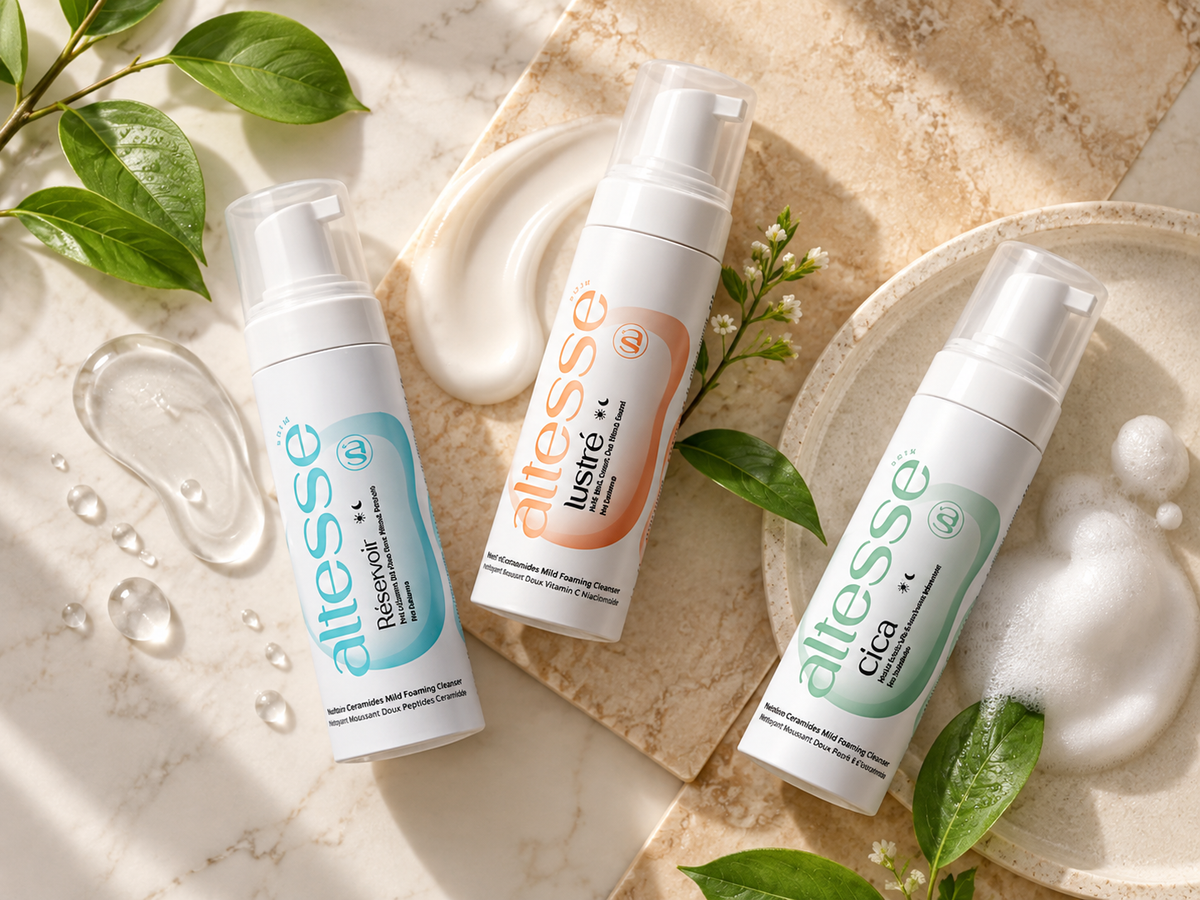
An Altesse Soin skincare routine can include:
-
Altesse Cica Mild Foaming Cleanser: To cleanse skin first.
-
Altesse Soin Reservoir Hydrating Serum: Comes after cleansing to support skin hydration.
-
Altesse Cica Repairing Gel Cream: For skincare and barrier support.
-
Altesse Soin Reservoir Moisturizing Gel Cream: To help maintain skin hydration.
-
Altesse Soin Sunissime Sunscreen SPF50+: Used in your morning routine as one of the final skincare steps before heading out.
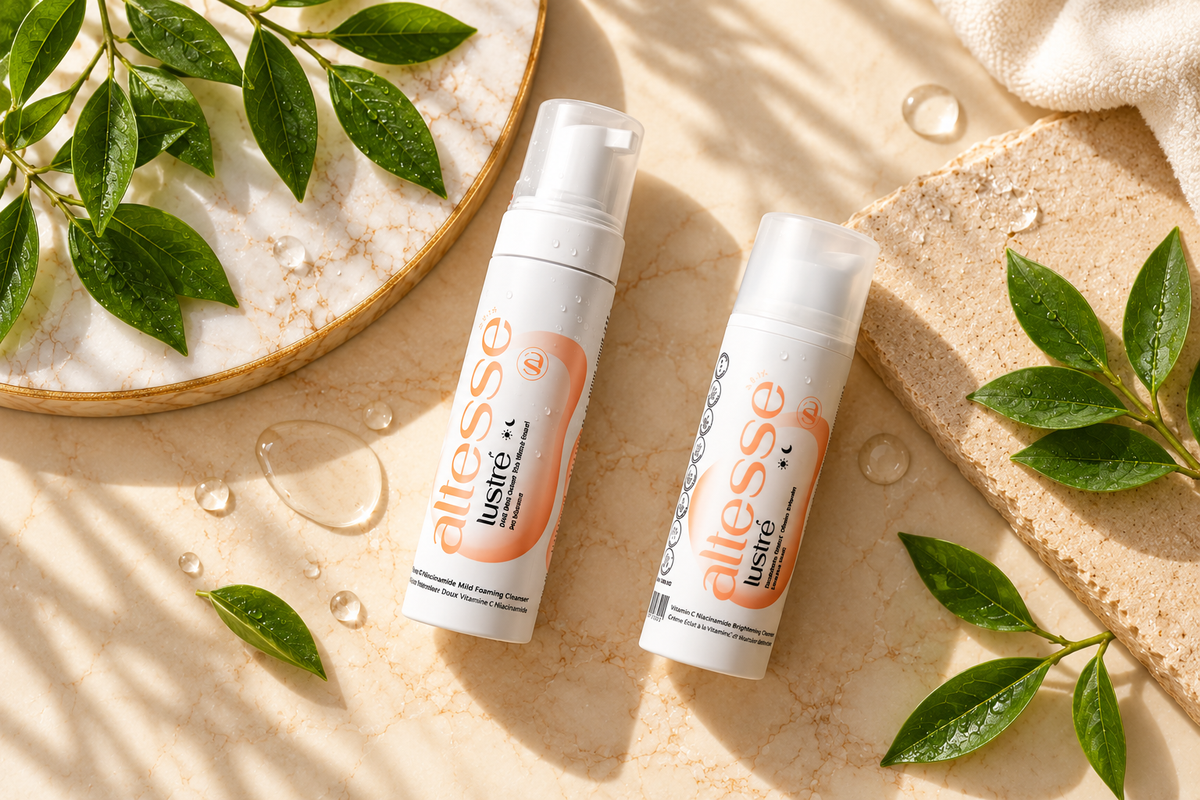
Altesse Soin's Lustré Serum and Lustré Gel Cream are used based on your skin's needs and a specialist's guidance, especially for skin that has recently undergone procedures like laser treatment.
What's the Complete Morning and Evening Routine?
You can build an effective routine from a limited number of steps instead of using dozens of products, with sunscreen as the focus of your morning routine and hydration plus suitable treatment as the focus of your evening routine.
Morning routine
-
Gentle cleanse: To remove overnight buildup and residue from nighttime products.
-
A suitable serum, if needed: Such as an antioxidant serum suited to your skin.
-
Moisturizer: Choose a texture that suits your skin's needs.
-
Sunscreen: Apply it as the last step in your morning routine.
Evening routine
-
Remove makeup or sunscreen as needed.
-
Cleanse skin gently.
-
Apply the appropriate treatment ingredient or serum.
-
Apply moisturizer.
If your routine includes retinol or a retinoid, it's usually used in the evening per the product's or your doctor's instructions, since these ingredients can cause irritation or increase skin's sun sensitivity.
The most important rule: simplicity and consistency beat a long routine you can't stick with.
Golden Tips for the Correct Order to Apply Skincare Products

Following a few simple rules makes your skincare routine more organized and helps you use products the right way.
-
Always start with lighter products, then move to thicker ones.
-
Don't use too many products at once without a real need.
-
Make sunscreen an essential step in your morning routine.
-
Introduce new products gradually, especially active ingredients.
-
Patch-test a new product on a small area if your skin is sensitive.
-
Only use treatment creams according to proper instructions.
-
Give your routine enough time before evaluating results.
-
If persistent irritation appears, stop using the suspected product and see a dermatologist.
Remember that the best routine isn't the most complicated one — it's the routine that suits your skin's needs and that you can stick to consistently.
Who Does the Texture-Based Product Order Suit?
Layering products from lightest to heaviest suits most daily skincare routines, with some adjustment based on skin type and any treatment products used.
This rule can help in the following cases:
-
Normal skin: Suits a simple routine that starts with cleansing, then light products, moisturizer, and morning sunscreen.
-
Dry skin: May need thicker moisturizers to help maintain skin hydration.
-
Oily skin: Can choose lightweight formulas while continuing to use moisturizer.
-
Sensitive skin: It's best to reduce the number of products and choose gentle formulas, testing new products before regular use.
-
Acne-prone skin: Needs careful selection of products and active ingredients like salicylic acid or benzoyl peroxide.
-
Skin using topical treatments: A prescribed treatment may need its own specific order, so your doctor's instructions or the product insert matter more than the general rule.
-
Skin with daily sun exposure: Sunscreen becomes an essential part of your morning routine to help protect skin from UV rays.
How to Choose the Right Products Before Ordering Them
Choosing the right product for your skin comes before deciding on its order, because the correct order won't make an unsuitable product work for your skin.
-
Identify your skin's need: Determine the goal of your routine first — hydration, reducing dryness, controlling oil, caring for acne-prone skin, or improving the look of pigmentation.
-
Consider the formula type: Lighter products are usually applied before thicker creams, but order doesn't depend on molecule size alone — a product's formula, how it's used, and its instructions matter too.
-
Choose ingredients with a clear purpose: You don't need to combine vitamin C, a retinoid, acids, and niacinamide all in one routine. Choose what fits your skin's needs and introduce active ingredients gradually.
-
Watch for fragrances and irritants: If your skin is sensitive, gentle, fragrance-free formulas may be a better fit, especially if irritation keeps happening.
-
Patch-test a new product: Testing on a small area of skin before regular use helps reduce the chance of unwanted surprises, especially for sensitive skin.
-
Don't mix every active ingredient: Combining several active ingredients at once can increase dryness and irritation without adding real benefit, so keep your routine simple and thoughtful.
Common Mistakes in the Order of Applying Face Creams
Some mistakes in the order of skincare products can affect how well your routine works or increase the chance of irritation.
Mistake 1: Applying moisturizer before serum. Do this instead: In most cases, the lighter serum goes on before the moisturizer, unless the product's instructions say otherwise.
Mistake 2: Treating sunscreen as optional. Do this instead: Make sunscreen an essential step in your morning routine to protect skin from UV rays.
Mistake 3: Using large amounts of product. Do this instead: Stick to the recommended amount — using more doesn't mean better results.
Mistake 4: Introducing several active ingredients at once. Do this instead: Add new products gradually to reduce the chance of dryness or irritation.
Mistake 5: Constantly changing your routine. Do this instead: Give suitable products enough time to show results, unless irritation appears.
Mistake 6: Rubbing skin too hard. Do this instead: Cleanse skin gently and pat dry, especially if it's sensitive.
Mistake 7: Using a treatment cream without knowing its function. Do this instead: Use medicated creams according to your doctor's instructions or the product insert.
Ultimately, the correct order to apply skincare products depends on your skin's needs and the nature of the products, not on using more of them — so focus on a simple, consistent routine that suits your skin.
Quick Facts About Skincare Product Order
-
The general rule: From lightest to heaviest.
-
Sunscreen: The essential final step in your morning routine.
-
Moisturizer: Not an unimportant step — it helps reduce water loss and supports the skin barrier.
-
Serums: Not necessary for everyone.
-
Toner: An optional step, not a requirement for healthy skin.
-
Retinoid: Usually used in the evening per the usage instructions.
-
Vitamin C: Can be used in the morning but doesn't replace sunscreen.
-
Too many products: Can increase the chance of irritation instead of improving results.
-
Patch testing: A helpful step when introducing a new product, especially for sensitive skin.
With these rules, ordering your products becomes simpler, and you can build a practical routine suited to your skin's needs without adding unnecessary steps.
How to Layer Skincare Products Without Causing Irritation
Getting the correct order to apply skincare products right also means knowing which ingredients can be used together and which need to be separated to reduce irritation.
Suitable combinations:
-
Niacinamide + hyaluronic acid: Help hydrate and calm skin.
-
Vitamin C + sunscreen: Provide antioxidant support alongside daily protection.
-
Ceramides + peptides: Help hydrate skin and support its barrier.
Combinations that need caution:
-
Retinol + AHA/BHA acids: Best used on different nights to reduce irritation.
-
Vitamin C + retinol: Vitamin C can be used in the morning and retinol at night, especially for sensitive skin.
What about heavy oils?
It's best to avoid applying heavy oils before sunscreen, since they can affect how evenly the sunscreen spreads on skin. That's why sunscreen comes as the essential final step in your morning routine.
What Are the Benefits of Applying Creams in the Correct Order?
Applying face creams in the correct order helps organize your skincare routine and use products more effectively.
Key benefits include:
-
Helps products spread more evenly across skin.
-
Ensures lighter products go on before thicker ones.
-
Makes it easier to benefit from serums and active ingredients in your routine.
-
Helps maintain skin hydration and support its protective barrier.
-
Reduces adding unnecessary products or using them randomly.
-
Makes your morning and evening routines simpler and more consistent.
Ultimately, applying products in the correct order helps you build a simple, organized skincare routine suited to your skin's needs.
When Do Results From the Correct Product Order Appear?
How quickly results appear varies based on skin type, the products used, and the concern your routine targets — so it's best not to expect a major change within just a few days. What matters most is consistency and using products the right way.
|
Timeframe |
What You Might Notice |
|
Week 1 |
Improved hydration and softness; your routine feels more organized and easier to follow with the right order |
|
2 weeks to a month |
Gradual improvement in skin's appearance and texture; more noticeable benefit from moisturizing products and suitable ingredients with regular use |
|
1–3 months |
Some results become clearer, especially with products targeting specific concerns; skin's appearance may gradually improve with a consistent, suitable routine |
Remember that the correct order to apply skincare products helps organize how you use them, but it doesn't guarantee identical results for everyone. Give your routine enough time to evaluate it, stop any product that causes clear irritation, and consult a specialist when needed.
When to See a Doctor Immediately
Severe or fast-developing symptoms after using a product need urgent medical evaluation, especially with difficulty breathing, noticeable swelling, or a severe reaction.
Seek urgent medical care if the following appears after using a product:
-
Severe swelling, especially of the face, lips, or around the eyes
-
Difficulty breathing or symptoms suggesting a severe allergic reaction
-
Widespread or severe rash that develops quickly
-
Blisters, sores, or unusually severe pain
-
Severe irritation that doesn't improve after stopping the product
-
Severe symptoms around the eyes or affecting vision
-
Signs of skin infection, such as increasing pain and redness or discharge with worsening symptoms
The American Academy of Dermatology notes that redness, itching, and swelling may signal a skin reaction, while severe reactions or difficulty breathing with swelling need immediate medical care. If symptoms persist or keep recurring with certain products, a dermatologist can help identify the cause and run a patch test if needed.
FAQ: Correct Order to Apply Skincare Products
What is the correct order to apply skincare products?
The order usually starts with cleansing skin, then lighter or suitable treatment products, then moisturizer, ending in the morning with sunscreen. Some steps may vary based on the product type and its usage instructions.
Does moisturizer go before or after serum?
In most routines, serum goes on before moisturizer because its texture is usually lighter, then moisturizer follows as a thicker layer.
Where does sunscreen go in a skincare routine?
Sunscreen goes on as the essential final step in your morning routine, after moisturizer and before makeup if makeup is part of your routine.
Should I use toner in every routine?
No. Toner is an optional step, and not every skin type needs it. If it suits you, it can be applied after cleansing and before other products.
Can I apply vitamin C and moisturizer together?
Yes, you can use a vitamin C serum followed by moisturizer as part of your morning routine, with sunscreen applied afterward. Vitamin C doesn't replace sunscreen.
When should retinol be applied?
Retinol is usually used in an evening routine, following the product's instructions and starting gradually when needed to reduce irritation.
Can eye cream go on before moisturizer?
Yes, if eye cream is part of your routine, it can be applied after serum and before moisturizer, depending on the product's nature. But eye cream isn't necessary for everyone.
Does the order of creams differ for oily and dry skin?
The type and texture of the products may differ more than the basic order rule itself. Dry skin may need a thicker moisturizer, while oily skin may prefer lighter formulas.
Do I need to wait between each product?
There's no fixed waiting time that works for every product. What matters most is letting the product spread across skin and following its usage instructions, while avoiding stacking too many layers before earlier products have settled.
Can I use more than one serum in the same routine?
This can be done in some cases, but it's not necessarily better. Combining multiple active ingredients can increase the chance of irritation, so evaluate the ingredients and your skin's actual needs first.
The correct order to apply skincare products isn't about following a rigid formula — it's about applying products in a way that lets each one do its job, starting light and building up, and always finishing your morning routine with sunscreen. Keep your routine simple, introduce new products gradually, and stay consistent for the best results.
Contact Altesse Soin
If you're looking for skincare products to help you apply the correct order to your routine and build a complete routine suited to your skin's needs, you can reach out to the Altesse Soin team to find the right products for your daily routine.
-
WhatsApp: https://wa.me/201001143374
-
Email: info@altessesoin.com
-
Phone: +2 010 0114 3374
Medical references consulted for accuracy: American Academy of Dermatology guidance on skin reactions, product order, and when swelling or difficulty breathing require immediate medical care.