Do clogged pores, blackheads and breakouts keep showing up even though you look after your skin? The right ingredient might be what your routine is missing, but using exfoliants the wrong way can leave your skin dry and red instead of clearer. If you are asking how to use salicylic acid on your face, this practical guide covers the right method, the strength to look for, the precautions that keep it safe, how to combine it with other ingredients and when to ask a dermatologist. If you would like to understand what the ingredient does first, read our guide to what salicylic acid does for your face. This one focuses on putting it into practice.
To use salicylic acid on your face, apply it to clean skin as the product directs, start with two or three times a week at a low strength, and build up only if your skin tolerates it. Follow with a moisturizer and use broad-spectrum sunscreen every morning.

What is salicylic acid and how does it work inside pores?
Salicylic acid is an exfoliant from the beta hydroxy acid (BHA) family. Unlike many acids, it dissolves in oil, so it can get inside the pore instead of staying on the surface of the skin, which is why it suits oily and acne-prone skin.
In practice it works like this:
- Exfoliates dead skin cells: it helps shed the buildup on the surface and at the opening of the pore.
- Reduces clogged pores: it helps break down the buildup behind blackheads and whiteheads.
- Improves texture: skin can feel smoother with regular use.
- Supports skin prone to breakouts: it helps with spots caused by blocked pores, although it does not treat every type of acne.
Results depend on the strength of the product, how you use it and how well your skin tolerates it, so moderation and moisturizer matter more than using more.
Who should use salicylic acid?
- Oily skin: it helps cut the buildup of oil inside pores.
- Acne-prone skin: it may improve blackheads and whiteheads.
- Combination skin: use it on the oily areas, such as the nose, forehead and chin, and keep it away from dry areas.
- Rough or bumpy skin: it helps shed dead cells and smooth the texture.
- Sensitive or dry skin: needs real caution. It can cause dryness and redness, so ask your dermatologist before using it.
Check with a doctor first if you are pregnant or breastfeeding (especially for high-strength exfoliants), if you are allergic to aspirin or salicylates, or if the area has irritated skin, wounds or sunburn.
How to use salicylic acid on your face: step by step
The method depends on the type and strength of the product, but the rule is the same everywhere: start slowly and follow the label.
- Patch test first. Put a small amount behind your ear or along your jawline for 24 hours. If you get strong redness or itching, do not use it on your face.
- Cleanse your skin with a gentle cleanser to remove dirt and oil, without scrubbing.
- Dry your face thoroughly. If the label says to apply to dry skin, wait a few minutes until your skin is completely dry. Damp skin lets the acid penetrate more and can raise the risk of irritation.
- Apply the recommended amount in a thin layer on the areas prone to breakouts. Keep it away from your eyes, lips, the creases beside the nose and any broken skin.
- Start gradually. Use it two or three times a week at first, then move to once a day if your skin is comfortable.
- Moisturize. Follow with a gentle moisturizer to reduce dryness and support your barrier.
- Protect your skin from the sun. Use broad-spectrum sunscreen SPF30 or higher every morning.
- Watch how your skin responds. If you get severe redness, constant stinging or uncomfortable peeling, stop the product and seek medical advice if needed.
Important: do not use more product or use it more often than recommended, and do not combine it with several exfoliants or active treatments from day one. Balanced use is safer than over-exfoliating.
What strength of salicylic acid should you choose?
A higher percentage does not necessarily give better results; it mostly means a higher chance of irritation. Over-the-counter acne products usually contain between 0.5% and 2%.
- 0.5% to 1%: typically found in cleansers and daily pore-care products, and a good starting point.
- 2%: a common strength in leave-on products for acne and blackheads, such as toners and serums.
- Higher strengths (chemical peels): performed by a professional and not meant for home use without supervision.
- Sensitive skin: ask your dermatologist first, then use it as rarely as you can.
Which form of salicylic acid should you choose?
Salicylic acid products come in several forms, and each one is used a little differently.
Cleanser
It stays on the skin for about a minute and is then rinsed off, so it is the gentlest way to use it. It suits first-timers and skin that irritates easily. Start with once a day.
Toner
Applied after cleansing to dry skin with a cotton pad or your fingertips. It suits people who want a slightly stronger effect and is usually used in the evening.
Serum
Left on the skin and not rinsed off, so it needs the most care and the lowest frequency at the beginning.
Spot treatment
Applied only on the spot itself, not spread across the face. Good for small, isolated breakouts.
Chemical peel
Done by a professional, or with products that have clear instructions. It is not recommended to use these randomly at home.
How to combine salicylic acid with the rest of your routine
Ingredients that pair well with it
- Hyaluronic acid: hydrates skin and reduces dryness.
- Niacinamide: supports the barrier and may improve the look of pores; the two can be used together as your skin tolerates.
- Ceramides: support the protective barrier and hold in moisture.
- A gentle moisturizer: eases the dryness and peeling that exfoliants can cause.
- Sunscreen: essential every morning.
Ingredients to be careful with
- Retinol: can add dryness and irritation. It is best to separate them, for example salicylic acid in the morning or on different nights from retinol.
- Glycolic and lactic acid: combining several exfoliating acids can irritate skin.
- Benzoyl peroxide: it is part of some acne plans, but combining active products needs planning and is best done under a doctor's guidance.
Introduce new ingredients gradually and avoid using several exfoliants in the same routine at the beginning. If you use a prescribed acne treatment or have sensitive skin, ask your dermatologist before adding salicylic acid.
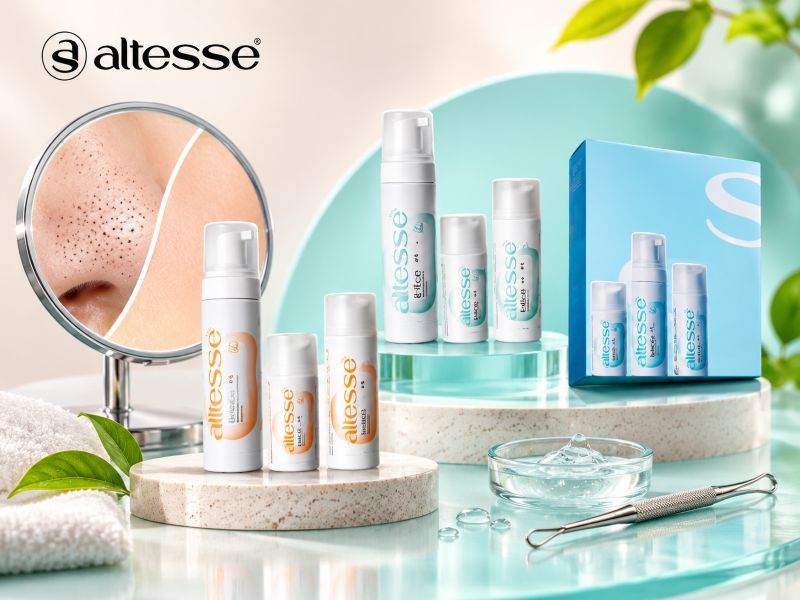
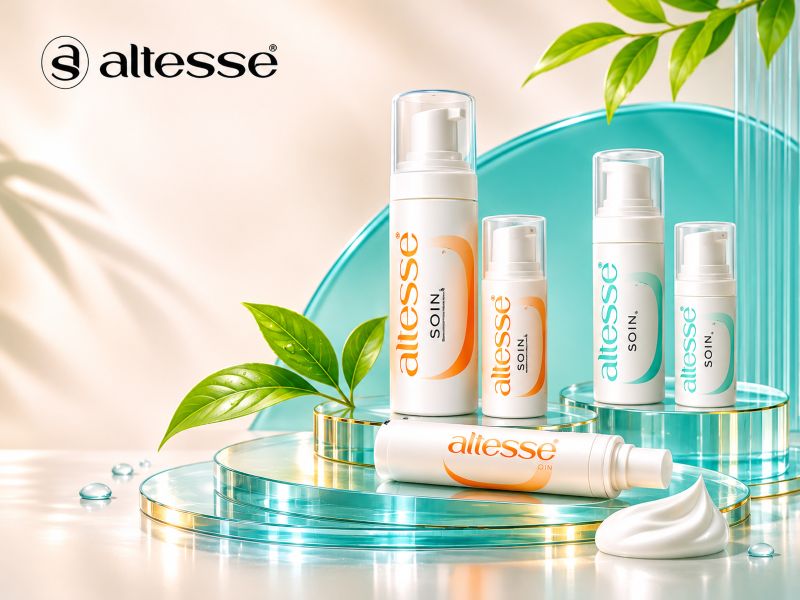
Altesse Soin products that complete a salicylic acid routine
To be transparent: Altesse Soin does not currently make a product that contains salicylic acid by name, so we will not recommend one. But any exfoliating routine depends on what surrounds it: a gentle cleanse, moisture that supports the barrier and sun protection. These Altesse Soin products do that job.
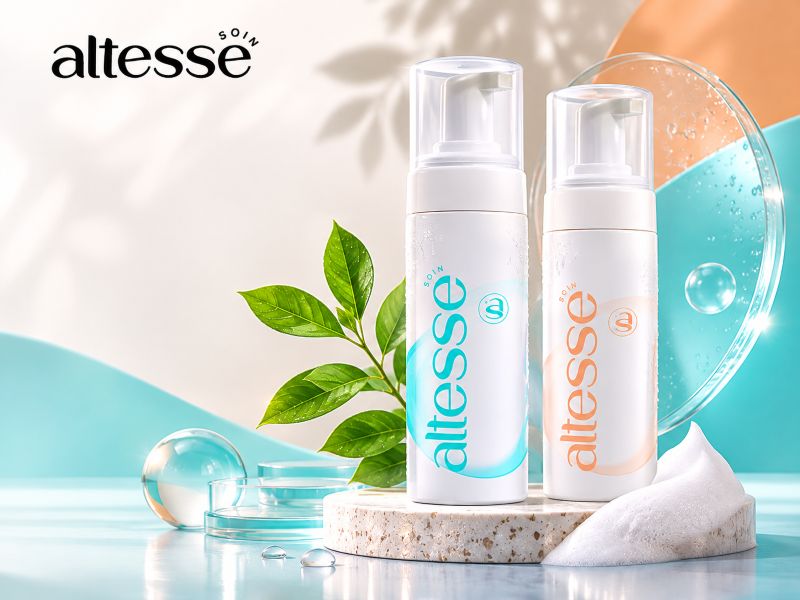
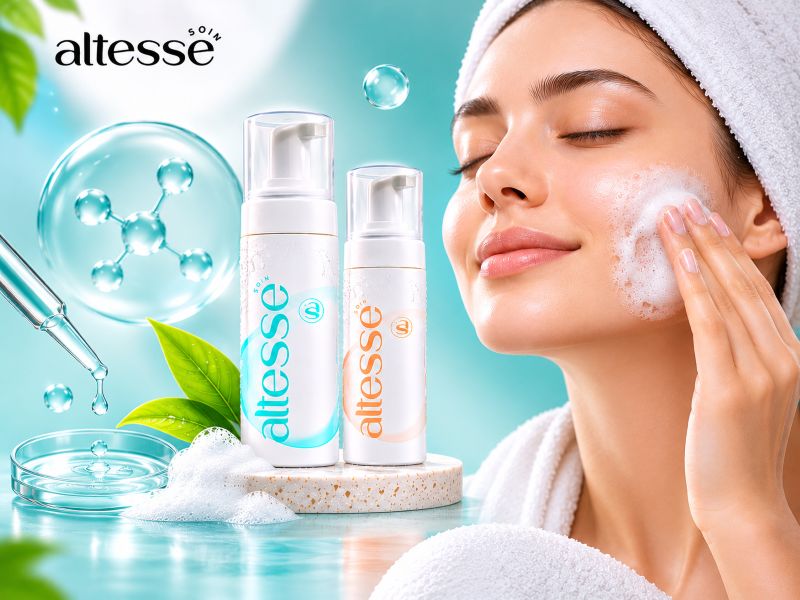
1. Lustré Vitamin C Niacinamide Mild Foaming Cleanser with AHA/BHA
If you want a cleanse that helps improve the look of pores without adding a separate exfoliating product, the Lustré Mild Foaming Cleanser combines vitamin C, niacinamide and AHA/BHA in a gentle foam that removes impurities and excess oil and helps brighten skin. Because it contains exfoliating acids, do not use it at the same time as another salicylic acid product. Choose one or the other within a single routine.
ولأنه يحتوي على أحماض مقشرة، يُنصح بعدم استخدامه مع أي منتج آخر يحتوي على حمض الساليسيليك في نفس الوقت. اختاري أحدهما ضمن روتين العناية بالبشرة.
Discover the Lustré Vitamin C Niacinamide Mild Foaming Cleanser (30 ml) and order it today from the Altesse Soin store.
2. Cica Mild Foaming Cleanser: for days your skin needs a break
On days you pause exfoliants, or when your skin shows signs of irritation, the Altesse Cica Mild Foaming Cleanser takes the pressure off. It contains soothing Cica extract, cleans without drying and suits sensitive skin.
Discover the Altesse Cica Mild Foaming Cleanser (30 ml) and order it today from the Altesse Soin store.
3. Cica Repairing Gel Cream: soothing moisture after acids
The Cica Repairing Gel Cream has a lightweight gel-cream texture that pairs a Cica complex with soothing ingredients, and helps calm sensitive or irritated skin. It is a good step after exfoliants to ease redness and tightness.
Discover the Cica Repairing Gel Cream (50 ml) and order it today from the Altesse Soin store.
4. Rèservoir Peptides Ceramides Hydrating Gel Cream: moisture and barrier support
If your skin leans dry after exfoliants, the Rèservoir Peptides Ceramides Hydrating Gel Cream provides gel-cream hydration that supports the skin barrier with ceramides and peptides. Ceramides are among the ingredients we listed as a good match with salicylic acid.
Discover the Rèservoir Peptides Ceramides Hydrating Gel Cream (50 ml) and order it today from the Altesse Soin store.
5. Sunissime Daily Sunscreen SPF50+
Sun protection is not optional with any exfoliant. Sunissime absorbs quickly, leaves no white cast and offers SPF50+, in two versions:
- Sunissime Hydrating Daily Sunscreen SPF50+ for skin that needs extra moisture.
- Sunissime Anti-Aging Daily Sunscreen SPF50+ if you want protection together with care for signs of aging.

Can salicylic acid help with acne marks?
Salicylic acid may improve skin texture and reduce clogged pores, but how much it helps with marks depends on the type of mark:
- Dark spots: exfoliation may improve the look of skin, but it is not the best option on its own for every kind of pigmentation.
- Blackheads and whiteheads: it helps reduce clogged pores, which may limit new breakouts.
- Scars and deep pits: salicylic acid does not usually treat these by itself, and they may need specialist procedures.
- Preventing marks from worsening: moderate use, avoiding irritation and wearing sunscreen reduce the chance of more pigmentation in some people.
Identify the type of mark before choosing a treatment and avoid over-exfoliating, because irritation can deepen dark marks, especially in skin prone to post-inflammatory pigmentation.
A morning and evening routine with salicylic acid
Morning routine
- Cleanse with a gentle cleanser that suits your skin.
- Moisturize with a suitable, preferably non-comedogenic moisturizer.
- Protect with broad-spectrum sunscreen SPF30 or higher.
Evening routine
- Remove sunscreen and makeup, cleansing without rubbing or using rough tools.
- Apply salicylic acid at this step if the product is meant for it, following the recommended frequency.
- Moisturize to reduce water loss.
- Check in with your skin: if you notice dryness or irritation, use it less often or stop, depending on how severe it is, and get advice if needed.
You do not need to use salicylic acid morning and night to see results, because the right frequency differs between products and skin types. A simpler routine is often better than stacking several strong treatments.
When will you see results?
Results vary with the type of acne, the formula and how consistently you use it. Visible improvement can take several weeks, so no specific result can be promised in a set number of days.
| Approximate stage | What you may notice |
|---|---|
| First few days | Little visible change; mild dryness, stinging or irritation is possible |
| After several weeks | Blackheads and whiteheads may start to decrease if the product suits you |
| Within 6 to 8 weeks | Easier to judge progress with regular use |
| After that | If nothing improves, or you have deep painful spots, see a dermatologist |
It is best not to switch products every week. Give a routine enough time before judging it.
Common mistakes when using salicylic acid
- "A higher percentage is better." Strength should match your skin type and your concern.
- "Using it more often speeds up results." Overuse can cause dryness, redness and irritation.
- "It suits every skin type." Sensitive or irritated skin needs more caution.
- "It cures every kind of acne." It helps with clogged pores, but some types of acne need other treatments.
- "It does not need moisturizer." A suitable moisturizer supports the barrier and reduces dryness.
- Applying it on wet or broken skin. This increases absorption and irritation.
- Skipping sunscreen. This raises the chance of irritation and pigmentation.
Salicylic acid quick facts
- What is it? An exfoliating acid from the beta hydroxy acid (BHA) family.
- Main benefits: helps reduce clogged pores, blackheads and whiteheads.
- Who it suits: most often oily and acne-prone skin.
- Common strengths: 0.5% to 2% in over-the-counter acne products.
- How to use it: as directed on the product, with moisturizer and without over-exfoliating.
- Possible side effects: dryness, peeling or redness, especially with overuse.
When to see a doctor
Stop using the product and get urgent medical help if you develop signs of a severe allergic reaction, such as difficulty breathing or swelling of the tongue or throat. These situations call for prompt assessment or advice from a dermatologist, depending on how severe they are:
- Marked swelling, severe pain or blisters after using a product.
- Severe redness or irritation that gets worse instead of better.
- A widespread rash or intense itching that suggests an allergy.
- Deep, painful breakouts, or dark marks and scars that keep increasing.
- No improvement in acne after using the product properly for an appropriate time.
If a strong exfoliant has injured your skin, do not try to treat it with other exfoliants or home remedies. Get it examined and do not wait if symptoms are severe.
FAQ: how to use salicylic acid on your face
Can I use salicylic acid every day?
It depends on the strength, the formula, the label and how well your skin tolerates it. Start with two or three times a week and reduce if you notice dryness or irritation.
Should I apply salicylic acid before or after moisturizer?
In most routines it goes on after cleansing and before moisturizer, but follow the product's directions, because cleansers, toners, serums and spot treatments are used differently.
Is salicylic acid suitable for sensitive skin?
It can irritate sensitive skin, especially at higher strengths or when used too often. If your skin is very sensitive or inflamed, ask a dermatologist before using it.
Does salicylic acid help with blackheads?
Yes, it can help reduce clogged pores, which is why it is used for blackheads and whiteheads. It may take several weeks of suitable use to see a difference.
Does salicylic acid lighten skin?
It is not designed to change your natural skin color. Exfoliation can improve texture and appearance, but it is not a guaranteed treatment for pigmentation, and irritation from overuse can make dark spots more likely.
Does salicylic acid make you more sensitive to the sun?
Irritation from exfoliants can leave skin less able to cope with outside stress, so daily sunscreen is recommended. Do not assume all salicylic acid products affect sun sensitivity in the same way.
Can I use salicylic acid with niacinamide?
They can be used in the same routine if the formula suits your skin. Introduce each gradually and watch for irritation instead of adding several new products at once.
Can I use salicylic acid with retinol?
Combining them may increase dryness and redness in some people. Do not use them together unless you are sure the routine suits you; separating them to different times or nights may be an option, depending on your skin and the product instructions.
Does salicylic acid remove acne scars?
It may improve texture and help with clogged pores, but it is not a guaranteed treatment for scars or every type of pigmentation. The right treatment depends on the type and depth of the mark and your skin tone.
What should I do if salicylic acid causes redness or peeling?
Pause it if the irritation is noticeable, avoid exfoliants and irritating actives until your skin settles, and use a soothing moisturizer. If redness continues or comes with pain or swelling, see a doctor.
Contact Altesse Soin
If you need help choosing the right product for your skin, the Altesse Soin team is happy to answer your questions:
- WhatsApp: +20 100 114 3374
- Email: info@altessesoin.com
- Phone: +20 100 114 3374