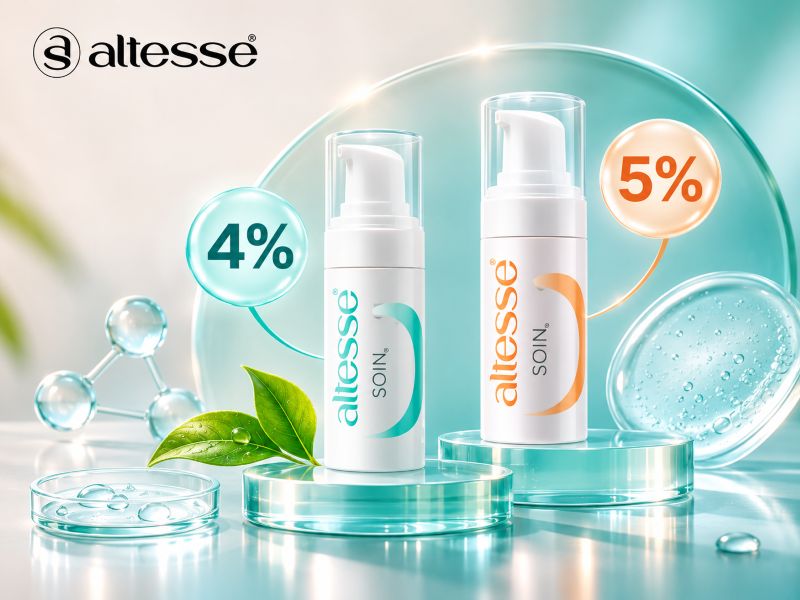
Staring at a 4% serum and a 5% one, unsure which to pick? The gap looks tiny, but choosing the right niacinamide 4% vs 5% option can save you irritation and time.
Direct answer: Both concentrations are effective and well tolerated by most skin types. Choose 4% if your skin is sensitive, you are new to niacinamide, or your goal is dark spots. Choose 5% if your skin handles actives well and you want clearer support for fine lines, texture and pores. Consistency matters more than the number itself.

Niacinamide 4% vs 5%: What Is the Real Difference?
The gap between 4% and 5% is small, and both sit inside the range that studies have shown to work on skin. Niacinamide is a form of vitamin B3. Products usually contain between 2% and 10%, but the concentrations backed by most research fall between 2% and 5%.
Some studies tested 4% on dark spots and acne, while others tested 5% on pigmentation, texture and signs of aging. That is why many experts describe the 4% to 5% range as the best balance of effectiveness and tolerance for most skin.
What many people forget is that the number on the label is not everything. Formula quality, the other ingredients, the product's pH and how consistently you use it all influence the result you will see. For a general overview, read the benefits of niacinamide serum for skin.
To see why one ingredient can help with several concerns, think of it as supporting the skin from several angles. It helps strengthen the skin barrier so skin holds water better, calms inflammation so redness eases, reduces the transfer of melanin pigment to the surface so tone improves gradually, and helps regulate oil. That is why dermatologists include it in so many routines: it plays well with most other ingredients.
Still, do not expect instant results, because niacinamide works cumulatively. The difference between 4% and 5% may be much smaller than the difference between using it regularly and using it on and off. Pick the concentration you can stick with every day without irritating your skin.
What Do Studies Say About Niacinamide 4%?
In studies, 4% has been linked to improvement in dark patches (melasma) and a reduction in inflammatory acne. The main findings:
- Melasma: in a double-blind trial of 27 women with melasma, participants used 4% niacinamide on one side of the face and 4% hydroquinone on the other for eight weeks. Niacinamide was slightly less effective than hydroquinone but still did well, and it is gentler on the skin.
- Acne: research reported that a 4% niacinamide gel applied twice daily improved moderate acne over eight weeks about as well as 1% clindamycin.
- Underarm pigmentation: 4% was also tested in a study on darkened underarm skin.
In melasma studies using 4%, roughly 40% of participants showed a meaningful improvement in pigmentation. That means results vary from person to person, and patience and consistency are essential. Learn what drives dark patches in the causes of melasma and skin pigmentation.
What Do Studies Say About Niacinamide 5%?
5% has been linked to improvement in pigmentation, fine lines, texture and redness, and it is the concentration most often used in anti-aging research. Key points:
- Signs of aging: a 12-week study of 50 women aged 40 to 60 used a 5% niacinamide moisturizer and reported improvement in fine lines, texture, spots, redness and sallowness.
- Pigmentation: research indicated that a 5% moisturizer reduced the transfer of melanin pigment to surface skin cells, which helps even out tone with consistent use.
- Acne: one study found a 5% gel worked about as well as a 2% clindamycin gel for mild to moderate acne.
There is also no widely accepted published trial showing that much higher concentrations such as 10% beat 5% for these results, so do not fall for the idea that a bigger number always means better results.
Which Is Better for Your Skin: 4% or 5%?
Pick 4% if your skin is sensitive or new to niacinamide, and 5% if it is used to active products and you want a clearer effect on texture and fine lines. A quick comparison:
| Comparison | Niacinamide 4% | Niacinamide 5% |
|---|---|---|
| Best-studied for | Melasma, acne, pigmentation | Pigmentation, fine lines, texture |
| Suits | Beginners and sensitive skin | Skin that has tolerated actives before |
| Tolerance | Excellent for most skin | Good for most skin with a gradual start |
| Time to results | 4 to 12 weeks | 4 to 12 weeks |
| Daily use | Morning and evening | Morning and evening after adjusting |
There is no magic concentration for everyone. The final judge is your own skin: how it reacts over two weeks and whether it feels comfortable or stings. For the right application steps, see how to use niacinamide serum on your face.
A few questions can help you decide. Have you used actives such as vitamin C, acids or retinol before? If so and your skin tolerated them, it is probably ready for 5%. If your routine is simply a cleanser, moisturizer and sunscreen, start at 4% and review the result after four weeks.
Another key question is your main goal. For dark spots or acne marks, both concentrations work with patience and sunscreen. For smoother texture and fewer fine lines, 5% is closer to what studies tested. And if you simply want calmer, more balanced skin, either is fine.
How Do You Choose a Concentration by Skin Type?
Sensitive and dry skin should start at 4%, while oily and non-sensitive skin usually tolerates 5% easily. The breakdown:
- Sensitive or irritated skin: start at 4% or lower and patch test first. ✓
- Oily and acne-prone skin: either works, and 2% to 5% has been linked to lower oil production. ✓
- Dry skin: choose a moisturizing 4% formula and pair it with a ceramide-rich moisturizer. ✓
- Pigmentation and melasma: 4% is well studied here and 5% is an excellent option, with sunscreen mandatory. ✓
- Fine lines and texture: 5% is the concentration most tied to these results in studies. ✓
- Pregnancy and breastfeeding: check with your doctor before any new product.
If your skin is very sensitive, read serum for sensitive facial skin before you begin.
Is a Higher Concentration Always Better?
No. Concentrations above 5% do not necessarily work better and may raise the risk of redness and stinging. Reviews note that side effects of topical niacinamide are usually mild, including slight burning, itching or redness, and that lasting irritation suggests the concentration is higher than your skin can handle.
Some sources advise talking to a dermatologist before using products above 5%. Starting at 4% or 5% is therefore a smart, safe place to begin, and you can reassess later rather than jumping straight to bigger numbers.
People sometimes assume their skin is "purging" when small bumps or redness appear a few days after starting a new product. It is safer to be cautious: if redness or burning lasts more than two weeks, the concentration or formula probably does not suit you, rather than your skin clearing something out. Going back to a lower concentration is not failure; it is a smart way to find your sweet spot.
Do not judge a product by its percentage alone either. A well-made 4% formula can outperform a poorly made 5% one full of irritants. Read the ingredient list, and if your skin is sensitive, check that alcohol and fragrance are not near the top.
How Do You Start Using Niacinamide Safely?
Start once a day for a week after a small patch test, then build up gradually to twice a day. The steps:
- Patch test: apply a small amount to the inner forearm and wait 24 hours.
- Cleanse: use a gentle cleanser and pat the face dry.
- Serum: apply 3 to 4 drops to face and neck.
- Moisturize: seal with a moisturizer suited to your skin.
- Sunscreen in the morning: essential, especially with pigmentation.
- Increase gradually: from once to twice daily based on tolerance.
Expert tip: if you feel burning or redness, reduce how often you use it or move to a lower concentration, and do not add other new actives at the same time.
Caution: stop if swelling, a rash or intense itching appears, and see a doctor.
Apply niacinamide to clean skin that is slightly dry rather than soaking wet, because excess moisture can increase tingling for some people. Wait a minute or two after the serum before moisturizing so it absorbs well. And do not use a large amount thinking it doubles the effect; a few drops cover the face and neck.
If you use exfoliating products or retinol, do not start niacinamide in the same week as another new product, so you can tell which one is responsible if irritation appears.
When Do Niacinamide Results Appear?
Texture improves within a few weeks, acne within 4 to 8 weeks, and pigmentation within 8 to 12 weeks. A realistic timeline:
2 to 3 weeks:
- ✓ Smoother texture and fresher-looking skin.
- ✓ Better oil balance for some skin types.
4 to 8 weeks:
- ✓ Improvement in acne and redness.
- ✓ Pores that look more even.
8 to 12 weeks:
- ✓ Visible improvement in spots and pigmentation, provided you use sunscreen consistently.
Important: sun exposure undermines any pigmentation progress regardless of concentration. Read when does niacinamide serum start working for more.
If you see no change after eight weeks of regular use, do not jump straight to a higher concentration. First check: are you using sunscreen daily, in enough quantity, and applying the product consistently? One of these is usually the reason results are slow, and if the problem persists, see a dermatologist to set the right plan.

Which Ingredients Pair Well With Niacinamide, and Which Need Care?
Niacinamide works with most ingredients, and its best partners are hyaluronic acid, ceramides, peptides and sunscreen. Useful combinations:
- Hyaluronic acid: adds hydration and eases dryness. See using niacinamide with hyaluronic acid.
- Ceramides and peptides: support the skin barrier and reduce irritation.
- Vitamin C: the two sit well together in many products. If you feel tingling, space them apart or use each at a different time of day.
- Retinol: niacinamide can ease retinol's dryness and irritation, and some doctors suggest applying it before or after retinol.
- Exfoliating acids: introduce gradually and cut back if redness appears.
To keep things simple, you can divide actives across the day: niacinamide morning and evening, exfoliants or retinol in the evening on separate nights, and sunscreen every morning. This lowers the chance of clashes and gives your skin time to recover between steps.
What Are the Most Common Mistakes When Choosing a Concentration?
The biggest mistakes are chasing high numbers, skipping sunscreen, and starting many actives at once. Here they are with the fix:
- Mistake 1: jumping straight to 10% or more. Fix: start with 4% or 5%.
- Mistake 2: quitting after two weeks. Fix: give your skin 8 to 12 weeks.
- Mistake 3: skipping sunscreen. Fix: use it every morning.
- Mistake 4: mixing several new actives at once. Fix: add one product every two weeks.
- Mistake 5: judging by percentage only. Fix: look at the whole formula.
- Mistake 6: ignoring persistent burning. Fix: drop to a lower concentration or stop the product.
- Mistake 7: relying on one product for stubborn melasma. Fix: see a doctor for resistant cases.
Which Altesse Soin Products Contain Niacinamide?
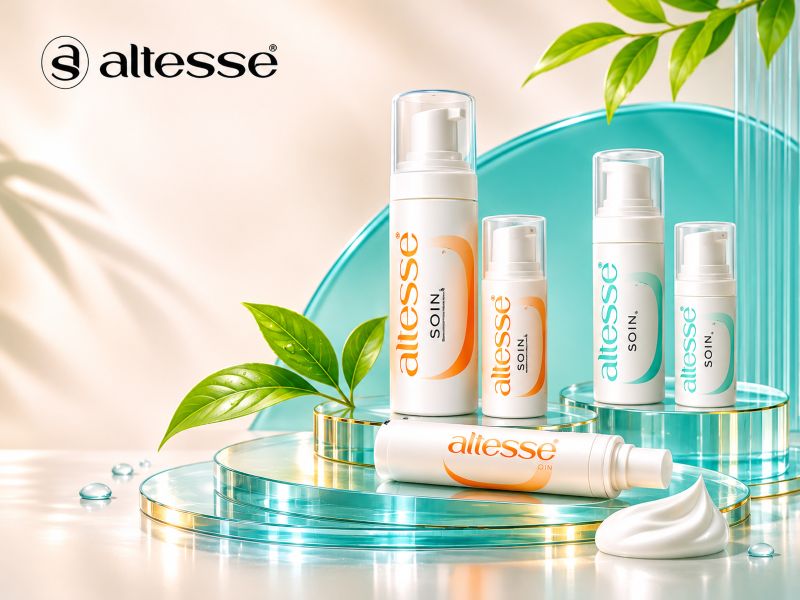
Within the Lustré line, Altesse Soin offers a complete routine that combines vitamin C and niacinamide in a serum, a gel cream and a cleanser. The range targets dark spots and uneven tone and lets you build a gradual routine based on how your skin tolerates it. For the exact niacinamide percentage in each product, please check the ingredient list on the packaging or contact us.
1. Lustré vitamin C and niacinamide serum (30 ml): for pigmentation and spots
This serum is the concentrated step in the routine. It combines vitamin C and niacinamide to tackle pigmentation and even out tone, and suits anyone wanting a clear effect on dark spots.
How to use: start once daily in the evening for a week, then increase based on tolerance.
Order the Lustré vitamin C and niacinamide serum (30 ml) to start a gentle brightening routine.
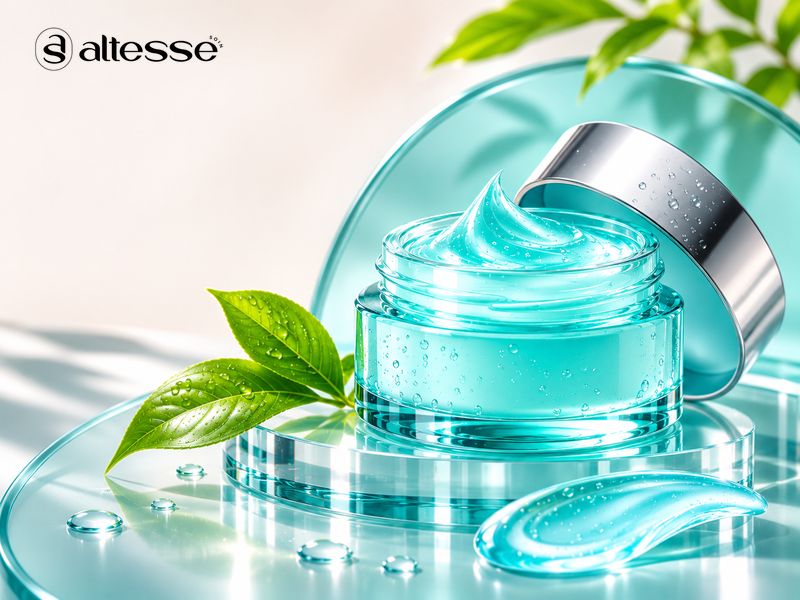
2. Lustré vitamin C and niacinamide gel cream (50 ml): hydration with brightening
If your skin prefers a lighter step than a serum, this gel cream pairs hydration with brightening ingredients in a comfortable texture for daily use, making it a good option for beginners.
How to use: apply morning and evening after cleansing, then sunscreen in the daytime.
Try the Lustré brightening gel cream (50 ml) for hydration and tone care in one step.
3. Lustré mild foaming cleanser (180 ml): a clean start
The cleanser is the lightest way to bring vitamin C and niacinamide into your routine, because it touches the skin only briefly. It suits those easing in gradually, and a 30 ml size is available for a first trial.
How to use: massage gently onto damp skin for a minute, then rinse.
Discover the Lustré mild foaming cleanser (180 ml) for a clean, gentle start.
4. Sunissime SPF50 sunscreen: the step that protects your results
Any product aimed at pigmentation needs sunscreen, or the effort is wasted. Sunissime hydrating daily SPF50 completes your niacinamide routine in the morning.
How to use: apply as the last morning step and reapply during long sun exposure.
Choose the Sunissime hydrating daily sunscreen SPF50 (50 ml) for protection that preserves your progress.
5. Reservoir ceramide and peptide gel cream: barrier support when skin feels dry
If dryness or tightness shows up when you start niacinamide, a moisturizer rich in ceramides and peptides supports the skin barrier and eases the feeling of irritation.
How to use: apply in the evening after the serum.
Try the Reservoir ceramide and peptide gel cream (50 ml) for hydration that balances your actives.
Tip: for very sensitive or stressed skin, see the Cica repairing gel cream (50 ml) as a gentle option.
What Is the Best Daily Routine With Niacinamide?
Gentle cleansing, then niacinamide, then moisturizer, then sunscreen in the morning. The suggested routine:
Morning:
- Gentle cleanser: the Lustré cleanser.
- Serum or gel cream: a thin layer on slightly dry skin.
- Sunscreen: Sunissime SPF50.
Evening:
- Cleanse: and remove sunscreen and makeup.
- Serum: a small amount of the Lustré serum.
- Supportive moisturizer: Reservoir gel cream.
To pick a sunscreen, see the best daily sunscreen.
Quick Facts About Niacinamide 4% vs 5%
- Niacinamide is a form of vitamin B3 used topically at 2% to 10%.
- 4% and 5% are the most studied for melasma, pigmentation and fine lines.
- A higher concentration does not mean a better result and may add irritation.
- Most side effects are mild: burning, itching or redness.
- Pigmentation needs 8 to 12 weeks with daily sunscreen.
- It pairs well with hyaluronic acid, ceramides and retinol.
- A patch test is a simple step that protects you from irritation.
Common Misconceptions About Niacinamide Concentration
Misconception 1: "10% is always better than 5%." Higher concentrations have not been shown to win in widely accepted published trials, and they may increase irritation.
Misconception 2: "4% is weak." It is the concentration tested in melasma and acne with good results.
Misconception 3: "Niacinamide bleaches skin." It helps even tone and soften spots; it does not change your natural skin color.
Misconception 4: "Results show in a week." Pigmentation takes weeks, and there is no shortcut for patience.
Misconception 5: "It replaces sunscreen." No, because the sun undermines any improvement.
When Should You See a Doctor Immediately?
See a dermatologist if swelling, a rash or severe itching appears, if pigmentation is stubborn, or if you are pregnant or breastfeeding. Seek medical advice in these cases:
- Redness or burning that does not settle after you stop the product.
- Swelling of the face or lips, or difficulty breathing after use.
- Dark spots that grow, change quickly or have irregular edges.
- Severe, scarring or painful acne.
- Plans to use concentrations above 5%.
- Pregnancy, breastfeeding or a chronic skin condition.
Urgent note: if swelling or shortness of breath follows any product, get medical help right away.
This article is for awareness and does not replace a doctor's diagnosis or prescription. Oral niacinamide supplements should only be taken under medical supervision.
FAQ: Niacinamide 4% vs 5%
What is the difference between niacinamide 4% and 5%?
The difference is small and both are well studied. 4% is linked to melasma, acne and good tolerance, while 5% is linked to fine lines, pigmentation and texture.
Which is better for beginners: 4% or 5%?
Start at 4% or lower, especially with sensitive skin, then move to 5% if your skin tolerates it.
Is 5% much stronger than 4%?
No. The difference in concentration is small, and results also depend on the formula and how consistently you use it.
Can I use niacinamide every day?
Yes, it is usually used once or twice daily. Start with once and increase gradually.
When do niacinamide results appear?
Texture within a few weeks, acne within 4 to 8 weeks, and pigmentation within 8 to 12 weeks.
Does 4% niacinamide treat melasma?
It helped ease melasma in a share of participants in studies, but it does not guarantee results for everyone and needs sunscreen, and a doctor's input for stubborn cases.
Can niacinamide cause irritation or allergy?
Effects are usually mild, such as burning, itching or redness, and sometimes ease with time. If they persist, use it less often or stop.
Can I combine niacinamide with vitamin C?
Yes, they appear together in many products. If you feel tingling, space them apart or use each at a different time of day.
Can I use it with retinol?
Yes, it may ease retinol's dryness and irritation. Introduce gradually and watch your skin.
Do I need sunscreen with niacinamide?
Yes, especially with pigmentation, because the sun undermines any improvement.
Is it suitable for oily skin?
Yes. It has been linked to lower oil production and improved acne, and you can use 4% or 5% depending on tolerance.
Is it suitable during pregnancy and breastfeeding?
Check with your doctor before using any new product during pregnancy and breastfeeding.
Need help choosing the right routine for your skin? The Altesse Soin team is happy to answer your questions.
WhatsApp: https://wa.me/201001143374
Email: info@altessesoin.com
Phone: +2 010 0114 3374
Medical References
- Navarrete-Solís J, et al. A double-blind, randomized clinical trial of niacinamide 4% versus hydroquinone 4% in the treatment of melasma. Dermatology Research and Practice. 2011.
- Bissett DL, Oblong JE, Berge CA. Niacinamide: a B vitamin that improves aging facial skin appearance. Dermatologic Surgery. 2005;31:860-865.
- Rolfe HM. A review of nicotinamide: treatment of skin diseases and potential side effects. Journal of Cosmetic Dermatology. 2014;13(4):324-328.