Do you notice that daily heat and sun exposure leave your skin looking dull or more prone to pigmentation? With the best daily sunscreen, you can build steady, comfortable protection that shields your skin from harmful UV rays without complicating your routine.
The best daily sunscreen is a product that combines broad-spectrum protection from UVA and UVB rays, an SPF of at least 30 (SPF 50 is preferable for stronger exposure), a formula suited to your skin type, and one that's easy to use every single day. Choose a water-resistant option if you sweat or spend time outdoors, apply it before heading out, and reapply every two hours during sun exposure.

What Makes the Best Daily Sunscreen?
The best daily sunscreen is broad-spectrum, suits your skin, and delivers real protection from harmful UV rays when applied in a sufficient amount.
There's no single formula that works for everyone; the right choice depends on your skin, how much time you spend outdoors, and your overall sun exposure. Oily skin may do better with a light, non-shiny texture, while dry skin usually needs a sunscreen built with comfortable, hydrating ingredients.
The term "broad-spectrum" means the sunscreen protects against two main types of rays: UVA and UVB. UVA rays are linked to the effects of cumulative exposure, like loss of elasticity and some signs of photoaging, while UVB rays are more directly responsible for sunburn and redness.
In hot climates, where high temperatures stretch across much of the year, applying sunscreen once and forgetting about it simply isn't enough. It works best as a fixed part of your daily routine — as automatic as brushing your teeth or moisturizing your face. This guide walks you through choosing the best sunscreen based on your actual needs, not just the packaging or how popular a brand is.
Why Is Daily Sunscreen So Important?
Sunscreen matters daily because it reduces the impact of repeated UV exposure and helps protect skin from burns, pigmentation, and photodamage.
-
Reduces sunburn: an appropriate SPF helps lower the likelihood of redness and burns during sun exposure, especially with correct application
-
Supports pigmentation prevention: protecting skin from repeated exposure may help reduce the worsening of dark spots and uneven tone
-
Preserves skin's appearance: UV rays are linked to photoaging, including fine lines, dryness, and loss of elasticity
-
Practical daily protection: it can go on in the morning as the last skincare step, with makeup applied over it when needed
-
Supports the skin barrier: the right choice won't feel heavy or drying, which makes it easier to stick with long-term
-
Backs up other skin treatments: when using certain exfoliants or treatments, daily protection becomes even more important since skin can become more light-sensitive
-
Reduces exposure during outdoor activity: water-resistant sunscreens are a practical choice for sweat or swimming, but need reapplying according to the label's instructions
Who Should Use Sunscreen Every Day?
Sunscreen suits every skin type, because UV exposure can affect anyone, regardless of skin tone or age.
-
Oily skin: suits a lightweight fluid or gel, non-comedogenic, to reduce the feeling of shine
-
Dry skin: suits a cream sunscreen with hydrating ingredients to stay comfortable all day
-
Combination skin: suits a medium texture or gel-cream that balances oily and dry areas
-
Sensitive skin: suits a low-fragrance, dermatologist-tested product, tried first on a small area
-
Skin prone to pigmentation: needs daily broad-spectrum protection, and may benefit from a tinted sunscreen containing iron oxides, since the American Academy of Dermatology notes that iron oxides may add protection from visible light linked to dark spots
-
Anyone working near windows: may benefit from making sunscreen a fixed part of their routine, especially in bright office environments
-
Outdoor activity enthusiasts: need a water-resistant type, with reapplication after sweating or swimming
This kind of daily protection matters just as much for skin that's already reactive. If your skin tends to flare up easily, our guide to the best serum for irritated skin can help you build a calmer routine alongside your sunscreen.
How to Choose the Best Sunscreen for Your Skin
Choosing the best sunscreen starts with reading the label and focusing on broad-spectrum protection, SPF level, water resistance, and a texture that suits your skin.
|
What to Look For |
Why It's Considered |
|
Type of protection |
The phrase "Broad Spectrum" confirms protection from both UVA and UVB rays |
|
Protection factor |
SPF 30 or higher, and SPF 50 for strong daily exposure — dermatology bodies recommend a minimum of SPF 30 |
|
Water resistance |
"Water Resistant" for 40 or 80 minutes matters with heat, sports, and sweat |
|
Product texture |
Cream, gel, fluid, or stick — determines comfort and ease of daily application |
|
Skin type match |
Non-comedogenic or fragrance-free when needed, to reduce discomfort for certain skin types |
|
Finish |
Clear or tinted — a tinted option may suit those dealing with pigmentation or who prefer a more even look |
Don't let the SPF number be the only factor; a sunscreen that doesn't suit your skin usually won't get used consistently. Choosing the best sunscreen means choosing a product you'll apply daily in the right amount — not one that stays in a drawer.
How to Apply Sunscreen the Correct Way
Apply sunscreen about 15 minutes before heading out, spread a sufficient amount over your face and neck, then reapply every two hours during outdoor exposure.
-
Start with clean skin: wash your face with a gentle cleanser suited to your skin type
-
Apply your skincare steps first: use your serum or moisturizer, and let it settle on the skin
-
Make sunscreen the last morning step: applied after your skincare products and before makeup
-
Use enough product: the American Academy of Dermatology notes a guideline of roughly a teaspoon's worth to cover the face, based on its usage instructions
-
Cover all exposed areas: don't forget the ears, back of the neck, and hairline
-
Wait before exposure: the product needs time to settle; guidance recommends applying about 15 minutes before heading outside
-
Refresh protection regularly: reapply every two hours, and immediately after swimming, sweating, or towel-drying
Expert tip: keep a suitable sunscreen in your bag or at your desk to make reapplication easier.
Warning: don't treat sunscreen as a substitute for a hat, shade, or sunglasses — these tools complete your protection, especially during peak sun hours.
Can Sunscreen Be Used with Other Skincare Products?
Yes, sunscreen can be used with most skincare products, but it always goes at the end of your morning routine and shouldn't be mixed directly with other products.
Safe and effective with
-
Hyaluronic acid: supports skin hydration before sunscreen with no expected conflict — see what hyaluronic acid benefits your skin can get
-
Niacinamide: fits well into a morning or evening routine when your skin tolerates it — read our guide on using niacinamide serum for more detail
-
Vitamin C: applied before sunscreen in the morning, and it's worth knowing vitamin C serum results typically take a few weeks to show
-
A light moisturizer: suits dry skin before sunscreen if the formula isn't hydrating enough on its own
Use with caution
-
Chemical exfoliants: reduce frequency if you're dealing with dryness or sensitivity, and prioritize daily protection
-
Retinoids: usually used in the evening under a specialist's guidance, paired with daytime sunscreen
Avoid
-
Mixing sunscreen with foundation or moisturizer: this can reduce even distribution of protection
-
Applying sunscreen over very wet skin: this can affect how well some formulas hold up
-
Using an expired product or one stored somewhere hot: check the expiration date and keep it away from high heat, as recommended by the Saudi Ministry of Health
When Do Results from Regular Use Show Up?
The immediate result is better protection from daily exposure, while visible results like reduced new pigmentation take consistent use and patience.
|
Timeframe |
What to Expect |
|
Week 1 |
A greater sense of comfort with the right formula; reduced unprotected sun exposure |
|
2 weeks to 1 month |
Easier consistency with your routine; fewer chances of redness with correct use |
|
1 to 3 months |
Support for a more even tone; reduced impact of cumulative exposure |
|
3+ months |
Ongoing support for skin health as part of a complete preventive routine |
Important: sunscreen alone doesn't treat existing pigmentation or fine lines, but it's a necessary preventive element that stops them from getting worse and supports any care plan or medical treatment. Medical references note that UV damage can include photoaging and cellular damage, which is why consistency matters more than fast results.
Common Mistakes to Avoid
The biggest mistake is applying sunscreen once in the morning and assuming protection will last all day regardless of exposure or sweat.
-
Mistake 1: only using sunscreen in summer — Fix: use it daily; the Saudi Ministry of Health confirms sunscreen should be used daily, even in winter
-
Mistake 2: applying too little — Fix: apply enough to cover exposed skin evenly
-
Mistake 3: forgetting to reapply — Fix: refresh your sunscreen every two hours outdoors, and after swimming or sweating
-
Mistake 4: choosing SPF without broad-spectrum coverage — Fix: confirm the label says "Broad Spectrum" for protection from both UVA and UVB
-
Mistake 5: ignoring the neck and ears — Fix: apply sunscreen to all exposed areas, including your neck and ears
-
Mistake 6: using expired sunscreen — Fix: check the expiration date and store the product away from sunlight and high heat
Best Sunscreens by Texture and Skin Type
The best sunscreens are the ones that suit your skin type and offer broad protection with SPF 30 or higher — not necessarily the most popular or most expensive product.
|
Type |
Best For |
Advantages |
Keep in Mind |
|
Cream |
Dry and normal skin |
More comfort and hydration |
Choose a lighter texture for wear under makeup |
|
Gel or fluid |
Oily and combination skin |
Lightweight, absorbs quickly |
Make sure it's spread evenly |
|
Tinted sunscreen |
Uneven tone or pigmentation |
Evens out appearance; iron oxides may add visible-light protection |
Test the right shade first |
|
Water-resistant |
Sports or outdoor work |
Holds up with sweat and moisture for a set time |
Reapply after 40 or 80 minutes per the label |
|
Sensitive-skin formula |
Sensitive skin |
Usually lower fragrance and gentler |
Try it on a small area first |
We're not recommending one specific product by name here, because the right choice depends on a practical read of your own skin type and tolerance. Use this guide to identify the specifications you need, then compare what's available to you based on the label, ingredients, and instructions for use.
Tip: pair it with a suitable moisturizer in the morning if you feel dry, and a gentle cleanser in the evening to remove sunscreen residue without irritating your skin.
How Do You Build a Daily Routine That Protects Your Skin?
A successful routine doesn't need many steps — it needs the right sunscreen and consistent application that fits your daily life.
Morning
-
Gentle cleanser: clear away oils or residue from evening products
-
A hydrating or antioxidant serum: choose based on your skin's needs
-
Moisturizer if needed: use it if your skin feels dry or tight
-
Broad-spectrum sunscreen: apply SPF 30 or higher, preferably SPF 50 for strong exposure
-
Optional makeup: apply once the sunscreen has settled on your skin
Evening
-
Remove sunscreen and makeup: use a suitable cleanser, and consider double cleansing if you wore heavy makeup
-
Nighttime care: apply the treatment or hydrating products that fit your needs
-
Moisturizing cream: support your skin's comfort overnight
On days with long outdoor stretches or fieldwork, factor in a hat, sunglasses, and shade, and don't rely on sunscreen alone. And if you're also managing underarm care as part of your grooming routine, our guide to the best deodorant for dark underarms covers gentle, non-irritating options worth knowing about.
Quick Facts
-
The best daily sunscreen should be broad-spectrum, SPF 30 or higher, and water-resistant when needed
-
"Broad-spectrum" means protection from both UVA and UVB rays
-
Sunscreen should be reapplied every two hours when outdoors, and after sweating or swimming
-
Water resistance isn't permanent — it typically lasts 40 or 80 minutes, per the packaging
-
Sun exposure can lead to redness, burns, and early signs like dryness and dark spots
-
Effective protection includes sunscreen along with shade, a hat, sunglasses, and protective clothing
Common Misconceptions
-
Myth: I don't need sunscreen on cloudy days or in winter. Truth: daily sunscreen use is recommended even in winter, since UV rays remain linked to skin issues year-round.
-
Myth: SPF 50 means I don't need to reapply. Truth: sunscreen still needs reapplying every two hours during exposure, and sooner after sweating or swimming.
-
Myth: dark skin doesn't need sunscreen. Truth: all skin tones can be affected by the sun; guidance confirms everyone is susceptible to sunburn to varying degrees.
-
Myth: sunscreen alone protects against everything. Truth: broader protection includes shade, clothing, sunglasses, and a hat, alongside correct sunscreen use.
-
Myth: water-resistant sunscreen never comes off. Truth: water resistance lasts for a limited time, usually 40 or 80 minutes, after which the product needs reapplying.
When Should You See a Doctor Immediately?
See a doctor right away if you notice swelling of the face or eyes, difficulty breathing, a widespread rash, or extensive, painful sunburn.
Seek medical care in the following cases:
-
Large blisters or burns covering a significant area of the body
-
Pain that persists for more than 48 hours after a sunburn
-
High fever, severe dehydration, dizziness, or feeling unwell
-
Increasing swelling, discharge, or worsening pain when touching a burned area
-
Changes in vision after intense sun exposure
-
A change in a mole's size, color, or borders, or bleeding from it
-
Repeated severe sensitivity after applying sunscreen despite switching formulas
The Saudi Ministry of Health recommends seeking medical care for extensive burns, severe dehydration, high fever, or persistent pain, and flags signs like increased swelling, pus, and vision changes as reasons to seek care.
If your skin tends to react easily to new products in general, it's also worth reading up on whether cica serum daily use could help calm and support it alongside your sun protection routine.

Best Sunscreen for Daily Use
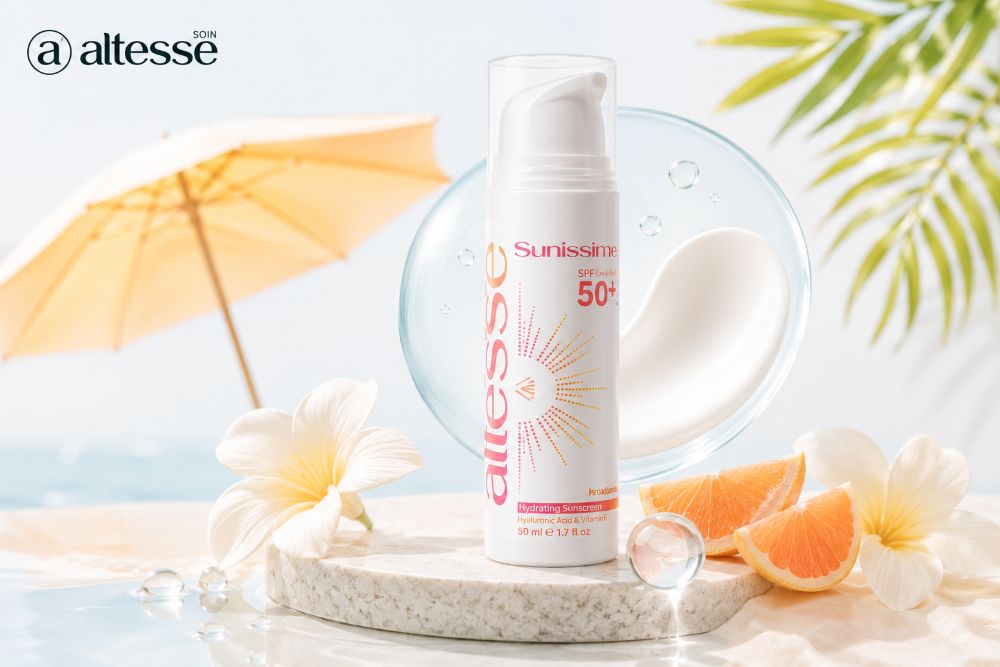
Consistent, daily sun protection is the single most important factor in keeping skin healthy and radiant over the long term. The Sunissime collection offers two ideal options for daily use, both with SPF50+ protection and a lightweight formula suited to wear under makeup.
Sunissime Hydrating Daily Sunscreen SPF50+ 50ml
The deciding factor in choosing a daily sunscreen is how well it suits repeated use without side effects — and this product stands out on exactly that point.
Key Ingredients & Benefits
-
A lightweight formula that doesn't feel heavy or clog pores, even with continuous daily use
-
Blends smoothly with makeup with no separation or uneven layering
-
SPF50+ protection needed daily, regardless of the weather
When Will You See Results?
Daily cumulative UV exposure, even on cloudy days or inside a car, is one of the leading causes of premature aging and pigmentation over the long term.
How to Use
-
Make it a fixed part of your morning routine, without exception
-
Refresh protection every 2 to 3 hours during direct exposure
A simple daily habit that protects your skin for the long haul.
Turn daily protection into a habit with Sunissime Hydrating Daily Sunscreen SPF50+ 50ml.
Sunissime Anti-Aging Daily Sunscreen SPF50+ 50ml
Regular daily sunscreen use is the cornerstone of any skincare routine, and this product is built to be easy to fit in every single day.
Key Ingredients & Benefits
-
A lightweight, fast-absorbing formula with no greasy or white residue
-
Can be applied as a base before foundation without changing your skin's texture
-
Ingredients that help limit the cumulative damage caused by daily sun exposure
When Will You See Results?
Daily consistency is the real difference between skin that stays youthful for years and skin that shows premature aging from neglected protection.
How to Use
-
Apply each morning after your moisturizer and before makeup
-
Reapply every 2 to 3 hours during outdoor activities or long drives
A simple daily commitment with a real long-term difference.
Commit to a daily protective routine with Sunissime Anti-Aging Daily Sunscreen SPF50+ 50ml for younger-looking skin, longer.
FAQ
What's the best daily sunscreen?
The best option is a broad-spectrum sunscreen that protects against both UVA and UVB, with an SPF of 30 or higher, suited to your skin type, and easy to reapply.
Is SPF 50 better than SPF 30 for daily use?
SPF 50 offers higher protection and can be a good fit for strong exposure or high heat, but correct application and reapplication matter more than the number alone.
Do I need sunscreen daily even indoors?
Yes, daily use matters because of repeated exposure to daylight, while reducing exposure during peak heat and using other protective measures is also recommended.
Can sunscreen be used on oily skin?
Yes, choose a lightweight gel or fluid texture, preferably non-comedogenic and suited to oily skin.
What's the difference between broad-spectrum and regular sunscreen?
Broad-spectrum sunscreen protects against both UVA and UVB rays, while a product not labeled this way doesn't confirm protection from both types.
How many times a day should I apply sunscreen?
Apply it in the morning before heading out, and reapply every two hours during outdoor exposure, or right after swimming, sweating, or towel-drying.
Should I apply moisturizer before sunscreen?
Yes, when needed — especially for dry skin. Apply your moisturizer first, then make sunscreen the last step of your morning routine.
Is tinted sunscreen good for pigmentation?
It can be a helpful part of a protective routine, especially when it contains iron oxides, which may add protection from visible light linked to dark spots.
Can makeup go on top of sunscreen?
Yes. Wait until the sunscreen has settled on your skin, then apply makeup gently without harsh rubbing.
Should sunscreen be reapplied indoors?
If you're near a bright window, exposed to daylight for long stretches, or heading outside during the day, it's practical to refresh protection based on your exposure level.
Does sunscreen cause breakouts?
Not necessarily. Choose a formula suited to oily or sensitive skin, and stop using it if it causes ongoing irritation or a clear rash.
Can children use the same sunscreen?
It's best to choose a sunscreen suited to a child's age and skin condition, and consult a pediatrician or dermatologist if there's eczema, sensitivity, or a very young age involved.
Protect Your Skin the Smart Way — Your Daily Glow Starts Here
Looking for the ideal protection that combines superior sun defense with a light, soft feel on your skin?
At Altesse Soin, we offer the best sunscreen designed specifically for daily use — it's not just a shield from the sun, but your ideal companion for protecting your skin from pigmentation and early signs of aging, with a fast-absorbing formula that leaves no greasy residue, so you can enjoy a natural, fresh look all day long.
Why make it part of your routine?
-
Broad protection against harmful sun rays (UVA/UVB)
-
Light on skin: a comfortable formula suited to intensive daily use
-
Safe and effective: nourishes your skin and maintains its hydration and health
Enjoy a summer full of confidence, and let your skin breathe freely under our trusted protection.
Get in touch with us to order your sunscreen. We're here to help you choose the product that best fits your skin type.
WhatsApp: https://wa.me/201001143374
Email: info@altessesoin.com
Phone: +2 010 0114 3374
Altesse Soin — because you deserve protection that matches your beauty.
Medical References
-
American Academy of Dermatology — sunscreen selection criteria, including broad-spectrum protection, SPF 30 or higher, and water resistance
-
American Academy of Dermatology — guidance on application amount and reapplying sunscreen every two hours and after swimming or sweating
-
U.S. Food and Drug Administration — recommendations on reapplying sunscreen to maintain protection
-
Saudi Ministry of Health — sunburn prevention, choosing SPF 30 or higher, and guidance on cases requiring medical care
-
NCBI StatPearls — photoprotection and its role in reducing UV damage and photoaging