Dry in some places, shiny in others, and a little uneven overall? Adding more products isn't always the answer. Pairing two well-studied ingredients, niacinamide and hyaluronic acid, can give you a simpler, more balanced routine. This guide explains how to use niacinamide with hyaluronic acid, which goes first, who benefits, how to avoid irritation, and what results are realistic.
Can You Use Niacinamide With Hyaluronic Acid?
Yes. You can use niacinamide and hyaluronic acid in the same routine, with no known conflict between them. Cleanse, apply the thinner serum first, follow with the thicker one, then moisturize and, in the morning, apply broad-spectrum sunscreen. Niacinamide supports the skin barrier and the look of oil and tone, while hyaluronic acid attracts water to boost hydration.
How Do Niacinamide and Hyaluronic Acid Work Together?

Each ingredient does a different job, which is why they complement each other: one supports the barrier and skin balance, the other draws in water.
What Is Niacinamide?
Niacinamide is a form of vitamin B3. In skincare it is used to support the skin barrier and may help improve the look of uneven tone, pores, and oiliness in some people. Research suggests it may support the production of barrier components and limit pigment transfer to surface skin cells, which can gradually improve the look of dark marks. Results depend on the formula, concentration, and the concern.
What Is Hyaluronic Acid?
Hyaluronic acid is a humectant, meaning it attracts and holds water. That is why it appears in many serums and moisturizers made to fight dryness and improve texture. Think of it as a tiny sponge for moisture. It doesn't replace a moisturizer, though, since a moisturizer helps reduce water loss from the skin's surface.
Why Combine Them?
Together they cover two needs: barrier support and hydration. Layering serums can be practical, as long as you don't overload your routine or ignore what your skin actually needs.
What Are the Benefits of Using Niacinamide and Hyaluronic Acid Together?
Combining them builds a balanced routine focused on hydration, barrier support, and a healthier-looking complexion, without needing many products.
-
More hydration: Hyaluronic acid draws water in, which can leave skin softer and plumper and soften the look of dryness lines.
-
Barrier support: Niacinamide may improve barrier function, which helps skin hold moisture and resist outside stressors.
-
More even-looking tone: Niacinamide may gradually reduce uneven tone, but it is not a guaranteed fix for every type of melasma or pigmentation.
-
Oil balance: Some studies suggest niacinamide may reduce visible oil for some people, though response varies.
-
Less visible pores: Pores can look smaller when oil and hydration improve, but neither ingredient removes pores or changes their size permanently.
-
Calmer-looking skin: Niacinamide may help reduce some signs of inflammation, but badly irritated skin needs proper assessment, not more actives.
-
A fresher glow: Better hydration and a more even look can make skin appear brighter, without changing your natural skin color.
Scientific reviews support several of these uses, though the strength of the evidence varies by benefit. Treat results as potential improvements with consistent use, not instant or guaranteed outcomes.
Who Should Use Niacinamide and Hyaluronic Acid?
This pairing can suit many skin types, provided you choose suitable formulas and don't apply them to badly irritated skin.
-
Oily skin: A lightweight niacinamide serum plus hyaluronic acid for hydration, without a heavy, greasy texture.
-
Dry skin: Hyaluronic acid helps hydration while niacinamide supports the barrier; a good moisturizer is still essential.
-
Combination skin: Use both on the whole face, with a lighter moisturizer on oily areas and a richer one on dry areas if needed.
-
Sensitive skin: Many sensitive skin types tolerate them, but introduce one product at a time and choose fragrance-free formulas when possible.
-
Acne-prone skin: Niacinamide may help with some oil and inflammation concerns, but it isn't an automatic replacement for acne treatments.
-
Uneven tone: Niacinamide may help with some pigmentation when used alongside daily sunscreen; some cases need dermatologist-guided treatment.
Note: If you have active eczema, persistent redness, or clear irritation, focus on gentle care and get it assessed before adding new products.
How to Choose Niacinamide and Hyaluronic Acid Products
Choose based on your skin type, the full formula, and ingredient concentration, not just the number of actives on the label.
1. The right niacinamide strength
Niacinamide products come in different concentrations. A moderate strength is often enough to start, especially if you're new to it or have sensitive skin. A higher percentage doesn't automatically mean better results.
2. Hyaluronic acid texture
Oily skin may prefer a light, watery serum. Dry skin may benefit from a formula that pairs water-attracting ingredients with moisturizing ones that reduce water loss.
3. The full ingredient list
Don't stop at checking for niacinamide or hyaluronic acid. Look at fragrance, alcohol, preservatives, and other ingredients that might irritate you.
4. Products that match your goal
If hydration is your priority, start with a good hydrating serum. If you want to address oil or uneven tone, niacinamide may be a useful addition.
5. Manufacturer directions
Some serums go on clean skin, others on slightly damp skin. Follow the instructions on the product rather than one rule for everything.
6. Patch-test first
The American Academy of Dermatology recommends testing a new product on a small area of skin twice daily for 7 to 10 days, using a method suited to the product type, before using it more widely. Stop if you develop itching, redness, or swelling.
What's the Right Order to Apply Niacinamide and Hyaluronic Acid?

The practical rule is: cleanse, apply the lighter-textured serum first, then the thicker one, then moisturizer, and sunscreen in the morning. Adjust based on each product's directions.
-
Cleanse: Use a gentle cleanser for your skin type, then pat dry rather than rubbing.
-
Apply the thinner serum first: If your hyaluronic acid serum is the lighter one, apply it to clean, slightly damp skin if the label allows.
-
Apply niacinamide: Spread a suitable amount over your face as directed, avoiding the eyes unless the product is made for that area.
-
Let layers settle: You don't need a long wait; letting each layer sink in is usually enough, especially if products tend to pill.
-
Moisturize: A moisturizer helps limit water loss, especially in dry climates or if your skin feels tight after serums.
-
Sunscreen in the morning: Use broad-spectrum SPF 30 or higher and reapply as directed.
-
Watch your skin: Introduce products gradually and note any redness, itching, or lingering stinging.
Can You Use Niacinamide First?
Yes. If your niacinamide serum is thinner than your hyaluronic acid serum, apply it first. The guideline is texture and the manufacturer's directions, not a fixed order for every product.
Tip: Don't add several new actives at once. If irritation happens, you won't know which one caused it.
How to Combine Niacinamide With Other Active Ingredients Safely
Niacinamide and hyaluronic acid pair with many ingredients, but what to add depends on your goal and how well your skin tolerates it.
Ingredients That Usually Combine Well
|
Ingredient |
Why It Works |
Notes |
|
Ceramides |
Support the skin barrier and reduce moisture loss |
Especially useful for dry skin |
|
Glycerin |
A water-attracting ingredient that boosts hydration |
Often found alongside hyaluronic acid |
|
Sunscreen |
The key morning step |
Helps limit sun-related dark spots getting worse |
|
Gentle moisturizers |
Improve comfort and lock in hydration |
Important in dry weather |
Ingredients That Need Care
|
Ingredient |
Why Be Careful |
Notes |
|
Retinol |
Can cause dryness and irritation |
Introduce gradually; don't start alongside several new actives |
|
Exfoliating acids (glycolic, salicylic) |
Overuse can cause irritation and dryness |
Compatibility depends on formula and tolerance |
|
Vitamin C |
Fine together in many modern formulas |
No general rule to separate; patch-test and follow directions |
Are There Ingredients to Avoid Completely?
There is no general list that bans combining niacinamide and hyaluronic acid with every other active. The risk comes from stacking several irritants or using strengths that are too high. If you use a prescription treatment, don't replace it with cosmetic serums or change how you use it without asking your doctor.
When Will You See Results?
Hydration can look better quickly, but changes in pigmentation, oil, and skin texture need weeks of consistent use, and the timing varies by concern and formula.
|
Timeframe |
Possible Results |
What to Do |
|
First few days |
Skin may feel more hydrated and smooth |
Check tolerance; don't overload on serums |
|
2 to 4 weeks |
Skin texture may feel more stable; early signs of improvement |
Continue if no irritation appears |
|
4 to 8 weeks |
Appearance and oil balance may improve for some users |
Assess changes without expecting guaranteed results |
|
8 to 12 weeks |
Clearer improvement in some uneven tone, with niacinamide and sunscreen |
Compare results and decide whether to adjust your routine |
These timeframes are estimates, not a fixed scientific schedule. Studies differ in product strength and duration, and the evidence for hyaluronic acid focuses mostly on hydration and skin quality, while niacinamide research covers several outcomes that vary by formula and target concern.
When to reassess: If you see no improvement after a fair trial, or things get worse, don't automatically use more product or use it more often. Review the ingredients and your application method, and see a dermatologist if the problem continues.
Common Mistakes When Combining Niacinamide and Hyaluronic Acid
The most common mistakes are overdoing products, assuming a higher percentage is better, and skipping moisturizer and sunscreen.
|
Mistake |
What to Do Instead |
|
Believing a higher concentration is always better |
Choose a strength that suits your skin; stronger can mean more irritation without extra benefit |
|
Starting all new serums on the same day |
Introduce one product at a time to identify what suits you |
|
Using hyaluronic acid without moisturizer |
Follow the product directions, then use a moisturizer if your skin needs help holding water |
|
Ignoring application directions |
Some formulas suit damp skin, others don't; products aren't all the same |
|
Expecting dark spots to vanish fast |
Tone improves slowly, may need specialist treatment, and sunscreen is essential |
|
Continuing despite irritation |
Stop the suspected product, rinse gently, and don't reuse it after a clear reaction until you've asked a professional |
|
Changing your routine constantly |
Give suitable products enough time to assess, while watching for signs of irritation |
Which Altesse Soin Products Fit This Routine?
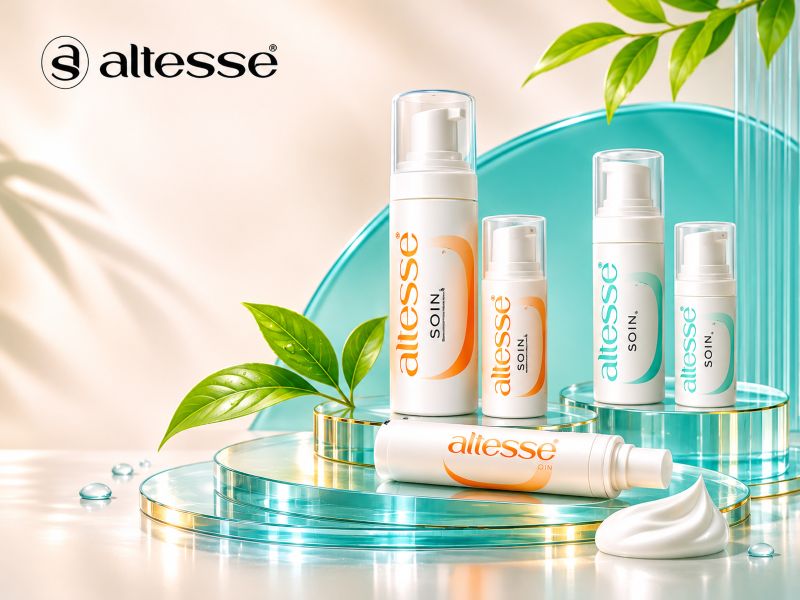
Here is how Altesse Soin products map onto a niacinamide and hyaluronic acid routine:
-
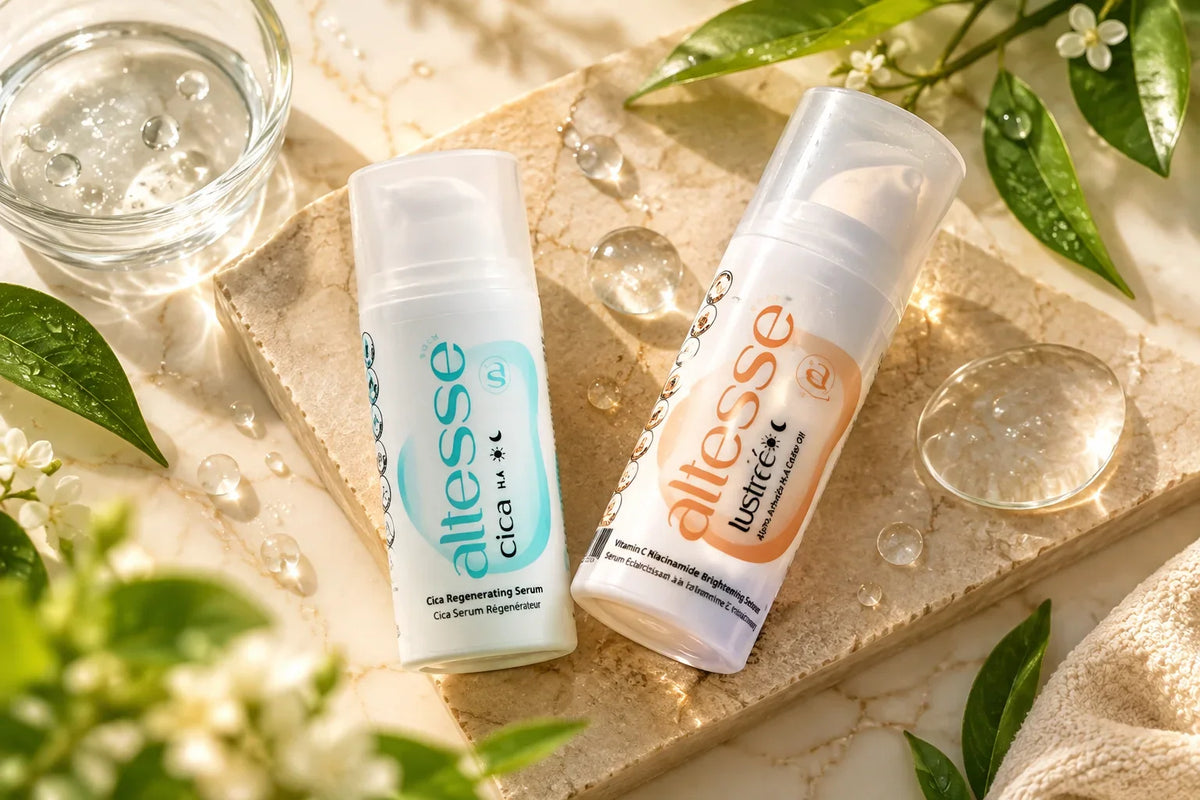
Niacinamide step: Altesse Lustré Vitamin C & Niacinamide Brightening Serum. Combines niacinamide with vitamin C, aimed at brightness and a more even-looking tone. Use as directed on the product page.
-
Hydration step: Altesse Soin Reservoir Hydrating Serum. A hydration-focused serum in the range; check the product page for the exact formula and how to use it alongside your other serums.
-
Moisturizer step: Altesse Soin Reservoir Moisturizing Gel Cream for lightweight hydration, or Altesse Lustré Vitamin C & Niacinamide Brightening Gel Cream if you want to keep brightening support in your moisturizer step.
-
Cleansing: Altesse Cica Mild Foaming Cleanser for a gentle, everyday wash.
-
Morning protection: Altesse Soin Sunissime Sunscreen SPF50+ to complete the routine.
Introduce new products one at a time, particularly if your skin is sensitive.
Morning and Evening Routine

A good routine is simple: cleanse, hydrate, moisturize, and protect in the morning, and cleanse and moisturize at night.
Morning
-
Cleanse with a gentle cleanser, or simply rinse if that suits your skin.
-
Hydrating serum: Apply hyaluronic acid as directed on the label.
-
Niacinamide: Use it if you want barrier support or help with oil and uneven tone.
-
Moisturizer: Pick a light or rich formula to match your skin's needs.
-
Sunscreen: Broad-spectrum SPF 30 or higher, reapplied as directed.
Evening
-
Remove makeup and sunscreen, then cleanse gently.
-
Apply niacinamide and hyaluronic acid in the order that suits their textures and directions.
-
Finish with a moisturizer to support the barrier and limit water loss.
If your skin is sensitive, a gentle cleanser, suitable moisturizer, and sunscreen may be better than layering several serums while it recovers.
The key rule: You don't need a long routine. Use the right method consistently, and watch how your skin responds.
Common Myths About Niacinamide and Hyaluronic Acid
-
Myth: You can't use niacinamide and vitamin C together. Reality: Many modern formulas combine them, and there's no general rule to separate them. What matters is tolerance and how you apply products.
-
Myth: Hyaluronic acid replaces moisturizer. Reality: It attracts water, while a moisturizer helps limit water loss. Your skin may need both.
-
Myth: Niacinamide permanently removes dark spots. Reality: It may improve the look of some pigmentation but doesn't guarantee it disappears, and some cases need specialist care.
-
Myth: Oily skin doesn't need hydration. Reality: Oily skin can still be dehydrated, so choose a suitable moisturizer instead of skipping it.
-
Myth: Fast results mean the product works. Reality: Quick improvement may reflect temporary hydration, while other changes need time and realistic assessment.
-
Myth: "Natural" products are safe for everyone. Reality: Natural or synthetic ingredients, fragrances, and preservatives can cause irritation or allergy in some people.
Possible Side Effects and When to See a Doctor
Topical niacinamide and hyaluronic acid are widely used, but side effects and allergic reactions can still happen.
Possible Reactions
-
Redness or a burning sensation
-
Itching or irritation
-
Dryness or increased tightness
-
Rash or swelling where the product was applied
-
Breakouts or clogged pores in some people, often due to the full formula rather than the active ingredient itself
If symptoms appear, stop the suspected product and rinse your skin gently. Avoid adding other actives to treat irritation when you don't know the cause.
When to See a Dermatologist
See a doctor if redness or itching continues, irritation keeps coming back, pigmentation gets worse, or the problem doesn't improve even with a gentle, suitable routine. A doctor can check whether you have contact allergy or a skin condition needing different treatment.
When to Get Emergency Help
Get emergency medical help right away if you have sudden swelling of the lips, tongue, or throat, difficulty breathing, or severe dizziness with an allergic reaction. Don't wait for these to settle at home.
Quick Facts
-
Can you use both together? Yes, in the same routine, with no known general conflict between them.
-
What does niacinamide do? It may support the skin barrier, the look of pigmentation, and oil balance for some people.
-
What does hyaluronic acid do? It attracts and holds water in the surface layers of skin, improving hydration and plumpness.
-
What's the right order? Usually the lighter-textured serum first, following manufacturer instructions, then moisturizer, then sunscreen in the morning.
-
Are they suitable for sensitive skin? Often, but tolerance depends on the whole formula, ingredient strength, and your skin barrier.
-
When do you see results? Hydration may improve fast, while pigmentation and texture need weeks of regular use.
Summary
To get the most from niacinamide and hyaluronic acid, understand what each does, choose suitable products, and apply them in a sensible order. Hyaluronic acid draws in water for hydration, while niacinamide supports the skin barrier and may help with the look of oil and pigmentation.
Keep your routine simple: cleanse, hydrate, moisturize, and use sunscreen. Add new products slowly, don't mix several actives without a reason, and never ignore signs of irritation. The goal isn't more products; it's using the right ones correctly and judging results realistically.
For questions about Altesse Soin skincare products, contact us:
-
WhatsApp: https://wa.me/201001143374
-
Email: info@altessesoin.com
-
Phone: +2 010 0114 3374
Frequently Asked Questions
1. Can you use niacinamide and hyaluronic acid at the same time?
Yes. Niacinamide supports the skin barrier and may improve the look of oil and tone, while hyaluronic acid boosts hydration. Choose formulas that suit your skin.
2. Which goes first, niacinamide or hyaluronic acid?
Usually the lighter-textured serum goes first, then the thicker one. If your hyaluronic acid serum is lighter, use it before niacinamide, and the reverse also applies. Follow the manufacturer's directions if they differ.
3. Can you use them every day?
Yes, if your skin tolerates them and the product allows daily use. Start gradually with any new product and stop if clear irritation appears.
4. Are niacinamide and hyaluronic acid good for oily skin?
They can be. Choose light serums and a non-clogging moisturizer. Niacinamide may improve the look of oil, but it doesn't guarantee oil production stops.
5. Is this routine suitable for sensitive skin?
It may be, if the products are gentle and free of ingredients that trigger you. Patch-test each product first, and see a dermatologist if inflammation persists.
6. Does combining them help lighten dark spots?
Niacinamide may gradually improve the look of some pigmentation, while hyaluronic acid focuses on hydration. Daily sunscreen is a core part of caring for skin prone to dark spots.
7. Can you use them around the eyes?
It depends on the product and whether it's made for the eye area. Don't use a face serum near the eyes if its directions say not to, and avoid direct eye contact.
8. Do you need to wait between the two serums?
No set waiting time is required. Letting each layer settle before the next is usually enough, especially if products tend to pill. Follow the manufacturer's directions.
9. Can you use them morning and night?
Yes, if the formulas allow and your skin tolerates them. You don't need twice-daily use to benefit, and less frequent use may suit you at first.
10. Does hyaluronic acid reduce wrinkles?
It can improve the look of fine lines linked to dryness by boosting hydration and plumpness. It won't erase deep wrinkles or replace medical procedures for them.
11. Can you combine niacinamide with retinol and hyaluronic acid?
In some routines, yes. But retinol can cause dryness and irritation, so introduce it gradually, avoid starting several actives at once, and ask your doctor if you have a skin condition.
12. What should you do if your skin burns after applying the serum?
Stop the suspected product and rinse gently. If the burning continues or you get swelling or a rash, see a doctor. Trouble breathing or swelling of the tongue or throat needs emergency care.
13. Can you use vitamin C with niacinamide and hyaluronic acid?
In many modern formulas, yes, with no general rule to separate them. Introduce products one at a time, patch-test, and follow the directions.
14. Is a single serum with both ingredients better?
It can simplify your routine, but check the niacinamide concentration, the full formula, and how well it suits your skin. Separate serums give you more control over each step.
15. How long until you see results?
You may notice better hydration within days. Changes in pigmentation, oil balance, and texture usually take several weeks of regular use, and results aren't guaranteed.