Heard that alum is a natural fix for body odor and wondering if it works? The answer is not simple. Discover the truth about alum deodorant, its benefits, risks and safe use.
Direct answer: Yes, alum may reduce body odor because it limits the growth of the bacteria that cause it, but it does not reliably stop sweating. It is not aluminum-free, because alum is a natural aluminum salt, and it can irritate some skin, especially after shaving or on broken skin. Use it on clean, intact skin and stop if it burns.

Alum Deodorant: What Is It and How Does It Work?
Alum is a natural mineral salt known chemically as potassium aluminum sulfate, and it works as a deodorant by leaving a thin salt layer on the skin that hinders bacterial growth. It has been used for centuries in many cultures, which is why the block made from it is sometimes called an alum stone or crystal deodorant.
Body odor originates from bacteria breaking down underarm secretions, not from sweat itself. When a thin layer of alum stays on the underarm, conditions suit those bacteria less, so odor falls. A laboratory study found alum stopped the growth of underarm odor-producing bacteria from a concentration of about 7.5 mg per milliliter. But that was in the lab, and it does not mean the same result will occur on every skin.
Dermatologists explain that mineral salts such as alum have antimicrobial properties, which can cut the number of bacteria on the skin and therefore odor. The idea of "detoxing" that appears on some sites has no strong evidence behind it, since the body clears waste through the liver and kidneys, not the underarm. To understand the difference between deodorant and antiperspirant, read deodorant vs antiperspirant.
The product is usually sold as a solid stone you dampen with water and glide over the underarm, and some come as sprays, roll-ons or powders. A single stone is said to last a long time, but that does not mean it is the right choice for everyone, as this article explains.
Is Alum Deodorant Really Aluminum-Free?
No. Alum is an aluminum salt, so anyone who wants a completely aluminum-free product needs to read ingredient labels carefully. Many people miss this when buying a "natural deodorant," assuming it contains no aluminum, yet any product listing "alum" or "potassium alum" contains an aluminum compound.
Still, there is a difference between alum and the compounds used in antiperspirants such as aluminum chlorohydrate. Some sources note that alum's molecule is larger and stays on the skin surface, while the smaller antiperspirant compounds enter sweat ducts and block them. That is why alum works as an odor deodorant and does not stop sweating, while antiperspirants reduce the amount of sweat.
Medical sources indicate that absorption of alum through intact skin is limited, but that does not mean it is without effect on every skin type. Evidence for its long-term safety in everyone is not strong, and the wider debate about aluminum is ongoing. If you do not want any aluminum, choose a product that states it is aluminum-free. For help choosing, read how to choose the safest deodorant for sensitive skin.
What Are the Benefits of Alum Deodorant?
The main benefits are reduced odor through fewer bacteria, a simple formula, and usually no added fragrance, alcohol or preservatives. The advantages that users and specialists mention:
- Less odor: it limits odor-causing bacteria, and a lab study showed activity against underarm bacteria.
- Simple formula: a pure stone is one ingredient, so no fragrance, parabens or alcohol, which suits those sensitive to scents.
- Does not block sweat: it does not prevent natural sweating, so it suits anyone who wants an odor product and not an antiperspirant.
- Long lasting: one stone can last for months depending on use.
- May calm tiny shaving nicks: it is traditionally used to stop light bleeding, though that is not its role as a deodorant.
- Usually no stains on clothes: because it is clear and light.
Even so, these advantages do not mean it is the best fit for you. Results vary from person to person, and alum alone may not be enough if sweating is heavy or odor is very strong. Learn more about causes in why you smell bad even after showering.
What Are the Side Effects of Alum Deodorant?
The main possible side effects are skin irritation, dryness and burning, especially after shaving or on broken or sensitive skin. These are not common in everyone, but they are documented. A medical report described two patients who developed irritant dermatitis in the underarm shortly after using an over-the-counter natural deodorant crystal containing alum. Health sources also warn that crystal deodorant can cause rashes, itching or irritation, especially if skin is broken or you have recently shaved or waxed.
- Irritation, redness and itching: may appear after the first use or after several days.
- Dry, tight skin: because alum is astringent.
- Burning after shaving: so do not apply it right after hair removal.
- Does not reduce sweat: so dampness remains, which can disappoint anyone wanting dry skin.
- Unsuitable for inflamed skin: or skin with eczema or wounds.
- Varying quality: some stones are not pure, so buy from a trusted source.
If your skin is sensitive, read the best alcohol-free deodorant for sensitive skin before trying.
How Do You Use Alum Deodorant Correctly?
Dampen the stone, glide it gently over clean, slightly dry underarms, let it dry before dressing, and never use it on broken skin. The steps:
- Patch test: glide it over a small area of the inner forearm and wait 24 hours.
- Shower and dry well: cleansing removes surface bacteria.
- Wet the stone: with water to form a thin salt layer.
- Glide gently: 2 to 3 passes on each underarm without pressure.
- Let it dry: before putting on clothes.
- Dry the stone after use: and keep it in a clean, dry place.
Expert tip: if you feel burning, rinse the area with water and stop; do not try to "tough it out."
Caution: do not use it right after shaving or waxing; wait until skin calms for a day or more.
Do Homemade Alum Deodorant Recipes Work?
There is no evidence that homemade alum mixes are safe or effective, and some ingredients such as alcohol can irritate skin, so we do not recommend them. Recipes online describe making a "homemade deodorant" by grinding alum and mixing it with water or medical alcohol, essential oils and powders such as baby powder. But these mixes are:
- Untested: their concentration, stability and cleanliness are unknown.
- Possibly irritating: alcohol and essential oils trigger sensitivity in some people.
- Hard to keep safe: household water and ingredients can contaminate the mix.
- Messy: they may leave powder or marks on skin and clothes.
If you want to try alum, the safer route is a pure stone or a reliable product from a known source, not a homemade blend. If you want a ready alternative, read the best whitening deodorant for women.
How Does Alum Differ From Antiperspirant and Regular Deodorant?
Alum and most deodorants deal with odor only, while antiperspirant reduces the amount of sweat, and that difference matters before you choose. A quick comparison:
| Comparison | Alum stone | Antiperspirant | Aluminum-free deodorant |
|---|---|---|---|
| Goal | Reduce odor | Reduce sweat | Reduce odor |
| Contains aluminum? | Yes (alum salt) | Usually yes | No, as stated on the product |
| Reduces sweat? | Not reliably | Yes | No |
| Possible irritation | Can occur after shaving | Can occur | Varies by formula |
| Fragrance | Usually none | Often scented | Unscented and scented options |
| Use | Dampen and glide | On dry skin, sometimes at night | On clean, dry skin |
Medical sources advise that people with excessive sweating may need an antiperspirant or medical treatment, not just an odor product. If sweat is a bigger problem than odor, speak with a dermatologist.
Who Is Alum Deodorant Right For, and Who Should Avoid It?
It suits someone who wants a simple odor product and whose skin does not react, and those with sensitive, broken or inflamed skin should avoid it. The guidance:
- May suit: mild to moderate odor and a preference for an unscented product. ✓
- May suit: trying a simple-formula deodorant after a patch test. ✓
- Avoid: sensitive skin or underarm eczema.
- Avoid: right after shaving or waxing, or with a cut.
- Avoid: redness or burning on the first trial.
- May not be enough: heavy sweating or strong persistent odor.
Pregnant or breastfeeding women should check with a doctor before any new product. If you have a known aluminum allergy, avoid alum entirely.
When Do You See Results From Alum Deodorant?
You may notice less odor within days of regular use, but results differ between people and do not mean sweating stops. A rough timeline:
First week:
- ✓ Some people notice milder odor late in the day.
- ✓ Or irritation appears and you should stop.
Two weeks to one month:
- ✓ Steadier results if it suits your skin.
After one month:
- ✓ If odor has not improved, try an alternative or talk to a dermatologist.
Important: do not expect it to stop sweat. If you want to cut sweating itself, alum is not the best fit.
What Are the Most Common Mistakes With Alum Deodorant?
The biggest mistakes are using it right after shaving, enduring burning, and assuming it stops sweat or contains no aluminum. The mistakes and fixes:
- Mistake 1: using it right after shaving. Fix: wait until skin calms.
- Mistake 2: pressing hard. Fix: glide gently.
- Mistake 3: enduring burning. Fix: rinse and stop.
- Mistake 4: thinking it is aluminum-free. Fix: read the ingredients; alum is an aluminum salt.
- Mistake 5: expecting it to stop sweat. Fix: it is for odor only.
- Mistake 6: homemade mixes. Fix: a reliable product or a ready alternative.
- Mistake 7: neglecting drying and hygiene. Fix: showering and drying well is the base of any deodorant.
Altesse Soin Products as an Alternative for Those Who Prefer an Aluminum-Free Deodorant
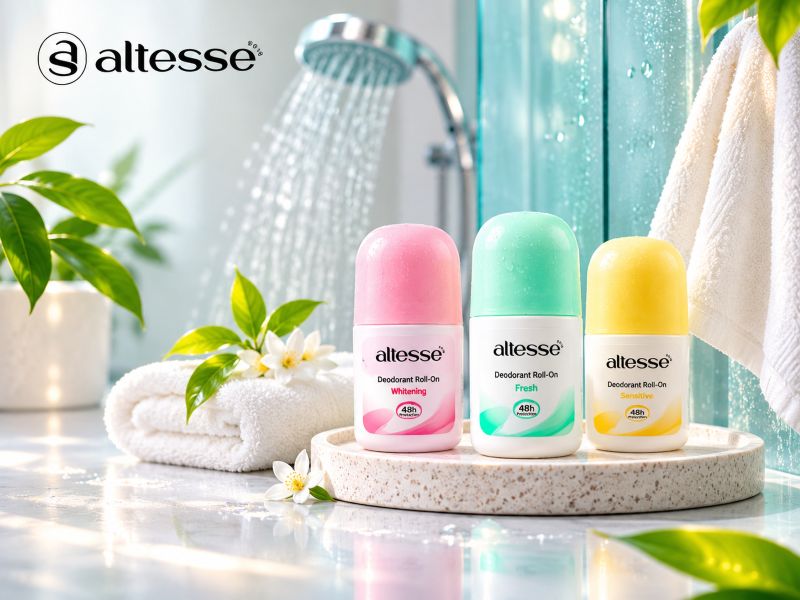
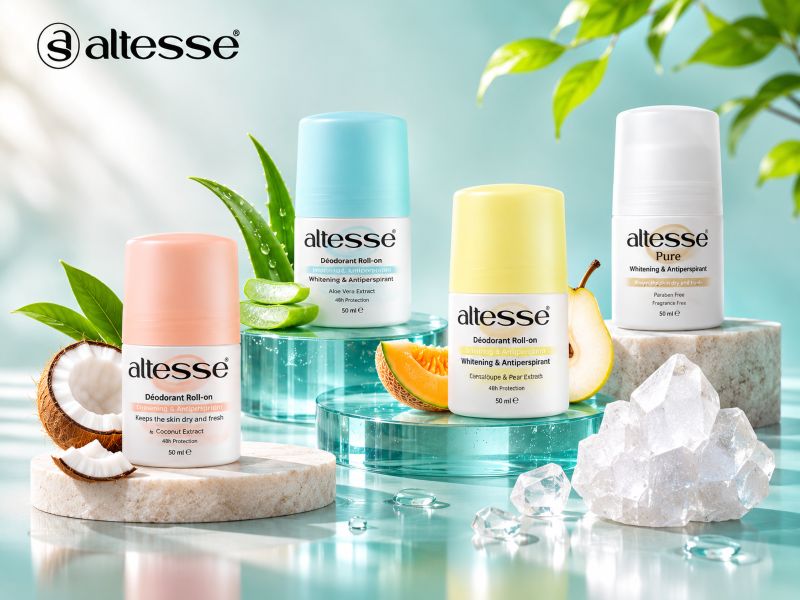
If you are looking for an odor product without aluminum, Altesse Soin offers a roll-on deodorant in an unscented version and five scents. According to the product description it is free from aluminum, parabens and ammonia, gives protection that lasts up to 48 hours, helps even out underarm tone gradually and delays hair regrowth. Because it is aluminum-free it is a deodorant, not an antiperspirant, just like alum in that it does not reduce sweat.
1. Unscented roll-on: for simplicity or fragrance sensitivity
The closest match for anyone who likes an unscented product such as an alum stone, but in an easy roll-on format with no need to wet a stone.
How to use: on clean, dry skin after showering.
Order the unscented roll-on deodorant (50 ml) as a simple aluminum-free alternative.
2. Pear and cantaloupe roll-on (Félicité): fruity freshness
For those who like light fresh scents for daytime and summer, with the same protection and tone care.
How to use: suited to everyday use.
Choose the pear and cantaloupe roll-on (50 ml) for freshness that stays.
3. Aloe vera and cucumber roll-on (Aurora): calm and soft
A light, calm scent that feels refreshing on hot days.
How to use: after a morning shower.
Try the aloe vera and cucumber roll-on (50 ml) for calm freshness.
4. Oud and coconut roll-on (Belle Vie): distinctive warmth
For those who prefer deep, warm scents that suit occasions and evenings.
How to use: a companion for evenings out.
Discover the oud and coconut roll-on (50 ml) for a distinctive scent.
5. Dessert-scented roll-on (Délicat): a sweet touch
For fans of soft sweet scents, with the same protection.
How to use: quiet days and light outings.
Order the dessert-scented roll-on (50 ml) for a sweet touch that lasts.
6. Soft powder roll-on (Sérénité): clean and soft
For those who like a classic feeling of cleanliness and softness.
How to use: a good choice for the daily work routine.
Choose the soft powder roll-on (50 ml) for softness that lasts.
Tip: if your underarms are dark, read the best deodorant for dark underarms. Note that no specific change in underarm tone is promised, since results vary from woman to woman.
What Is the Best Daily Routine for Managing Body Odor?
Shower, then dry, then a suitable deodorant, then cotton clothing. The suggested routine:
- Shower with running water: focusing on the underarms.
- Dry completely: with a clean towel.
- Deodorant: alum or the roll-on on clean, dry skin.
- Loose cotton clothing: and change after sweating.
- Reapply: in heat or after exertion.
For details, see why you smell bad even after showering.
Quick Facts About Alum Deodorant
- Alum is a natural mineral salt: potassium aluminum sulfate.
- It reduces odor by limiting bacteria, not by reducing sweat.
- It is not aluminum-free.
- It may cause irritation, especially after shaving or on broken skin.
- Homemade mixes are untested.
- Results vary between people.
- Excess sweating may need medical treatment.

Common Misconceptions About Alum Deodorant
Misconception 1: "Alum is aluminum-free." It is a natural aluminum salt.
Misconception 2: "It stops sweating." It reduces odor and does not reliably stop sweat.
Misconception 3: "It removes toxins from the body." There is no strong evidence for that.
Misconception 4: "Natural is always safe." Alum can irritate, and cases of dermatitis have been reported.
Misconception 5: "A homemade mix beats a product." Homemade mixes are untested and may irritate.
When Should You See a Doctor Immediately?
See a doctor if a rash, sores or severe itching appear, sweating is heavy, or your body odor changes suddenly. Medical advice is recommended in these cases:
- Redness, burning or a rash in the underarm that does not clear after stopping.
- Sores, blisters or swelling in the underarm.
- A sudden increase in sweating or night sweats for no reason.
- A change in body odor with no clear cause.
- Sweating that disrupts your daily life.
- A known aluminum allergy or an underarm skin condition.
Urgent note: if sweating comes with chest pain, nausea or dizziness, seek medical help right away.
This article is for awareness and does not replace a doctor's diagnosis or prescription.
FAQ: Alum Deodorant
Does alum deodorant work?
It may reduce body odor because it limits the bacteria that cause it, but it does not reliably reduce sweating, and results vary from person to person.
Is alum aluminum-free?
No. It is a natural aluminum salt (potassium aluminum sulfate), so anyone wanting a product without aluminum should read the ingredients.
Does alum stop sweat?
Not reliably. It works on odor, while reducing sweat is the job of antiperspirants.
Does alum deodorant have side effects?
It can cause irritation, itching and dryness in some people, especially after shaving or on broken skin, and cases of underarm dermatitis have been reported.
How do I use an alum stone?
Dampen the stone, glide it gently over clean, slightly dry underarms and let it dry, and do not use it on broken skin or right after shaving.
Can I use it after shaving?
Not straight away, as it may burn. Wait until skin has calmed.
Does it detox the body?
There is no strong evidence for that; the body clears waste through the liver and kidneys.
Is a homemade alum deodorant a good idea?
We do not recommend it. Homemade mixes are untested and may irritate skin, especially when alcohol or oils are added.
Is it suitable for sensitive skin?
Not always, as it may irritate. Patch test first and stop at the first sign of burning.
What is the difference between alum and antiperspirant?
Alum deals with odor only, while an antiperspirant reduces the amount of sweat and usually contains aluminum salts.
Is it safe in pregnancy and breastfeeding?
Check with your doctor before using any new product during pregnancy and breastfeeding.
What is an aluminum-free alternative?
Deodorants that clearly state they are aluminum-free, such as the Altesse Soin roll-on, which handles odor, not sweat.
Need help choosing the right deodorant for you? The Altesse Soin team is happy to answer your questions.
WhatsApp: https://wa.me/201001143374
Email: info@altessesoin.com
Phone: +2 010 0114 3374
Medical References
- Potassium aluminium sulphate (alum) inhibits growth of human axillary malodor producing skin flora in vitro. Journal of Clinical and Health Sciences. 2016;1(1):59-63. https://jchs-medicine.uitm.edu.my/images/article/original/Potassium-Aluminium-Sulphate-Alum-Inhibits-Growth-of-Human-Axillary-Malodor-Producing-Skin-Flora-In-Vitro.pdf
- Irritant dermatitis of the axillae after use of an over-the-counter natural deodorant crystal containing alum (case report). PubMed. https://pubmed.ncbi.nlm.nih.gov/10431678
- Cleveland Clinic. Body odor: causes, changes, underlying diseases and treatment. https://my.clevelandclinic.org/health/symptoms/17865-body-odor