Skin dry, tight and irritated despite every moisturizer you try? The answer may be an ingredient studied for decades. Meet panthenol cream and learn how to use it properly.
Direct answer: Panthenol (dexpanthenol) is a substance the skin converts into vitamin B5. It works as a moisturizer that supports the skin barrier and soothes dryness and mild irritation. It suits the face, body, hands and dry patches, and can be used once or twice a day. It does not replace medical treatment for skin disease or sunscreen.

Panthenol Cream: What Is It and How Does It Work on Skin?
Panthenol is the stable alcohol form of pantothenic acid (vitamin B5), and the skin converts it into that vitamin, which supports hydration and barrier repair. On labels you will see names such as dexpanthenol, D-panthenol and provitamin B5, all pointing to the same substance.
Scientific reviews note that topical dexpanthenol acts like a moisturizer: it improves hydration of the outer skin layer, reduces water loss through the skin, and keeps skin soft and elastic. In dermatology it has two main directions of use: as a moisturizer that restores the barrier, and as a helper for healing superficial wounds.
The exact mechanism is still not fully understood. It appears to increase the mobility of outer-layer components that matter for the barrier and to influence genes linked to skin healing, which may explain the smoother, more supple feel after regular use.
It is considered safe at the concentrations used in cosmetics by the ingredient safety panel, and it appears in many creams, lotions, hand and lip products, and after-sun care. To learn how to spot a weakened barrier, read signs of a damaged skin barrier.
What Are the Benefits of Panthenol Cream for Skin?
The main benefits are deep hydration, repair of the protective barrier, soothing of redness and mild irritation, and a smoother feel. The evidence includes:
- Hydration and less water loss: it improves hydration of the outer layer and reduces evaporation from the surface.
- Barrier repair after irritation: in a randomized trial, a dexpanthenol cream sped up barrier repair after induced irritation compared with the base cream, improved hydration and reduced roughness.
- Less redness: the panthenol cream reduced skin redness, a sign of inflammation, while the base cream did not.
- Better irritation symptoms: dryness, roughness, scaling and itching improved over three to four weeks of supportive use.
- Support for healing of superficial wounds: and relief of itching in some skin conditions.
- Useful for maintenance in eczema: it is used as a supportive moisturizer between flares.
Results are cumulative, not instant, so do not expect a big change from the first application. To see which cream suits dry skin, read the best cream for dry skin and barrier repair.
What Do Studies Say About Panthenol Concentration?
Research has looked at concentrations between 2% and 5%; most approved medicinal preparations contain around 2%, while barrier studies tested 5% creams. Key findings:
- 5% twice daily: a 5% cream enhanced barrier repair and hydration in skin with experimental irritation over seven days.
- 2.5% and 5%: a study in 20 healthy volunteers evaluated a water-based emulsion with 2.5% or 5%, and results matched another study that used a 2.5% lotion.
- 2%: most approved topical products for relieving itching and promoting healing contain roughly 2%.
This does not mean a higher number is always better. The formula, the type of vehicle (water-in-oil or water-based) and how you apply it all matter. Reviews note that a suitable vehicle, such as water-in-oil emulsions, lets panthenol penetrate well.
How Do You Use Panthenol Cream on Your Face?
Apply a thin layer to a clean face once or twice a day, after your serum and before sunscreen in the morning. The steps:
- Patch test: on the inner forearm for 24 hours before first use.
- Cleanse: with a gentle cleanser and pat dry.
- Use a pea-sized amount: and add more only on dry spots.
- Massage gently: until absorbed.
- In the morning: wait a minute, then apply sunscreen.
- In the evening: you may apply a slightly thicker layer as a hydrating mask.
Expert tip: if you use retinol or exfoliating acids, apply a rich moisturizer a few minutes afterwards to ease dryness and support the barrier.
Caution: do not apply to an open wound or visible infection without advice, and avoid the eyes.
If your skin is oily, choose a light texture such as a gel cream. If it is dry, see the best moisturizer for dry skin.
How Do You Use Panthenol Cream on the Body, Hands and Dry Areas?
Apply to slightly damp skin after bathing once or twice a day, focusing on elbows, knees, heels and hands. Damp skin holds water better. Common areas:
- Hands: after every wash, especially with frequent water contact.
- Elbows and knees: for roughness and mild cracking.
- Heels: after gentle weekly exfoliation, then a rich layer at night.
- Lips: only if the product is made or safe for that area.
- After shaving: to calm slight irritation.
- After sun: for comfort, though it is not a replacement for protection.
One medical source notes it helps with seasonal dryness, over-washed hands and mild irritation after shaving or environmental exposure. Deep wounds, persistent rashes or infection need medical evaluation.
How Does Panthenol Differ From Other Moisturizing Ingredients?
Panthenol is a moisturizer that supports barrier repair, while petroleum jelly seals water in and hyaluronic acid and glycerin draw water in. You can combine them for a better effect. A quick comparison:
| Ingredient | How it works | Best for |
|---|---|---|
| Panthenol | Hydrates, supports barrier repair, soothes | Dryness, mild irritation, post-shave |
| Hyaluronic acid | Draws water into upper layers | Surface dryness and thirsty skin |
| Ceramides | Replace lost barrier lipids | Weak barrier and very dry skin |
| Petroleum jelly | Seals the surface to stop water loss | Severe cracking, not for oily faces |
In short, panthenol does not compete with these ingredients; it completes them. A moisturizer that pairs panthenol with ceramides and hyaluronic acid hydrates from several angles. Learn more in the difference between serum and moisturizer.
Is Panthenol Cream Good for Acne and Oily Skin?
It is not an acne treatment, but a light gel-cream version may ease the dryness of acne treatments without clogging pores in most cases. Oily skin still needs hydration, and skipping it pushes skin to make more oil.
- Choose a light texture: a gel cream or water-based lotion rather than heavy ointments.
- Look for "non-comedogenic": on the label.
- Use it alongside active treatments: such as salicylic acid or retinoids to reduce dryness.
- Start with a small amount: and watch for new breakouts.
If you have active acne, ask a dermatologist about proper treatment, since moisturizer alone is not enough. See a skincare routine to get rid of acne.
Is Panthenol Cream Safe, and Who Should Be Careful?
It is well tolerated by most people with little risk of irritation or allergy, but any product can cause stinging, redness or a rash in a few. Reviews report that dexpanthenol preparations are usually well tolerated, with minimal risk of irritation or sensitization. Still:
- Pregnancy and breastfeeding: check with your doctor before any new medicinal product.
- Babies and children: follow a pediatrician's or pharmacist's advice and do not use a product not made for them.
- Inflamed or infected skin: it does not replace medical treatment.
- Sensitivity to other ingredients: fragrance and preservatives may be the cause rather than panthenol itself.
Stop if a rash, severe itching or swelling appears and see a doctor. If your skin is sensitive, read serum for sensitive facial skin.
When Do You See Results From Panthenol Cream?
Most people feel hydration and comfort within days, and ongoing dryness and irritation symptoms usually improve over three to four weeks. A realistic timeline:
First days:
- ✓ A softer, more comfortable feel and less tightness.
One to two weeks:
- ✓ Dryness and roughness improve, and mild redness may settle.
Three to four weeks:
- ✓ Clear improvement in dryness, scaling and itching linked to skin irritation.
Important: if things do not improve or get worse, the cause may be deeper than dryness and needs a dermatologist's assessment.
What Are the Most Common Mistakes When Using Panthenol Cream?
The biggest mistakes are relying on it alone for a medical condition, applying it to an inflamed wound, and neglecting basics such as gentle cleansing and sunscreen. The mistakes and fixes:
- Mistake 1: treating it as a cure for every skin problem. Fix: it is a supportive moisturizer, not a drug for skin disease.
- Mistake 2: applying to totally dry skin. Fix: apply to slightly damp skin.
- Mistake 3: using it instead of sunscreen. Fix: it may calm redness but does not protect you from the sun.
- Mistake 4: too much on an oily face. Fix: a thin layer of a light texture.
- Mistake 5: continuing despite new irritation. Fix: stop and talk to a doctor.
- Mistake 6: ignoring the cause of dryness. Fix: cut back on hot water and harsh soap.
- Mistake 7: ignoring persistent symptoms. Fix: see a doctor.

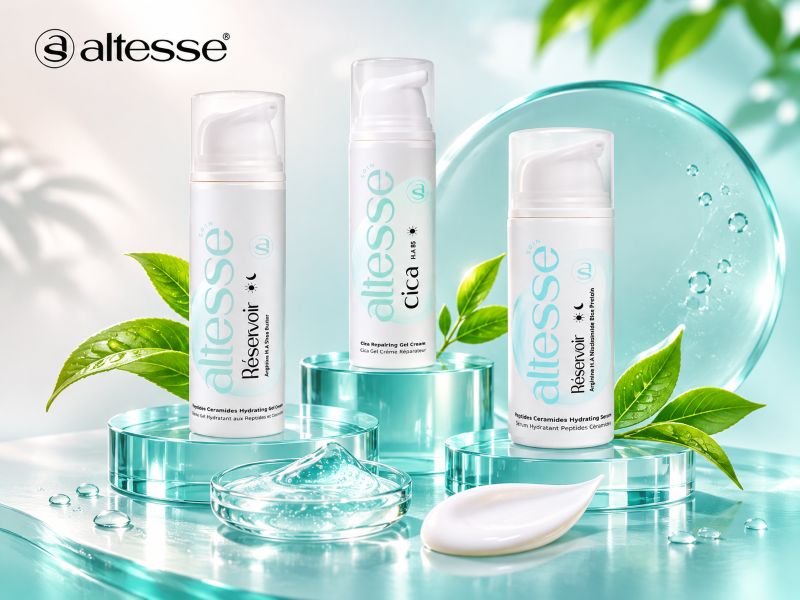
Which Altesse Soin Products Support Hydration and Soothing?
Altesse Soin's current products do not include a dedicated panthenol cream, and we do not claim they do. But if your goal is to hydrate, support the barrier and soothe skin, these products offer complementary solutions with different formulas, and you can see what each contains in the ingredient list on the packaging.
1. Reservoir ceramide and peptide gel cream (50 ml): lasting hydration
A gel cream that combines the lightness of a gel with the softness of a cream, backed by ceramides and peptides for hydration that lasts up to 48 hours according to the product description. It suits dry skin that needs a stronger barrier.
How to use: a thin layer morning and evening on slightly damp skin.
Order the Reservoir ceramide and peptide gel cream (50 ml) for deep, comfortable hydration.
2. Cica repairing gel cream (50 ml): for sensitive, irritated skin
Designed for sensitive skin with persistent redness and irritation, with a cica complex and soothing ingredients in a light texture.
How to use: apply after cleansing and whenever skin feels irritated; do not apply to an open wound.
Try the Cica repairing gel cream (50 ml) to calm tired skin.
3. Reservoir ceramide and peptide serum (30 ml): a concentrated hydration layer
If you like to start with a liquid step before moisturizer, this serum adds a concentrated hydration layer under your cream and suits those who need barrier support.
How to use: 3 to 4 drops before moisturizer on damp skin.
Discover the Reservoir ceramide and peptide serum (30 ml) for an extra layer of hydration.
4. Reservoir hydrating foam cleanser (180 ml): cleansing that does not dry
Dryness often starts with harsh cleansing. This cleanser cleans gently without stripping natural moisture, and it is the base of any hydration routine.
How to use: with lukewarm, not hot, water, twice a day.
Choose the Reservoir hydrating foam cleanser (180 ml) for cleansing that protects the barrier.
5. Sunissime hydrating daily sunscreen SPF50: everyday protection
Any barrier-repair routine needs sun protection, because the sun weakens skin and increases dryness and redness. This moisturizing sunscreen completes your morning routine.
How to use: last step in the morning, reapplied during long sun exposure.
Order the Sunissime hydrating daily sunscreen SPF50 (50 ml) for protection that safeguards your skin.
Tip: to learn which serums suit you, read the best serum for irritated skin.
What Is the Best Daily Routine for Dry Skin That Needs Hydration and Soothing?
Gentle cleansing, then a hydrating serum, then a moisturizer, then sunscreen in the morning. The suggested routine:
Morning:
- Gentle cleanser: Reservoir cleanser with lukewarm water.
- Hydrating serum: Reservoir serum on damp skin.
- Moisturizer: Reservoir gel cream.
- Sunscreen: Sunissime SPF50.
Evening:
- Cleanse: and remove sunscreen and makeup.
- Soothing moisturizer: Cica gel cream when skin is red or irritated.
- A richer layer for dry areas: only when needed.
To find your skin type, read how to know your skin type.
Quick Facts About Panthenol Cream
- Panthenol is converted in the skin into vitamin B5.
- It works as a moisturizer and supports barrier repair.
- Studies examined concentrations from 2% to 5%.
- It is well tolerated, with little risk of irritation.
- Irritation symptoms usually improve in 3 to 4 weeks.
- It does not replace sunscreen or medical treatment.
- It suits the face, body and hands.
Common Misconceptions About Panthenol Cream
Misconception 1: "It cures every skin problem." It is a supportive moisturizer and does not treat skin disease.
Misconception 2: "It treats acne." It is not a direct acne treatment, though it may ease the dryness of acne products.
Misconception 3: "It protects from the sun." It may calm redness but does not replace sunscreen.
Misconception 4: "A higher percentage is always better." Results depend on the formula and consistent use.
Misconception 5: "It is safe for everyone without exception." It is usually well tolerated, but irritation can happen, and pregnant women and infants need a doctor's guidance.
When Should You See a Doctor Immediately?
See a doctor if a rash or severe dryness persists, or if a wound is not healing or shows signs of infection. Medical advice is recommended in these cases:
- A rash or itching that continues despite weeks of moisturizing.
- A wound that does not heal, drains pus or grows redder and more painful.
- Cracked skin that bleeds or scales heavily.
- Swelling or breathing difficulty after any product.
- Eczema, psoriasis or another chronic skin condition.
- Pregnancy or breastfeeding before using a new medicinal product, and use on babies and children.
Urgent note: if swelling or shortness of breath follows any product, get medical help right away.
This article is for awareness and does not replace a doctor's diagnosis or prescription.
FAQ: Panthenol Cream
What is panthenol cream?
A cream containing panthenol (dexpanthenol), which the skin converts into vitamin B5, acting as a moisturizer that supports the barrier and soothes dryness.
What are the benefits of panthenol for skin?
It improves hydration, reduces water loss, supports barrier repair, and eases redness and mild irritation.
Is it suitable for the face?
Yes, in a thin layer with a texture that suits your skin type, and after a patch test before first use.
Is it suitable for the body and hands?
Yes, especially on slightly damp skin after bathing and on dry areas such as elbows and heels.
How often a day can I use it?
Usually once or twice a day, and more often on very dry areas as needed.
Does it suit oily skin?
Yes, if the texture is light and non-comedogenic, because oily skin needs hydration too.
Does it treat acne?
No, it is not a direct acne treatment, but it may ease the dryness of acne treatments.
Does it protect from the sun?
No. It may calm redness but does not replace sunscreen.
When will I see results?
Comfort and hydration within days, and improvement in irritation symptoms usually within 3 to 4 weeks.
Is it safe during pregnancy and breastfeeding?
Check with your doctor or pharmacist before using any new medicinal product.
Can it cause allergy?
Rarely. Irritation may come from other ingredients in the cream. Stop and see a doctor if a rash or severe itching appears.
Can I use it with retinol or acids?
Yes, it may ease the dryness that comes with them; apply it a few minutes after the active step.
Need help choosing a hydration routine for your skin? The Altesse Soin team is happy to answer your questions.
WhatsApp: https://wa.me/201001143374
Email: info@altessesoin.com
Phone: +2 010 0114 3374
Medical References
- Ebner F, et al. Topical use of dexpanthenol in skin disorders. American Journal of Clinical Dermatology. 2002. https://pubmed.ncbi.nlm.nih.gov/12113650/
- Proksch E, Nissen HP. Dexpanthenol enhances skin barrier repair and reduces inflammation after sodium lauryl sulphate-induced irritation. Journal of Dermatological Treatment. 2002;13(4):173-178. https://pubmed.ncbi.nlm.nih.gov/19753737/
- Choi FD, Juhász MLW, Atanaskova Mesinkovska N. Use of dexpanthenol for atopic dermatitis: benefits and recommendations based on current evidence. Journal of Clinical Medicine. 2022;11(14):3943. https://pmc.ncbi.nlm.nih.gov/articles/PMC9322723