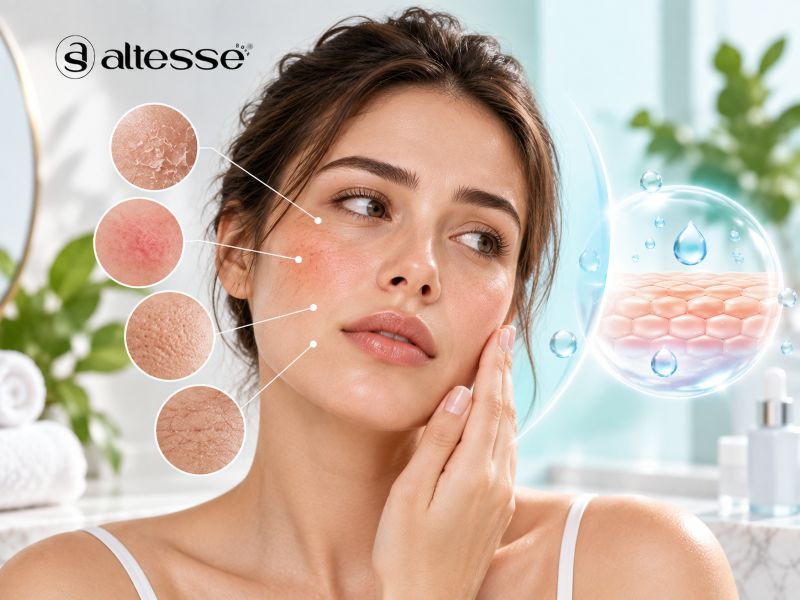
Have you started noticing fine lines and a loss of radiance despite staying consistent with your skincare? Signs of aging can sometimes feel like they appeared overnight, while the effects of time and sun exposure actually built up gradually.
This is exactly where the benefits of peptides for skin come in as a promising option for supporting a smoother, more elastic complexion. In this guide, you'll learn what peptides are, how they work, the different types, what you can realistically expect from them, and how to use them within a balanced routine, without the overblown promises.

What Are the Benefits of Peptides for Skin?
The benefits of peptides for skin mainly come down to supporting the skin's appearance, with certain types helping with signals linked to collagen production and improving hydration or the look of fine lines, though results vary depending on the peptide type, formula, and how it's used.
A systematic review points to improvement in some markers of skin aging, particularly hydration, radiance, and reduced wrinkles, though evidence on topical products remains limited compared to the sheer variety of formulas available on the market.
What Are Peptides and How Do They Work on Skin?
Peptides are short chains of amino acids used in skincare products to support certain processes linked to skin's health and appearance. Some types can act as signals that help skin support the production of important components like collagen and elastin, which may contribute to better elasticity, texture, and the look of fine lines.
Peptides work differently depending on the type, and their key roles include
-
Supporting collagen production: some peptides trigger signals linked to collagen synthesis
-
Supporting skin elasticity: certain types help maintain components important to skin's structure
-
Improving the look of fine lines: skin may appear smoother with regular use
The concept behind peptides is based on understanding the natural processes that occur in skin during repair and renewal, though their effectiveness varies from one type to another and one formula to another. That means the word "peptides" alone doesn't guarantee every product delivers the same results.
Do Peptides Help Improve Skin Elasticity?
Some peptides may contribute to improving the look of skin elasticity by supporting the components and proteins linked to skin's structure. Elasticity gives skin a plumper, firmer appearance, and over time, these properties can shift due to aging and environmental factors — which is why peptides have become an ingredient of real interest in skincare products aimed at signs of aging.
That said, it's important to keep expectations realistic. Peptides don't instantly restore skin to its previous state — they can be part of an ongoing routine aimed at improving skin's appearance and maintaining its elasticity over time.
What Role Do Peptides Play in Protecting Skin from Sun Damage?
Peptides don't replace sunscreen, but they can be used within a complete routine focused on reducing the impact of environmental factors on skin. UV rays are a major factor linked to photoaging and can affect collagen and skin structure with repeated exposure, which is why using sunscreen daily matters more than relying on any single cosmetic ingredient.
Peptides can be seen as a supportive step within the routine, while sunscreen remains the primary line of defense against UV rays. Combining sun protection, hydration, and appropriate care helps maintain skin's appearance over the long term.
Key Benefits of Peptides for Skin and Daily Care
The benefits of peptides for skin are numerous and scientifically documented, making them one of the most important active ingredients in modern skincare products.
-
Boosting collagen: peptides stimulate fibroblasts to increase collagen production, giving skin a plumper, more youthful look
-
Reducing wrinkles and fine lines: a clinical study found that using a topical peptide compound for just two weeks led to a noticeable, measurable improvement in wrinkles across all tested areas
-
Improving skin elasticity and firmness: by supporting elastin production, which gives skin a smoother, more flexible feel when it moves
-
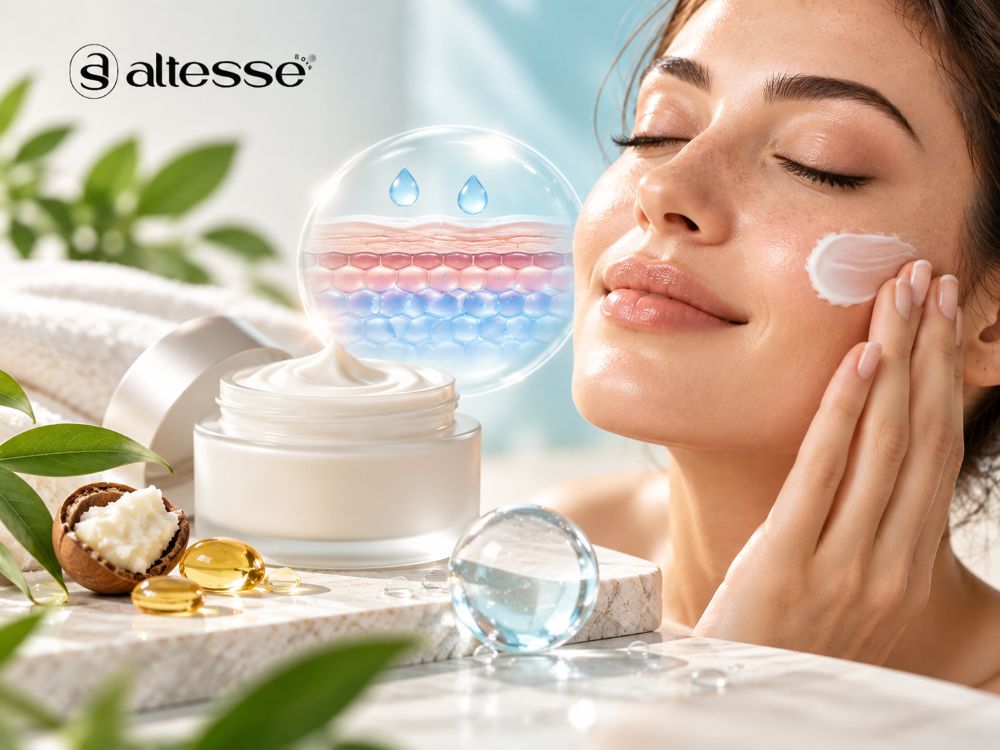
Strengthening the skin barrier: some peptides help reinforce the skin's protective barrier, which reduces transepidermal water loss (TEWL) and improves hydration
-
Repairing damage caused by aging: certain peptide types work to reduce signs of cellular aging and improve skin thickness, according to a study published in the journal Nature in 2023
-
Supporting balanced melanin production: some peptides help regulate pigment distribution, which reflects on a more even skin tone
-
Increasing skin density and thickness: a randomized controlled study published in 2025 found that oral bioactive peptides improved dermal density and thickness after 12 weeks of consistent use
Taken together, these benefits make peptides an ideal choice for anyone looking for real results without complication or irritation.
Types of Peptides Used in Skincare Products
Before choosing any product, it's worth knowing there are four main types of peptides, and each plays a completely different role within the skin.
-
Signal peptides: send a direct signal to cells to increase collagen and elastin production; one of the best known is Palmitoyl Pentapeptide-4
-
Carrier peptides: transport essential elements like copper into the skin to support the repair process, such as copper tripeptide
-
Neurotransmitter-inhibiting peptides: work to gently relax facial muscles, which reduces the appearance of expression lines
-
Enzyme-inhibiting peptides: slow down the enzymes responsible for breaking down collagen, helping preserve skin's structural integrity for longer
Knowing which type of peptide is in a product helps you choose what actually matches your goal — whether that's stimulating collagen production, reducing expression lines, or repairing the skin barrier.
Who Are Peptide Products Best Suited For?
Peptides suit a wide range of people, thanks to how gentle they are on skin compared to other active ingredients like retinol or strong acids.
-
Anyone starting to notice fine lines around the eyes or mouth
-
Anyone dealing with mild sagging or loss of elasticity
-
Anyone with sensitive skin that can't tolerate strong ingredients like retinol
-
Anyone looking for a preventive routine before clear signs of aging appear
-
Anyone whose skin is frequently exposed to sun damage and UV rays
-
Anyone wanting to improve overall skin texture without irritation
-
Anyone using other strong ingredients who needs extra support for the skin barrier
If you find yourself in any of these categories, peptides are likely to be a genuinely useful addition to your routine.
How to Use Peptides on Skin the Right Way
Apply your peptide product to clean skin according to the manufacturer's instructions, then follow with a moisturizer and use sunscreen in the morning.
-
Cleanse your skin: use a gentle cleanser suited to your skin type
-
Dry your face gently: no need to rub — gentle patting is enough
-
Apply the peptide product: use the recommended amount on your face or the target area
-
Spread the product: distribute it gently without harsh massaging
-
Use a moisturizer: it helps support the skin barrier and reduce water loss
-
Sunscreen in the morning: use a broad-spectrum sunscreen suited for daily use
-
Stay consistent: potential results take time, and a product shouldn't be judged after only a very short period of use
Important tip: don't add several active products at the same time if your skin is sensitive, since that makes it harder to identify the cause of any irritation.
Warning: if you notice severe burning, swelling, or an obvious rash, stop the product and seek a medical evaluation if symptoms are severe or persistent.
What Can Peptides Be Combined with in a Skincare Routine?
Peptides can be combined with many skincare ingredients, but it's best to build your routine gradually and keep your skin's tolerance in mind.
Usually safe and effective with
-
Hyaluronic acid: supports hydration and can complement a peptide formula — see what hyaluronic acid benefits it adds when the two are paired together
-
Ceramides: help support the skin barrier, which matters for maintaining hydration
-
Moisturizers: combining active ingredients with hydration makes for a more balanced routine
-
Sunscreen: necessary to protect skin from UV rays
Use with caution
-
Retinoids: can be effective within an anti-aging routine but may cause dryness or irritation for some people. Introducing each ingredient gradually is better than adding several strong actives at once
-
Exfoliating acids: can be used within a balanced routine, but over-exfoliating can weaken the skin barrier and cause irritation
Avoid
-
Overloading your routine with a large number of active ingredients on the same day without knowing your skin's tolerance
-
Randomly mixing products based on claims you've seen online, since ingredient compatibility depends on the full formula, not just ingredient names
The simple rule: a simple, consistent routine beats a crowded one where it's hard to tell whether it's actually helping skin or overwhelming it.

When Do Peptide Results Show Up on Skin?
Results vary depending on the peptide type and formula, but improved hydration may show up before changes related to fine lines and elasticity, which usually need more consistent use.
|
Approximate Timeframe |
What You Can Notice |
|
The first few days |
Temporary improvement in the feeling of hydration if the formula is hydrating |
|
2 weeks to a month |
Gradual improvement may appear in skin texture and hydration |
|
1 to 3 months |
Changes related to the look of fine lines and texture can be evaluated more accurately |
|
After 3 months |
A clearer judgment can be made on how well the product suits you and whether to continue |
Clinical studies don't use one single timeline for all peptides. In one trial of a topical collagen peptide, changes in wrinkle markers appeared after four weeks, while another trial of a newer cyclic peptide used twice daily for 56 days showed improvement across several wrinkle markers. Oral studies, meanwhile, found improvement in some hydration and flaking markers within weeks in a randomized trial, with wrinkles and elasticity improving over a longer period. Important: these results don't mean every peptide product will deliver the same outcome.
How to Choose the Best Peptide Products for Skin
The best product for skin isn't necessarily the one with the biggest claims — it's the one with a clear formula suited to your skin's needs that you can use consistently.
-
1. Peptide type: find out whether the product relies on signal peptides or another type, and what function the formula is targeting
-
2. Your main goal: if reducing wrinkles is the goal, look for a formula with data or supporting ingredients for that purpose instead of choosing based on the words "Anti-Aging" alone
-
3. Complementary ingredients: the presence of hydrating ingredients that support the skin barrier can make a product a better fit for a balanced daily routine
-
4. Scientific evidence: it's best to prioritize products with clear supporting data over ones relying purely on marketing promises
-
5. Ease of use: a product you can use consistently according to its instructions is more practical than a complicated formula that's hard to stick with
Clinical evidence on peptides remains mixed. A 2026 review covering 19 randomized trials and 1,341 participants found potential benefits, but it also confirmed differences across peptide types, dosing methods, and how results were measured, alongside a limited number of high-quality topical studies. That means a purchase decision shouldn't be based on the phrase "contains peptides" alone.
Why Choose Altesse Soin for Your Skincare?
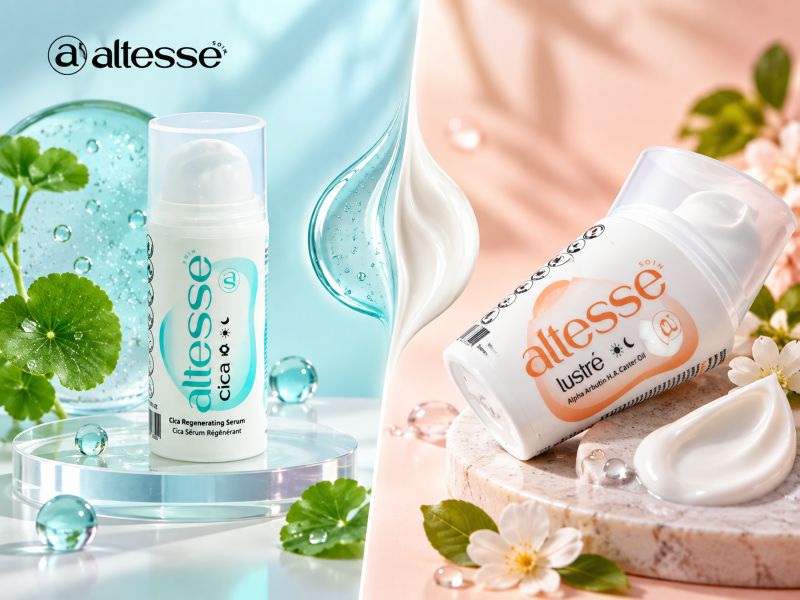
Choosing skincare products isn't just about the ingredients — it's about the quality of the formula and how well it matches your skin's needs. That's why Altesse Soin offers options that help you build a complete routine focused on hydration, improving skin texture, and caring for fine lines and signs of aging.
What sets Altesse Soin apart
-
Formulas built around skin's needs: combining supportive ingredients for daily care with visible improvement in skin's appearance
-
A focus on hydration: to help maintain the skin barrier and give skin a softer, more comfortable feel
-
Care for signs of aging: including fine lines and loss of elasticity
-
Easy to fit into a daily routine: products can be coordinated into simple morning and evening steps
-
A focus on complete care: rather than relying on a single product, you can build a routine that matches your skin's different needs
Ultimately, Altesse Soin gives you practical options to help you choose a balanced skincare routine that keeps up with your skin's needs and supports its healthy, radiant appearance.
How to Build a Complete Routine with Peptides
The best routine combines cleansing, hydration, peptides, and sun protection without overloading skin with too many active ingredients.
Morning
-
A gentle cleanser: to remove buildup and impurities without stripping skin
-
Peptide product: if it's formulated for morning use
-
Moisturizer: to support the skin barrier and reduce water loss
-
Sunscreen: the essential step to protect skin from UV rays
Evening
-
Cleanse skin: especially after a long day or wearing makeup
-
Peptides: according to the product's instructions
-
A hydrating ingredient: like hyaluronic acid, if it suits the formula
-
Moisturizer: to keep skin comfortable and support the barrier
If you're combining peptides with other actives like retinoids or exfoliating acids, the goal isn't to put everything into one routine — it's about spacing out active ingredients to reduce the chance of irritation while staying consistent. Our guide on the correct face cream order can help you figure out exactly where peptides fit relative to your other steps.
Most importantly, skincare isn't a race to pack in the most ingredients — skin benefits more from a routine that's understood, balanced, and consistent.
What's the Difference Between Peptides and Collagen in Skincare?
Peptides aren't collagen itself — peptides are short chains of amino acids, while collagen is a larger protein made of interconnected chains.
Discussions about the benefits of peptides sometimes get mixed up with collagen products. Some peptides can act as signals linked to collagen production processes, but that doesn't mean applying a peptide to skin directly converts into collagen within the skin.
|
Peptides |
Collagen |
|
Short chains of amino acids |
A large structural protein |
|
Some types act as signals |
Forms an important part of skin's structure |
|
Mechanism of action varies by type |
Linked to structural support and elasticity |
|
Multiple types with different mechanisms |
Has a defined structure and function |
Understanding the difference between the two helps you read skincare product claims more accurately.
Golden Tips for Getting the Most Out of Peptides in Your Skincare Routine
Getting the best possible benefit from peptides isn't just about choosing a good product — it also depends on how you use it and how consistent your routine is.
-
Choose the right peptide: peptide types and functions differ, so pinpoint what your skin needs before choosing a product
-
Stay consistent: results usually don't show up overnight, and consistency matters more than overusing the product
-
Prioritize hydration: combining peptides with hydrating ingredients helps maintain the skin barrier and a softer appearance
-
Don't skip sunscreen: daily protection from UV rays is an essential step for skin health and reducing the effects of photoaging
-
Don't overcrowd your routine: using too many active ingredients at once can increase the chance of irritation without necessarily meaning better results
-
Watch how your skin responds: when introducing a new product, start gradually and stop if severe or persistent irritation appears
-
Give your skin enough time: improving the look of fine lines and elasticity takes patience — don't judge a product after just a few days
The most important rule: a simple, consistent routine suited to your skin beats a complicated one packed with ingredients whose individual effects are hard to track.
Common Mistakes When Using Peptides for Skin
Falling into a few simple mistakes can reduce how effective peptides are without you realizing why.
-
Mistake 1: using peptides alongside very strong acids at the same time — Fix: separate the two (morning and evening) or consult a skincare specialist
-
Mistake 2: expecting instant results within a few days — Fix: give the product at least 4 to 12 weeks before judging its effectiveness
-
Mistake 3: storing the product somewhere exposed to heat or direct light — Fix: keep it somewhere cool and dry, away from sunlight, to preserve peptide stability
-
Mistake 4: skipping sunscreen while using a peptide routine — Fix: use daily sunscreen to protect your care results from UV damage
-
Mistake 5: using too much product thinking it speeds up results — Fix: stick to the recommended amount; more product doesn't mean more effectiveness
-
Mistake 6: combining several different peptide products unnecessarily — Fix: choose one trusted product and give it enough of a chance before adding anything else
Quick Facts About Peptides and Skin
-
Collagen makes up 75 to 80% of skin's dry weight, and it's the main target of how peptides work
-
More than 199 types of peptides have been specifically studied in the context of skin aging
-
Peptides are inspired by the body's natural response to wound healing
-
Some clinical studies have shown noticeable improvement in wrinkles within just two weeks of topical use
-
Oral peptides showed improvement in hydration and skin radiance in a recent scientific review, more clearly than some topical formulas
Common Misconceptions About Peptides
-
Misconception: peptides work exactly like Botox. Truth: some peptide types (neurotransmitter-inhibiting) have a mild muscle-relaxing effect, but it doesn't compare to medical Botox injections in strength or mechanism.
-
Misconception: all peptides work the same way. Truth: there are four main types, and each has a completely different mechanism and function.
-
Misconception: a higher peptide concentration means faster results. Truth: peptides are effective even at very low concentrations, and a higher concentration doesn't necessarily mean a better result.
-
Misconception: peptides only suit mature skin. Truth: they're also useful as a preventive step for younger skin to delay the appearance of aging signs.
-
Misconception: sunscreen can be skipped when using peptides. Truth: UV exposure cancels out a large part of the benefit of any skincare routine, peptides included.
When Should You See a Doctor or Dermatologist Immediately?
While peptides are generally considered a safe ingredient, there are cases that call for stopping use and seeing a dermatologist without delay:
-
Severe redness or persistent itching that doesn't go away within 24 to 48 hours of use
-
A rash or swelling in the face appearing after applying the product
-
Strong burning or pain when applying the product, not just a brief, mild tingling
-
Water-filled blisters or unusual skin peeling
-
No improvement in skin's condition, or it worsening, after several weeks of consistent use
-
A previously known sensitivity to any of the ingredients listed in the formula
In these cases, don't rely on self-diagnosis — see a dermatologist for an accurate evaluation and to determine the actual cause.
Best Peptide Products for Skin
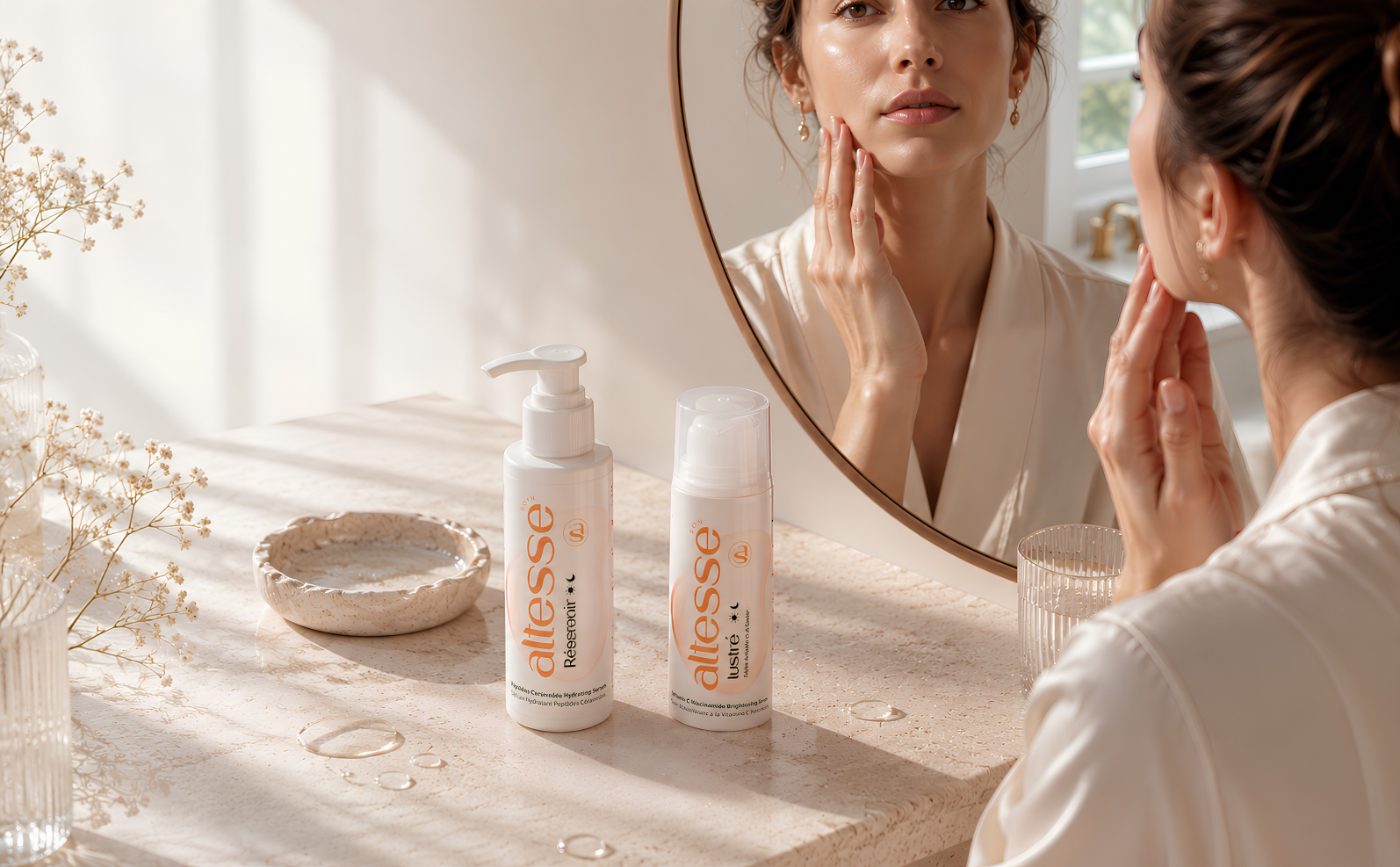
Peptides are one of the most advanced active ingredients in skincare, short chains of amino acids that act as biological messengers, triggering skin cells to naturally produce more collagen and elastin — giving skin genuine elasticity and firmness instead of just temporarily masking signs of fatigue. Altesse Soin's Rèservoir collection is built on an advanced peptide complex supported by triple ceramides and hyaluronic acid, offering a complete duo (serum and cream) that works to renew skin's structure from within and give it a more youthful, plump appearance.
Rèservoir Peptides Ceramides Hydrating Serum 30ml
The first choice for getting the full benefits of peptides for skin, thanks to its high peptide concentration in a lightweight serum texture that penetrates deep into the skin's layers.
Key Ingredients & Benefits
-
Advanced peptides that stimulate cell renewal and activate natural collagen production
-
Fine-molecule sodium hyaluronate that delivers deep hydration supporting the peptides' work
-
Triple ceramide that strengthens the skin barrier and protects new proteins from breaking down
-
Improves skin elasticity and softens fine lines caused by loss of firmness
When Will You See Results?
Instant hydration and plumpness from the first use. Within two weeks, skin starts gaining noticeable elasticity, and after one month of consistent use, the documented improvement in skin elasticity reaches 85%.
How to Use
-
Apply to slightly damp skin right after cleansing
-
Use morning and evening
-
Follow with a moisturizer to boost the peptides' results
Ideal for mature skin or skin that's starting to lose its natural firmness, and also for anyone looking for an effective option that works on a deeper level than surface hydration alone.
Get firmer, plumper skin with Rèservoir Peptides Ceramides Hydrating Serum 30ml now.
Rèservoir Peptides Ceramides Hydrating Gel Cream 50ml
Completes the peptides' effect and locks it in throughout the day, ensuring your skin keeps benefiting from their renewing properties without losing them to dryness.
Key Ingredients & Benefits
-
The same advanced peptide complex at a concentration suited to the final hydration step
-
Pure glycerin and triple ceramide that lock in moisture and protect the peptides' work from evaporating
-
A lightweight gel-cream texture that absorbs quickly with no greasy residue
-
Rebuilds the skin proteins responsible for its daily softness and firmness
When Will You See Results?
You'll feel instant hydration from the first use. Within two weeks, you'll notice an improvement in texture softness, and after a month of consistent use, the effect of the peptides becomes clear in skin's elasticity and plumpness.
How to Use
-
Apply right after your serum in a pea-sized amount
-
Massage in upward, circular motions on face and neck
-
Use morning and evening as the final step in your routine
Ideal for anyone who wants to lock in their peptide serum's results and make sure dryness doesn't creep back in and reduce its effectiveness over time.
Lock in your peptide results all day long with Rèservoir Peptides Ceramides Hydrating Gel Cream 50ml for firmer, more youthful-looking skin.
FAQ: Benefits of Peptides for Skin
What are the benefits of peptides for skin?
Some peptides may help support the appearance of collagen and elasticity and reduce the look of fine lines, and they may also be linked to improved hydration and texture, though the benefits vary depending on the peptide type and formula.
Do peptides stimulate collagen production?
Some signal peptide types can support pathways linked to collagen production, but this effect can't be generalized to all peptides.
Do peptides reduce wrinkles?
Some formulas may help reduce the appearance of wrinkles and fine lines with consistent use, and some clinical trials have shown positive results, though the strength of the evidence varies between types and formulas.
Are peptides better than retinol?
There's no one-size-fits-all answer. Different types of peptides and retinoids exist, each with a different mechanism of action and level of scientific evidence, and the choice depends on your skin's tolerance and your goal for using it.
Can peptides be used daily?
Many peptide products can be used daily if the product's instructions allow it and your skin tolerates it well.
Are peptides suitable for sensitive skin?
Some formulas may suit sensitive skin, but sensitivity depends on the full formula. It's best to introduce any new product gradually and monitor your skin.
Do peptides treat pigmentation?
Peptides aren't a general treatment for pigmentation. Some studies look into different effects on radiance or pathways linked to pigmentation, but that doesn't mean every peptide treats dark spots or directly controls melanin production.
Can peptides be used with hyaluronic acid?
Yes, they're usually fine to combine — hyaluronic acid focuses on hydration, while some peptides target other functions.
Can peptides be used with sunscreen?
Yes, and sunscreen is actually an essential part of your daytime routine — peptides shouldn't be considered a substitute for it.
When do the benefits of peptides for skin show up?
It depends on the product and your goal. Hydration improvement may show up early, while changes in the look of fine lines and elasticity need consistent use over weeks or months.
Do the peptides in creams actually reach the skin?
Some peptides can reach the skin to varying degrees, but limited penetration is a known challenge in developing topical peptides, which is why product formulation plays such an important role.
If dryness and fine lines are both showing up together, it's worth pairing this with our dedicated guide to a serum for dry skin, since hydration and peptide support tend to work best side by side.
And if you're also using niacinamide in your routine, our comparison of niacinamide vs hyaluronic acid can help you understand how each one complements peptides differently — or see our full guide on using niacinamide serum for the application details.
Talk to Our Skincare Experts
If you're looking for peptide-based skin products that help support collagen, improve the look of fine lines, and boost skin hydration within a complete routine, you can reach out to the Altesse Soin team to learn about the products suited to your skin's daily needs.
WhatsApp: https://wa.me/201001143374
Email: info@altessesoin.com
Phone: +2 010 0114 3374